
Search

Israel’s Other Independence Day: 29th of November

Why Are There Streets Named “29th of November” All Over Israel?

Read all about the UN Vote of November 29, 1947 – a momentous occasion in Israel’s history and key step towards Independence – as well as how the date is honored in Israel today!
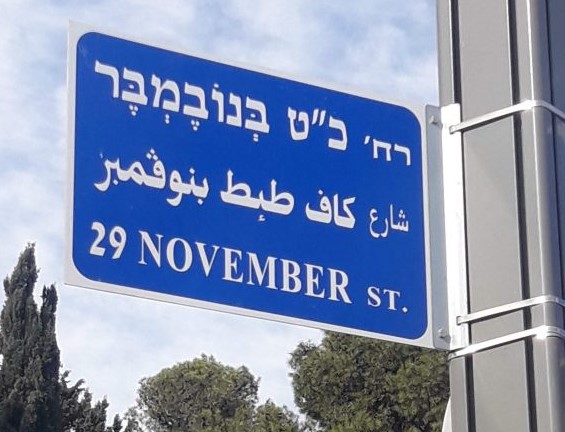


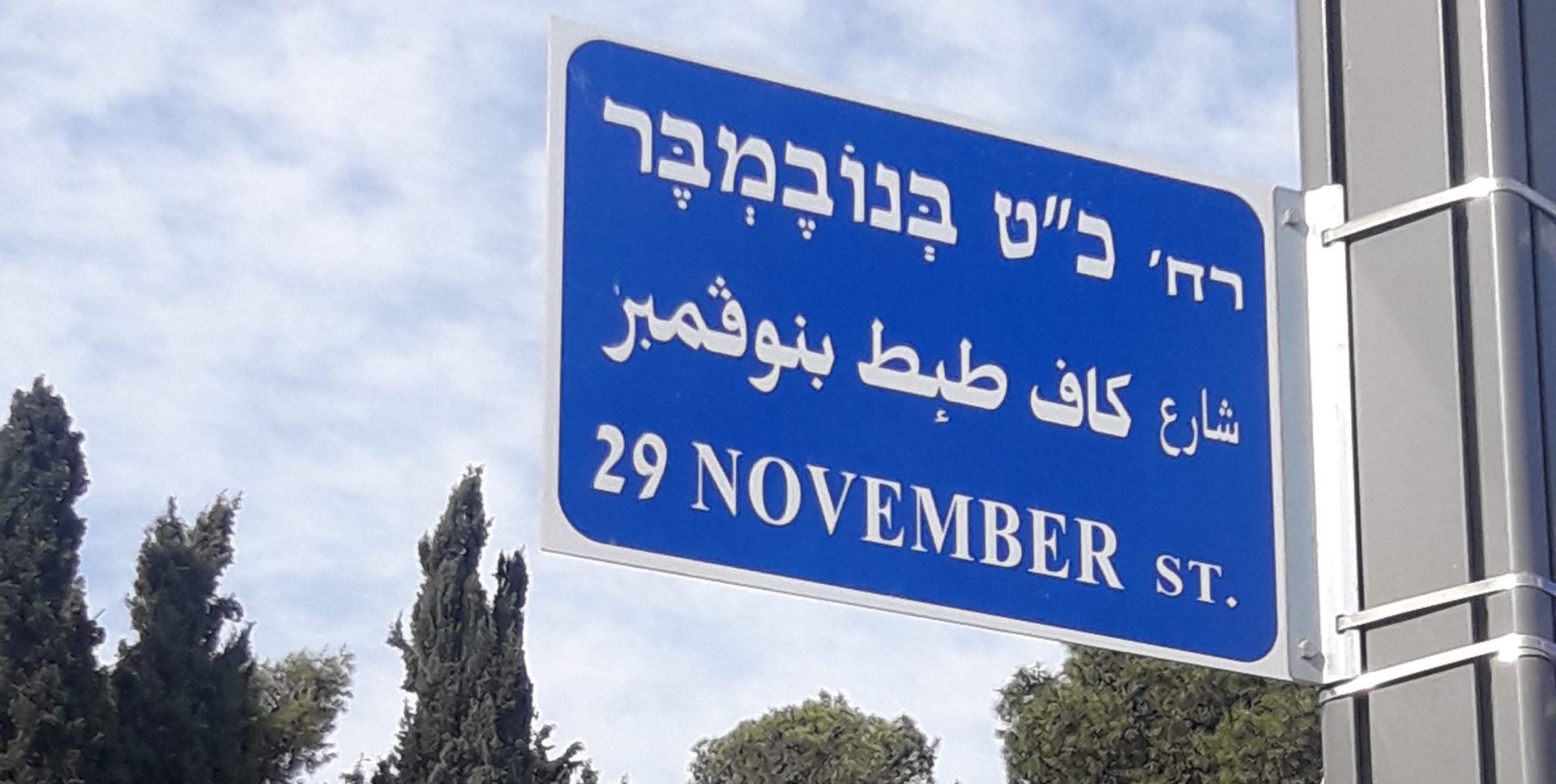
The 29th of November – known in Hebrew as Kaf Tet b’November – is a date so iconic that there are streets named after it in many Israeli cities: Jerusalem, Ashdod, Petach Tikva, Herzliya, and more. It represents a key moment in the lead-up to Israeli national independence, and some have even considered making it a national holiday.
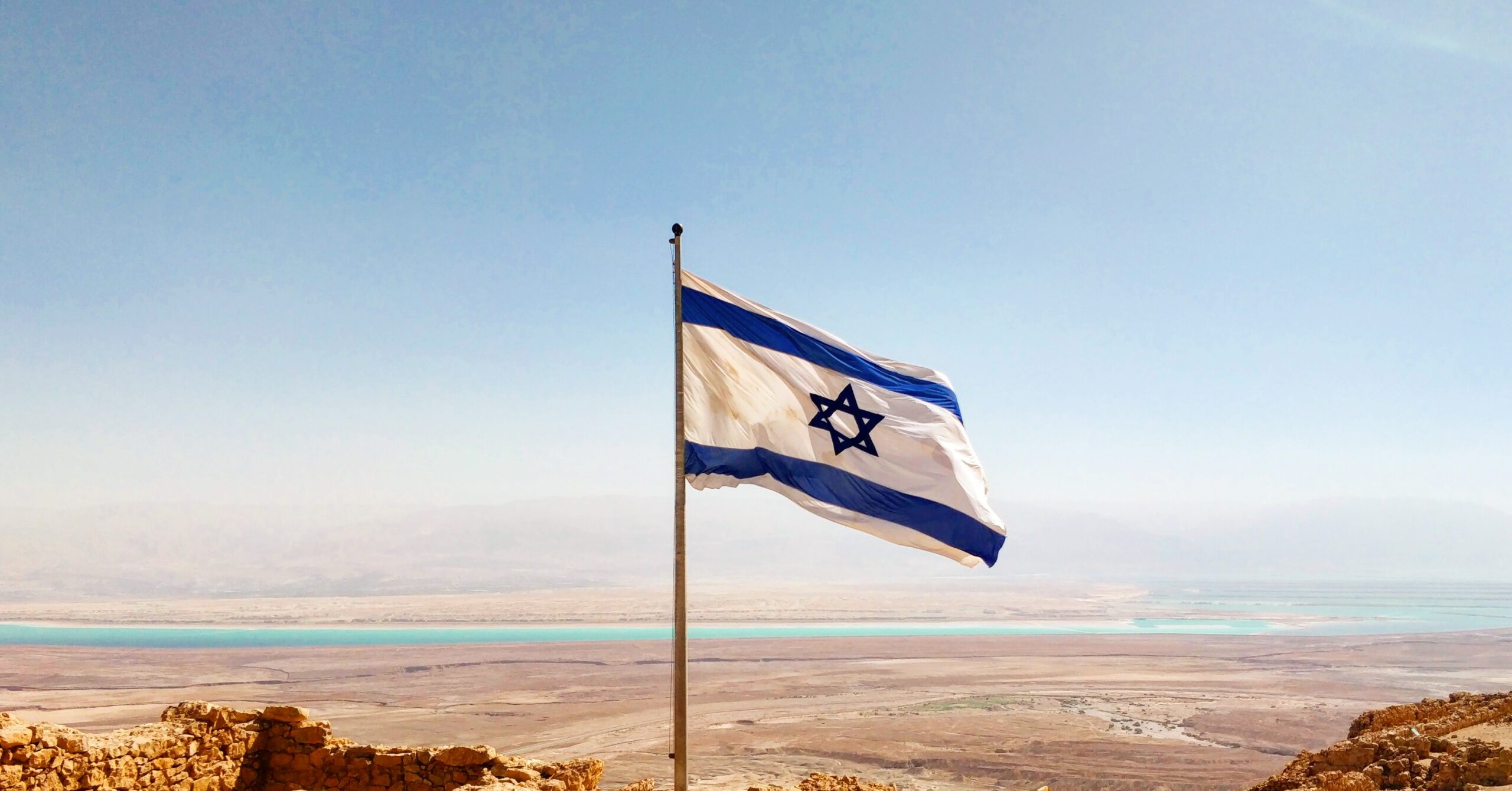
The Vote That Would Create the State of Israel
Metsada israel

While official Israeli Independence was declared on May 14th, 1948, the international recognition that many say made it possible happened when the UN General Assembly voted on and approved the Partition Plan for Mandatory Palestine – allowing the creation of a Jewish state alongside an Arab one – on November 29th, 1947.
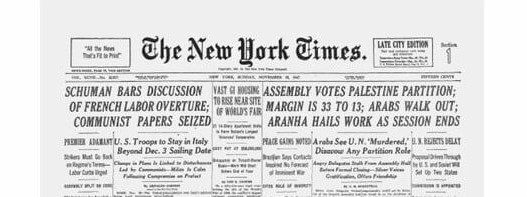
 

New York Times coverage of the UN vote of November 29, 1947


Jews in the Land of Israel and all over the world listened to live announcements of the United Nations' vote count on the radio with bated breath, and spontaneous cheers and dancing erupted in the streets as soon as it was over.

The final count was more than enough to pass the proposed partition, known as Resolution 181: 33 countries were in favor, 13 opposed, 10 abstained, and one was absent.

btn
SHOW-YOUR-SUPPORT_CATEGORY_M
Historical Context
masada_sunrise

The UN vote came during a bloody civil war between Jews and Arabs in what was then Mandatory Palestine, with Jewish safety in jeopardy as the region’s Arab population was growing increasingly and ever more violently hostile to any continued Jewish presence in the Land of Israel.

It was also only a couple of years after the Holocaust, which saw a near decimation of Europe’s Jewish population, and amid increased violence and pogroms against Jewish communities throughout the Middle East and North Africa.

The international community’s recognition of and promise of Jewish sovereignty therefore came as a welcome sign of hope that brighter days lay ahead. Even though it would be several more months until independence would be formally declared by David Ben-Gurion, the UN approval was a sort of mini-independence celebration for the Jews living in the Land of Israel.

In addition, the Zionists who had been agitating for Jewish sovereignty in the Land of Israel wanted recognition and legitimacy on the international stage, to assure that the State would last, and formal approval by the United Nations fulfilled that role.

The vote was also important for internal Jewish unity and agreement. Many of the more religious Jews, who were initially opposed to the creation of a Jewish state without Divine intervention, considered the UN resolution to be a sign from God and a formal consent by the nations of the world to restore Jewish sovereignty in the Holy Land.

btn
Israel_flag_category_mobile_24
How the Date Has Been Remembered
20211130_132100-scaled

Some had suggested to David Ben-Gurion, Israel’s first Prime Minister, that November 29th should become a national holiday, though it ultimately didn’t happen. The legacy of the date has become somewhat mixed over the years – some people question whether the UN vote was necessary for Israel’s independence, and some even consider the UN partition plan to be a catastrophe because it did not provide for a unified Jerusalem as part of Israel, and the city remains a controversial international issue to this day. Overall, its importance in the public consciousness is not as great as Israel’s Independence Day on May 14th.

Nonetheless, the 29th of November is a day on which we mark and celebrate the international recognition of the right of the Jewish people to live freely in the Land of Israel, our ancestral homeland, and an almost-independence and important step in the Zionist struggle.

Today, the date is remembered in Israel through educational programming organized around its anniversary, as well as the small everyday reminders like passing a street named “Kaf Tet b’November” or “29th of November.”


Celebrate Israeli independence and statehood every day of the year with our special "Support Israel" patriotic gifts by Israeli artists!

btn
Support Israel

JWS POST YOU MAY LIKE

Round challah for Rosh Hashanah with honey
Round Challah for Rosh Hashanah with Honey
Rosh Hashanah recipes
What Are the Best Rosh Hashanah Recipes for a Sweet New Year?
When is Rosh Hashanah in 2026? In 2026, Rosh Hashanah begins at sundown on Friday, September 11, and ends at nightfall on Sunday, September 13. It falls on 1–2 Tishrei 5787 in the Hebrew calendar. Food plays a central role in Rosh Hashanah observance and tradition, with rich symbolism woven
A Jewish man blowing the Shofar (ram's horn), which is used to blow sounds on Rosh HaShana (the Jewish New Year) and Yom Kippur (day of Atonement)
Rosh Hashanah in the Bible: Origins of the Jewish New Year
Rosh Hashanah – the Jewish New Year, coming up September 11-12, 2026 – is one of the most important and widely celebrated holidays in Judaism. But while many are familiar with its modern customs, from apples dipped in honey to the sounding of the shofar, fewer know about its biblical
Rosh Hashanah fun for kids
Rosh Hashanah Activities for Kids: Fun & Meaningful Holiday Ideas
Looking for fun ways to keep kids busy this Rosh Hashanah? Discover hands-on crafts, apple-and-honey taste tests, family games and creative activities you can make with AI – all designed to bring more fun and meaning to the holiday.
Pomegranates for Rosh Hashanah
Why Do We Eat Pomegranates on Rosh Hashanah?
Pomegranates are a popular fruit to eat during Rosh Hashanah and a significant symbol in Judaism year-round, often gracing Judaica and Jewish jewelry. Since Rosh Hashanah 2026 begins on September 11 at sundown, now is the perfect time to learn more about the significance and symbolism of the pomegranate in Judaism and Rosh Hashanah!
A Jewish man blowing the Shofar (ram's horn), which is used to blow sounds on Rosh HaShana (the Jewish New Year) and Yom Kippur (day of Atonement)
From Reflection to Renewal: The Deep Meaning of Yom Kippur
Yom Kippur, the Day of Atonement, is the holiest day of the Jewish year: a time of reflection, forgiveness, and renewal. In 2026, it begins at sundown on Sunday, September 20, and lasts through the following evening. Marked by fasting, prayer, and other austere restrictions, Yom Kippur is often seen