
Search
Rosh Hashanah recipes

What Are the Best Rosh Hashanah Recipes for a Sweet New Year?

When is Rosh Hashanah in 2026?

In 2026, Rosh Hashanah begins at sundown on Friday, September 11, and ends at nightfall on Sunday, September 13. It falls on 1–2 Tishrei 5787 in the Hebrew calendar.

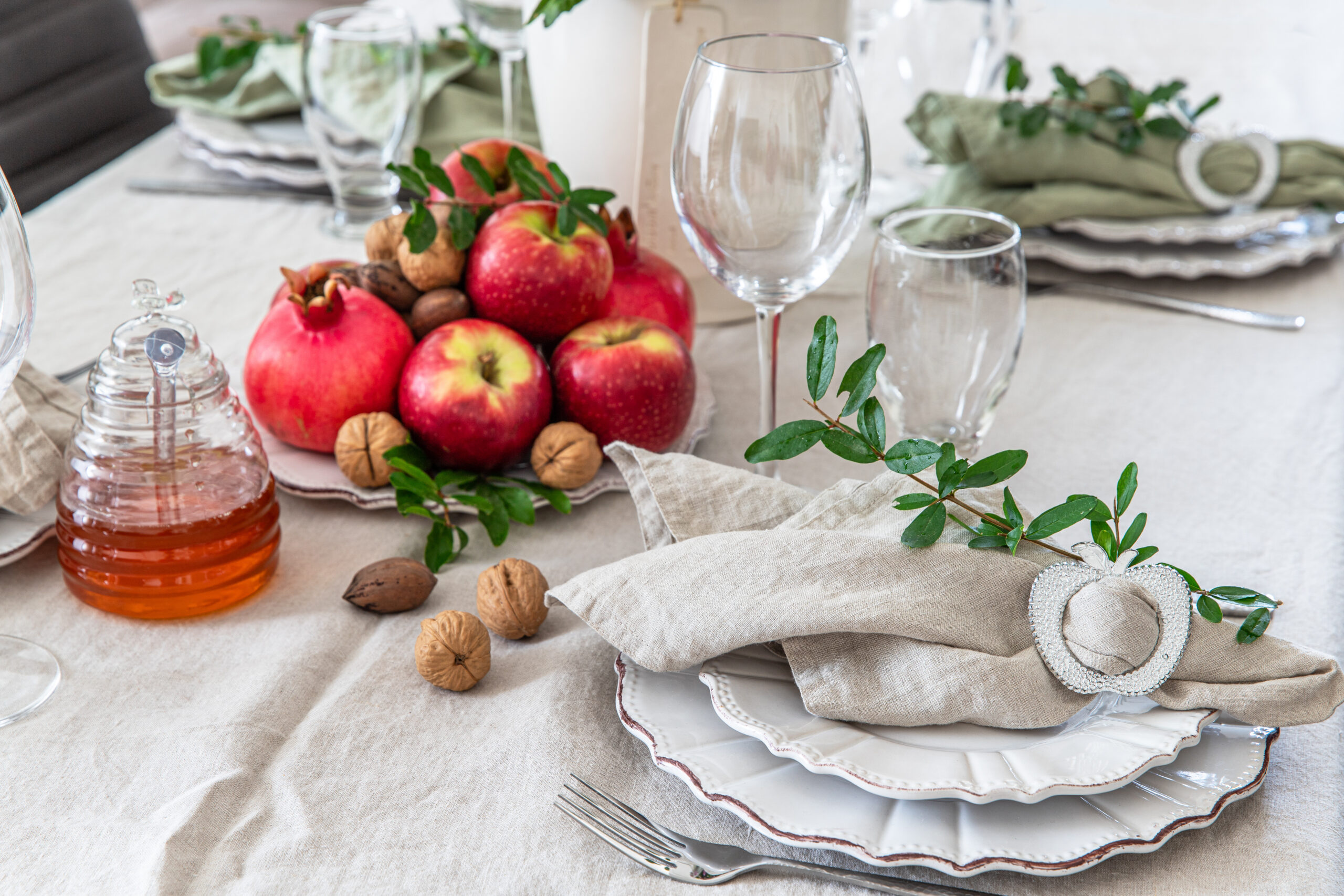
Food plays a central role in Rosh Hashanah observance and tradition, with rich symbolism woven into every dish. We eat apples dipped in honey for a sweet year ahead, round challah to represent the head of the Jewish new year and the cycle of life, fish as a wish for luck and abundance, and other symbolic and traditional foods.

Whether you’re hosting a festive meal or looking for meaningful dishes to try at home, these classic Rosh Hashanah recipes will help you celebrate with flavor, tradition, and joy.


Discover our recipes:

1. Round Challah – symbolic for the head of the Jewish New Year

2. Moroccan-Style Fish – a popular, spicier way to eat fish, which are used on Rosh Hashanah to represent our wish for luck and abundance in the coming year

3. Carrot & Sweet Potato Tzimmes – combining a wish for a sweet New Year with the carrot’s Rosh Hashanah symbolism of good luck

4. Honey Cake with Apples – a tasty way to use honey for a sweet Jewish New Year plus the famous Rosh Hashanah fruit that’s particularly popular in Ashkenazi tradition
1. Rosh Hashanah Round Challah

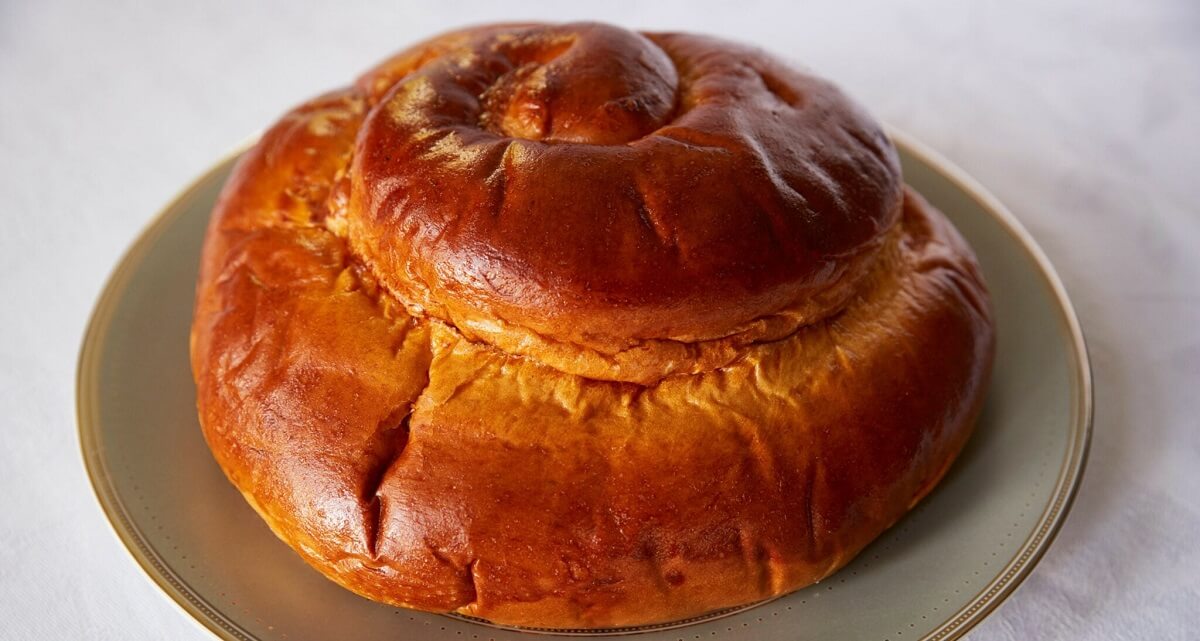
Round Challah for Rosh Hashanah

Every Shabbat and holiday meal traditionally starts with two loaves of bread, or most commonly challah, and the classic Rosh Hashanah custom is specifically round challah, which is often dipped in honey. The round shape resembles a head, and is thus used to represent the "head" - in Hebrew "rosh" - of the Jewish new year: Rosh Hashanah!

Ingredients:

  • 1⅛ cups lukewarm water

  • 1 Tbsp dry yeast

  • 4½ cups all-purpose flour

  • 2 eggs, plus 1 more for egg wash

  • ½ Tbsp salt

  • ¼ cup sugar

  • ¼ cup vegetable oil

  • Optional: poppy or sesame seeds for topping

Instructions:

  1. Dissolve yeast in lukewarm water with a bit of sugar. Let froth ~10 min.

  2. Mix eggs, oil, sugar, salt; add yeast mixture. Gradually add flour until you form a soft but manageable dough. Knead for ~10–15 min until smooth.

  3. Let dough rise in a greased bowl until doubled (~1.5–2 hours). Punch down.

  4. Shape into a round loaf: either by coiling braided strands into a ring or by shaping braided logs into a circle.

  5. Let rise again until puffed and nearly doubled. Brush with beaten egg, optionally sprinkle poppy or sesame seeds.

  6. Bake in preheated oven (about 350°F / 175-180°C) until golden brown, usually ~25-35 min depending on size.

btn
Challah boards and covers
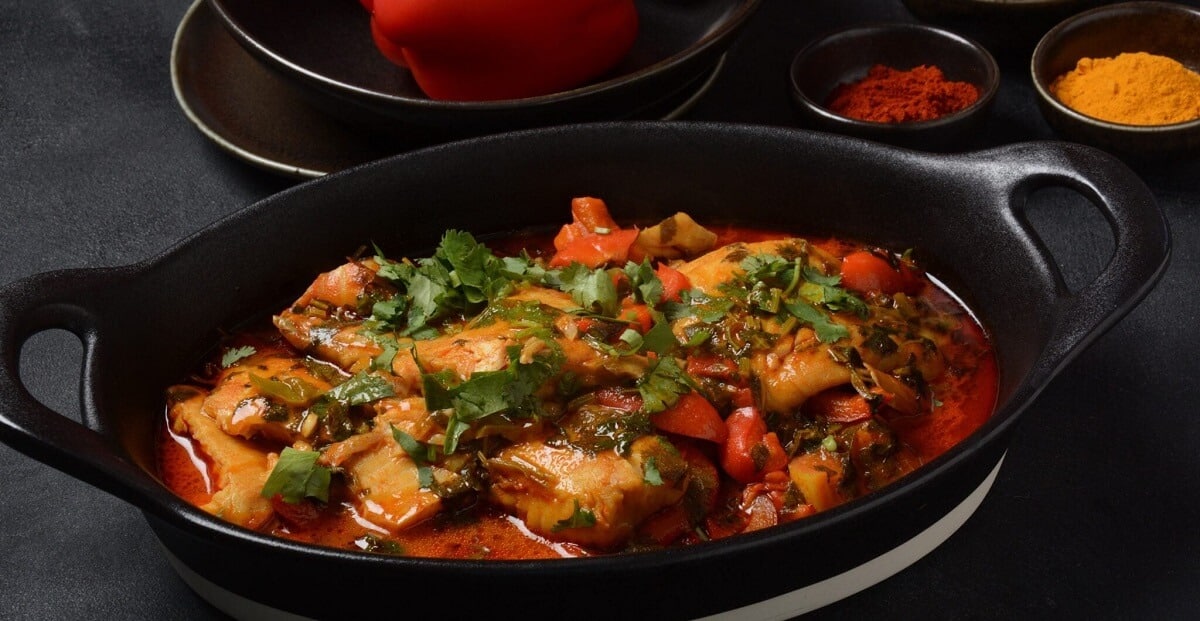
2. Moroccan-Style Fish

Moroccan Style Fish
Fish is a traditional Jewish food for Shabbat and holidays, but have an extra-strong association with Rosh Hashanah due to their special holiday symbolism: Because fish are plentiful in the sea, they represent plenty and abundance, which we wish for in the Jewish new year. Additionally, there is a Jewish belief that fish are immune to the "evil eye" due to being underwater, and thus symbolize luck and protection.

Ingredients:

  • White fish fillets (cod, halibut, or any firm white fish)

  • Olive oil

  • Tomatoes (fresh or canned), diced

  • Onion, chopped

  • Garlic, minced

  • Spices to taste: paprika, cumin, turmeric

  • Optional: red pepper, chili, or jalapeño

  • Lemon juice or lemon slices

  • Fresh herbs for garnish: parsley and/or cilantro

Instructions:

  1. Preheat a large skillet or pan, add olive oil, sauté onions and garlic until soft.

  2. Add spices (paprika, cumin, turmeric), stir. Add tomatoes and some water (or fish stock) to make a sauce; simmer until sauce is well blended. Add the optional pepper if using.

  3. Gently place fish fillets into sauce, spoon sauce over fish. Cover, cook on low-medium until fish is done (flakes easily), ~10-15 minutes depending on thickness.

  4. Sprinkle with fresh lemon juice and herbs before serving.

btn
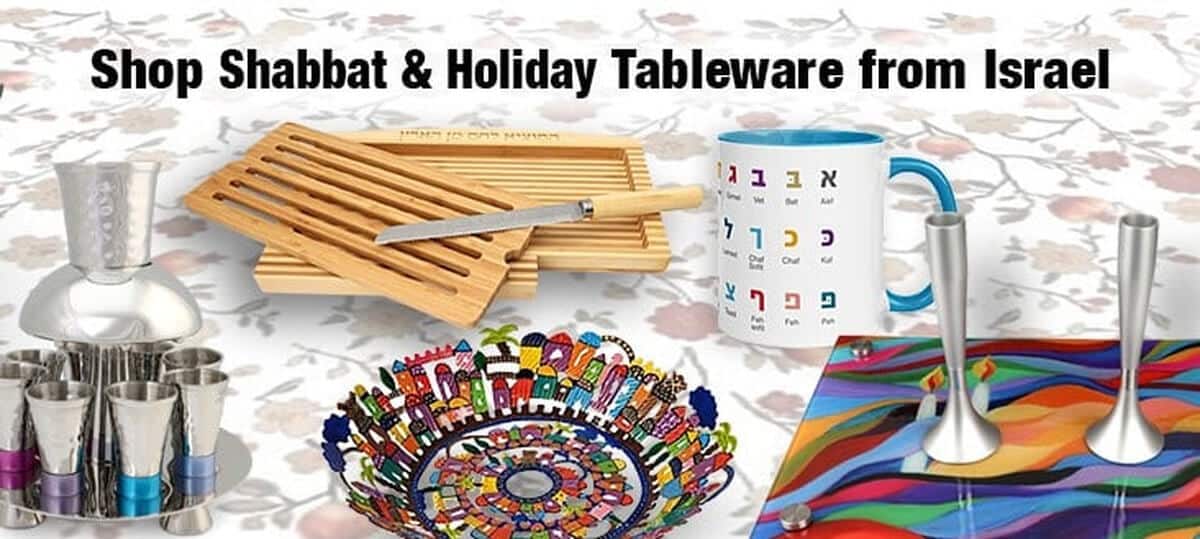
Holiday and Shabbat tableware
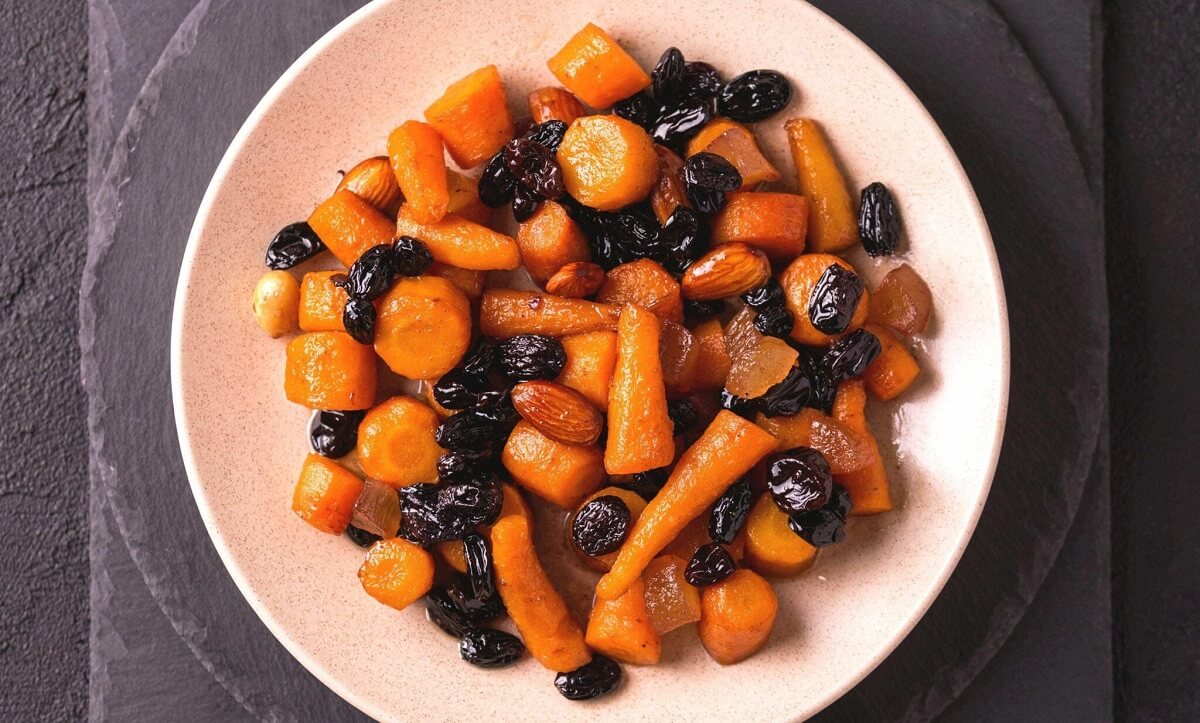
3. Carrot & Sweet Potato Tzimmes

tzimmes

Some traditional Rosh Hashanah dishes combine multiple symbolic foods, and this sweet tzimmes made with carrots, sweet potatoes, and honey does just that! "Tzimmes" is a Yiddish word referring to sweetened cooked vegetables, and this classic Ashkenazi dish is a favorite among North American Jews in particular.

Carrots are eaten by many Jewish communities on Rosh Hashanah for a lucky year ahead, due to a Hebrew pun that associates the word for carrot ("gezer") with tearing an evil decree, while the sweetness of the honey and sweet potatoes symbolizes a wish for a sweet new year. Moreover, if you choose to use date honey, you'll have the additional symbolism of dates as one of the biblical Seven Species of Israel and as a "siman," or good-luck holiday food, that's meant to protect us from our enemies in the coming year.

Ingredients:

  • ~2 lbs carrots, peeled & sliced

  • 2 sweet potatoes, peeled & cut into chunks

  • 1 cup prunes or mix with dried apricots

  • ½ cup golden raisins

  • 2-3 Tbsp honey or silan (date syrup)

  • Orange juice or other fruit juice for liquid base

  • Cinnamon; optionally a pinch of nutmeg or clove

  • Oil, salt, pepper

  • Optional brown sugar to taste

Instructions:

  1. Preheat oven to ~350°F (175°C). Grease a baking dish.

  2. In a bowl, combine carrots, sweet potatoes, prunes, apricots (if using) raisins. Toss with oil, honey, optional sugar, spices, a bit of salt & pepper.

  3. Add juice to moisten. Transfer to the greased baking dish; cover with foil.

  4. Bake ~1½ hours, stirring once or twice, until the vegetables are tender and the sauce has thickened. Remove cover for final ~15 min to glaze/brown slightly if desired.

btn
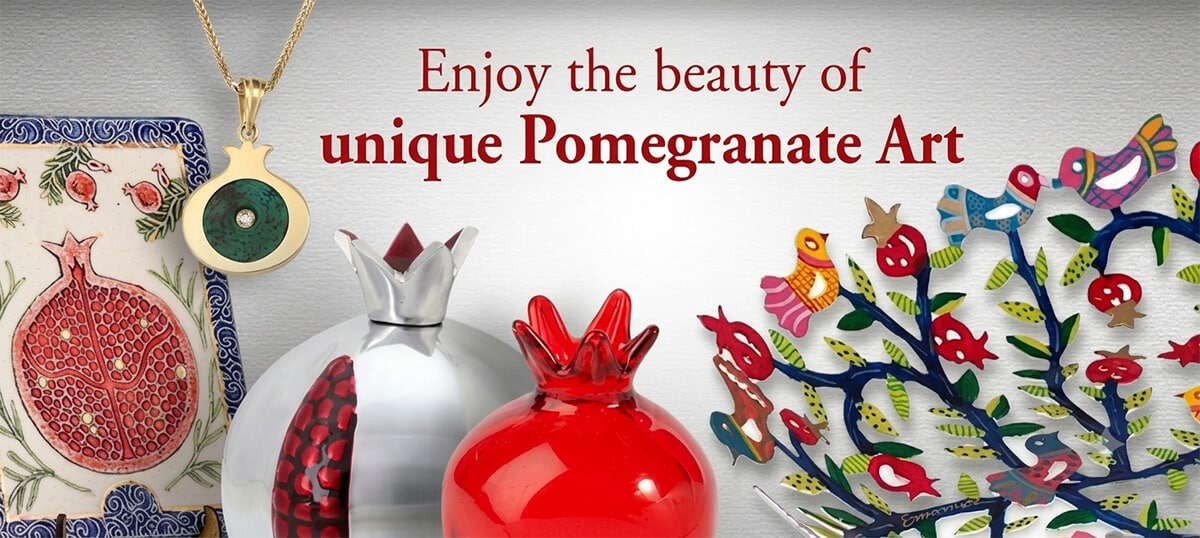
Pomegranate gifts from Israel
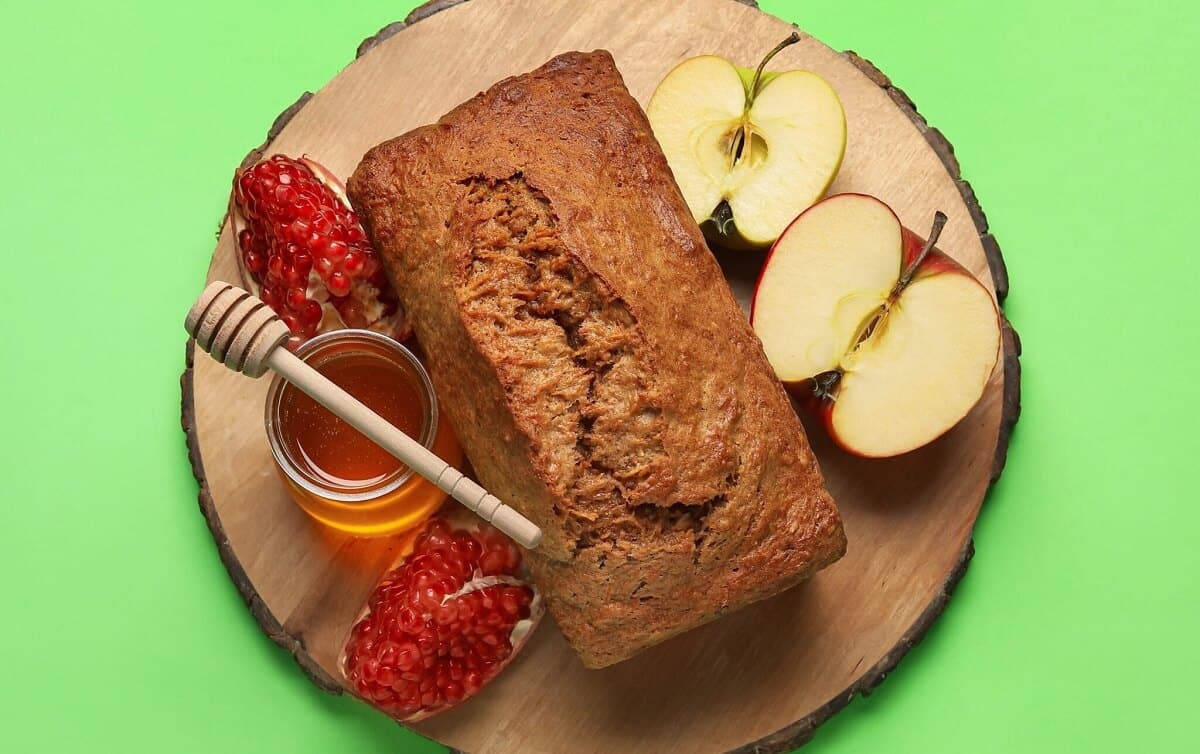
4. Rosh Hashanah Honey Cake with Apples

Rosh Hashanah Honey Cake with Apples

Honey features prominently in Rosh Hashanah menus, and honey cake is a popular and traditional way to end the meal with some extra sweetness for the coming year! This recipe also adds apples, which together with honey are a famous and beloved Rosh Hashanah combination, particularly in Ashkenazi Jewish communities.

Ingredients:

  • 2 ½ cups all-purpose flour

  • 1 ½ teaspoons baking powder

  • ½ teaspoon baking soda

  • 1 teaspoon ground cinnamon

  • ½ teaspoon ground cloves

  • ½ teaspoon ground allspice

  • ½ teaspoon salt

  • 1 cup honey

  • ½ cup white sugar

  • ½ cup brown sugar, packed

  • ½ cup vegetable oil (or melted coconut oil)

  • 3 large eggs

  • 1 teaspoon vanilla extract

  • ½ cup brewed coffee or strong black tea (cooled)

  • 2 medium apples, peeled and grated (about 1 cup)

  • Optional: ½ cup chopped walnuts or raisins

Instructions :

  • Preheat oven to 350°F (175°C). Grease and flour a 9x13-inch baking dish or two loaf pans.

  • In a medium bowl, whisk together flour, baking powder, baking soda, cinnamon, cloves, allspice, and salt.

  • In a large bowl, beat together honey, white sugar, brown sugar, and oil until smooth. Add eggs one at a time, then stir in vanilla.

  • Mix in the flour mixture in three parts, alternating with the coffee/tea. Stir until just combined.

  • Fold in the grated apples (and nuts/raisins if using).

  • Pour batter into prepared pan(s).

  • Bake 45–55 minutes, or until a toothpick inserted into the center comes out clean.

  • Cool before slicing. The flavor deepens after a day, making it even better if baked ahead!


Enjoy, and have a Happy Rosh Hashanah and a Sweet Jewish New Year!

Learn more about symbolic Rosh Hashanah foods here, and don't forget to shop tableware essentials, Israeli honey, and Rosh Hashanah gifts straight from Jerusalem at our store!

btn
Honey dishes for Rosh Hashanah

JWS POST YOU MAY LIKE

Round challah for Rosh Hashanah with honey
Round Challah for Rosh Hashanah with Honey
Rosh Hashanah recipes
What Are the Best Rosh Hashanah Recipes for a Sweet New Year?
When is Rosh Hashanah in 2026? In 2026, Rosh Hashanah begins at sundown on Friday, September 11, and ends at nightfall on Sunday, September 13. It falls on 1–2 Tishrei 5787 in the Hebrew calendar. Food plays a central role in Rosh Hashanah observance and tradition, with rich symbolism woven
A Jewish man blowing the Shofar (ram's horn), which is used to blow sounds on Rosh HaShana (the Jewish New Year) and Yom Kippur (day of Atonement)
Rosh Hashanah in the Bible: Origins of the Jewish New Year
Rosh Hashanah – the Jewish New Year, coming up September 11-12, 2026 – is one of the most important and widely celebrated holidays in Judaism. But while many are familiar with its modern customs, from apples dipped in honey to the sounding of the shofar, fewer know about its biblical
Rosh Hashanah fun for kids
Rosh Hashanah Activities for Kids: Fun & Meaningful Holiday Ideas
Looking for fun ways to keep kids busy this Rosh Hashanah? Discover hands-on crafts, apple-and-honey taste tests, family games and creative activities you can make with AI – all designed to bring more fun and meaning to the holiday.
Pomegranates for Rosh Hashanah
Why Do We Eat Pomegranates on Rosh Hashanah?
Pomegranates are a popular fruit to eat during Rosh Hashanah and a significant symbol in Judaism year-round, often gracing Judaica and Jewish jewelry. Since Rosh Hashanah 2026 begins on September 11 at sundown, now is the perfect time to learn more about the significance and symbolism of the pomegranate in Judaism and Rosh Hashanah!
A Jewish man blowing the Shofar (ram's horn), which is used to blow sounds on Rosh HaShana (the Jewish New Year) and Yom Kippur (day of Atonement)
From Reflection to Renewal: The Deep Meaning of Yom Kippur
Yom Kippur, the Day of Atonement, is the holiest day of the Jewish year: a time of reflection, forgiveness, and renewal. In 2026, it begins at sundown on Sunday, September 20, and lasts through the following evening. Marked by fasting, prayer, and other austere restrictions, Yom Kippur is often seen