
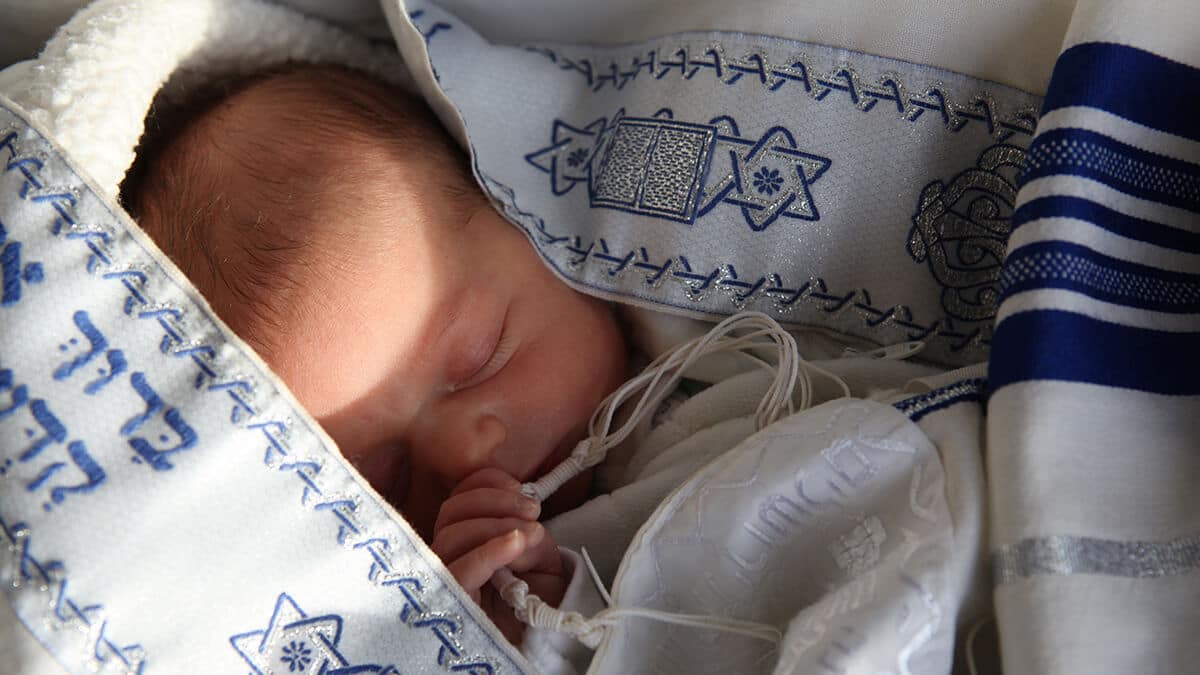
For thousands of years, Jewish families have gathered to welcome a newborn boy into one of the oldest and most enduring covenants in human history. The ceremony is called brit milah, often pronounced bris milah in Ashkenazi communities, and commonly shortened to bris.
At its heart, brit milah is much more than circumcision. It is a ceremony about covenant, identity, family, continuity, and the relationship between the Jewish people and God.
For a Jewish family, the arrival of a baby is already a moment of extraordinary joy. A brit milah adds another dimension to that joy: the child is being welcomed into a story that began with Abraham and has continued through countless generations of Jewish life.
1. What Does Brit Milah Mean? (Origin & Meaning)
2. Why Is a Brit Held on the Eighth Day?
3. Abraham and the Beginning of the Covenant
4. What Happens at a Brit Milah?
5. The Chair of Elijah
6. The Sandek: The Person Who Holds the Baby
7. The Circumcision Itself
8. Giving the Hebrew Name
9. Blessings for the Child
10. The Festive Meal
11. Meaningful Brit Milah Gifts
12. Brit Milah Across Jewish Communities
13. Brit Milah as a Link Between Generations
14. Frequently Asked Questions
1. What Does Brit Milah Mean?
The Hebrew words brit milah literally mean “covenant of circumcision.”
The word brit means covenant, while milah refers to circumcision. The expression therefore describes both the physical act and the covenant it represents.
The biblical foundation appears in Genesis 17, when God establishes a covenant with Abraham. Abraham is told that every male among his descendants is to be circumcised and that circumcision will serve as the “sign of the covenant” between God and Abraham and his descendants. The Torah specifically establishes the eighth day as the time for circumcision.
The symbolism is powerful. A covenant is a relationship involving commitment and responsibility. In brit milah, that relationship is represented by a permanent physical sign carried throughout one’s life.
The Torah describes the covenant as being established not merely with Abraham as an individual, but with his descendants “throughout the generations.” That idea of continuity is one reason brit milah has remained so central to Jewish identity.
2. Why Is a Brit Held on the Eighth Day?
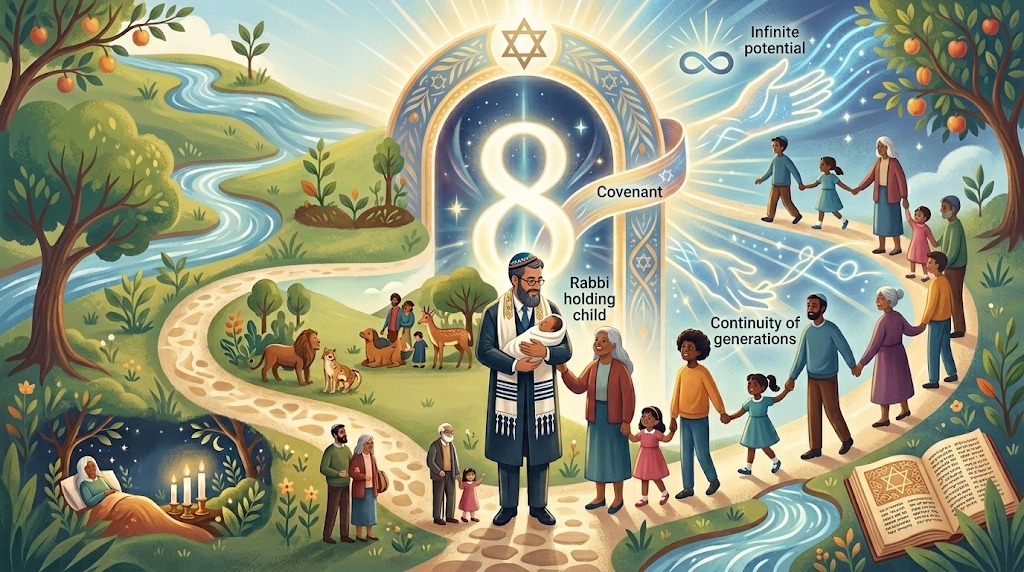
Traditionally, a healthy Jewish baby boy is circumcised on the eighth day after birth. The command appears in Genesis 17 and is repeated in Leviticus: “On the eighth day the flesh of his foreskin shall be circumcised.” The eighth day has therefore become an important part of the identity of the ceremony.
Jewish tradition also teaches that the eighth day is not simply a convenient date. The brit is supposed to take place at its appointed time whenever possible. In fact, the Mishnah teaches that when the eighth day falls on Shabbat, a brit that is being performed at its proper time takes precedence over the normal restrictions of Shabbat.
There are, however, important exceptions.
If a baby is ill, the brit is postponed until the child is healthy. The Mishnah explicitly states that a sick child is not circumcised until he has recovered. Other circumstances, such as uncertainty about the exact day of birth, can also affect the date. This is an important expression of a broader Jewish principle: the mitzvah is significant, but the wellbeing of the child comes first.
3. Abraham and the Beginning of the Covenant
The story of brit milah begins with Abraham. In Genesis 17, Abraham receives a new name and a new stage in his relationship with God. He is told that his descendants will become a great people and that the covenant will endure throughout generations.
Circumcision becomes the physical sign of that covenant. The biblical story is especially striking because Abraham himself is circumcised as an adult. His son Ishmael is also circumcised, and later Isaac is circumcised at eight days old.
Genesis tells us that Abraham circumcised Isaac “at eight days old, as God had commanded him.” From that point onward, the eighth-day brit becomes associated with the transmission of Jewish identity from one generation to the next.
The Talmud later gives extraordinary importance to this mitzvah. In Nedarim 32a, Rabbi Judah HaNasi teaches that Abraham was not described as tamim, often translated as “wholehearted” or “complete,” until after he performed circumcision.
The passage goes on to discuss the exceptional importance Jewish tradition attributes to the mitzvah of milah. The Talmud’s language is intentionally dramatic. It is expressing the idea that brit milah is not a minor ritual added to Jewish life. It represents something fundamental about the covenant itself.
4. What Happens at a Brit Milah?
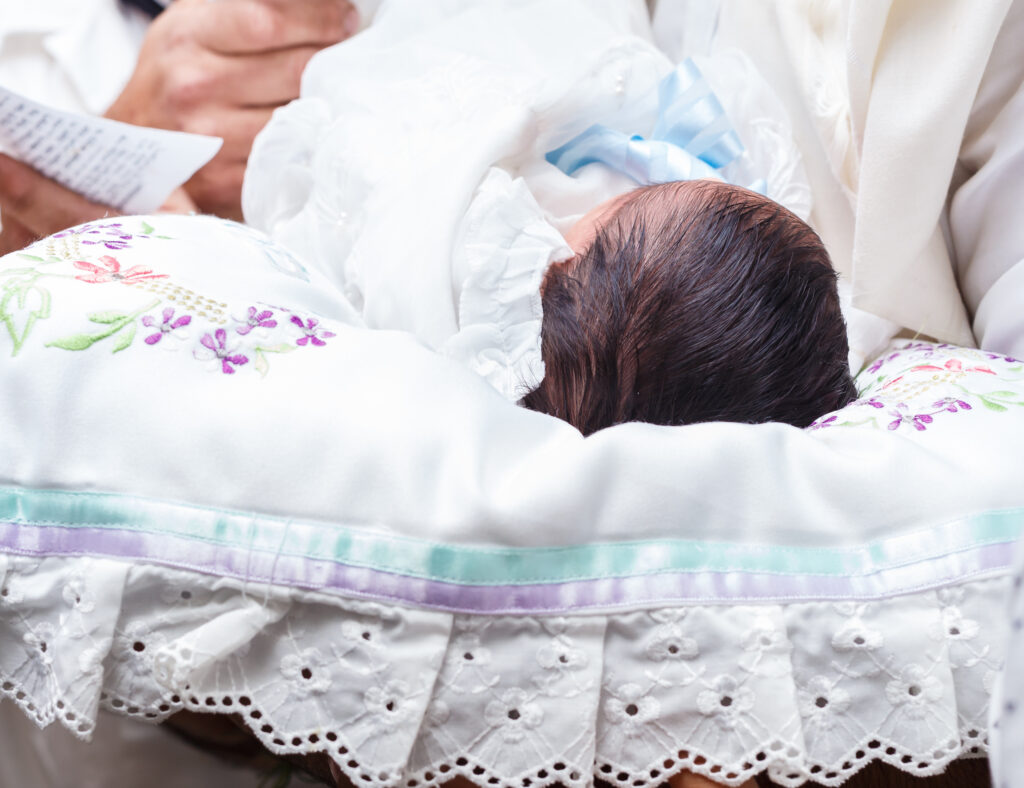
Although customs vary between Jewish communities and families, a traditional brit milah generally follows a recognizable structure.
The Mohel
The mohel is the person who performs the circumcision.
A mohel is specially trained in the laws, traditions, and practical aspects of brit milah. In contemporary Jewish communities, families often choose a mohel based on training, experience, community reputation, and, where applicable, medical credentials.
Some communities also have women who are specially trained to perform britot, commonly called mohelot.
The mohel does more than perform the physical procedure. He or she guides the family through the ceremony, explains what is happening, recites or leads the appropriate blessings, and helps coordinate the various honors.
Bringing the Baby Into the Room
In many traditional communities, family members are given the honor of bringing the baby into the room.
These individuals may be called kvatter and kvatterin, terms that refer to people who escort the infant to the ceremony. The exact customs differ from community to community.
The baby is then brought toward the place where the brit will take place.
The atmosphere can be surprisingly emotional. Grandparents, parents, siblings, relatives, and friends are gathered together, often with generations of family represented in the same room.
5. The Chair of Elijah
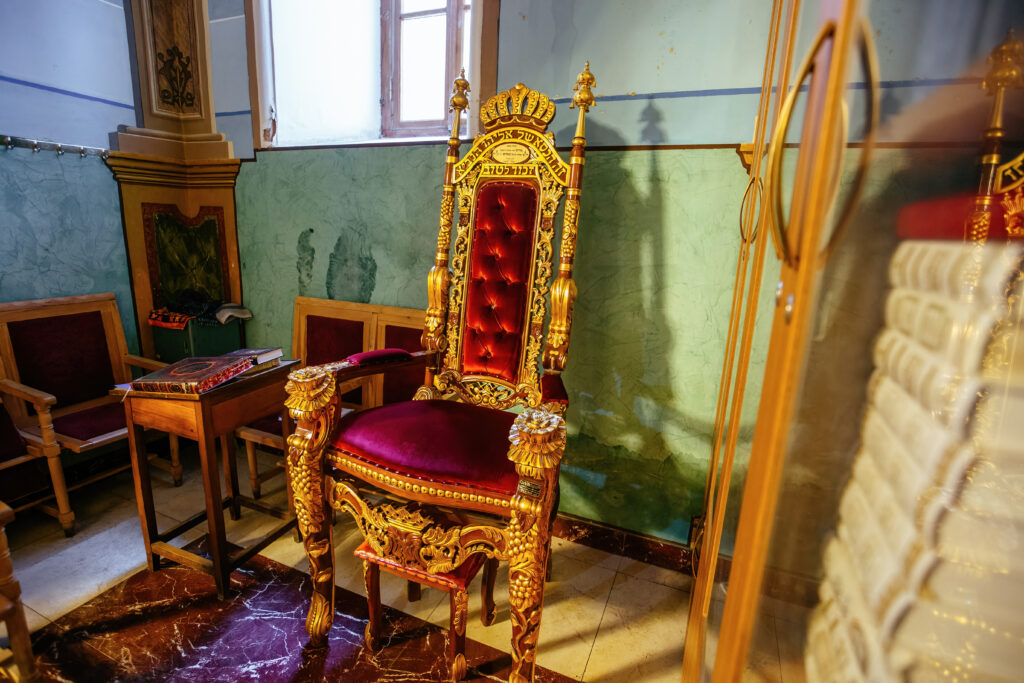
One of the most recognizable objects associated with a brit milah is the Chair of Elijah.
A special chair is traditionally designated for the prophet Elijah, known in Hebrew as Eliyahu HaNavi.
Why Elijah?
The tradition connects Elijah with the covenant because of a dramatic biblical episode in which Elijah speaks about his zeal for the covenant between God and Israel. Later Jewish tradition therefore associates Elijah with the brit milah and describes him as the “angel of the covenant.”
The chair is generally left empty or treated as a special seat before the baby is moved to the person who will hold him during the circumcision.
For many families, the chair represents something profound: the child entering a covenant that began long before he was born and that will, God willing, continue long after he is gone.
6. The Sandek: The Person Who Holds the Baby
The sandek is the person honored with holding the baby during the circumcision.
The role is often given to a grandfather or another respected family member, although there is no universal requirement that it be a particular person. In many families, the honor is especially meaningful because it creates a symbolic connection between generations.
The father traditionally has the primary responsibility for fulfilling the mitzvah, and the mohel acts as his representative in performing the circumcision.
This creates an interesting division of roles. The parents bring the child into the world and accept responsibility for his Jewish upbringing. The mohel performs the ritual. The sandek physically supports the baby during the ceremony. Family and community surround them.
The result is a ceremony that is simultaneously personal and communal.
7. The Circumcision Itself
The physical act of circumcision is the central ritual of brit milah.
The traditional procedure involves the removal of the foreskin according to Jewish law and custom. Classical sources describe the procedure in technical terms, including milah, periah, and, in traditional practice, metzitzah. The exact practices and medical safeguards surrounding the procedure vary by community and should be discussed directly with the mohel and the child’s healthcare professionals.
For a family preparing for a brit, the most important practical consideration is to work with an appropriately trained and experienced professional and to follow current medical guidance concerning the baby’s health and aftercare.
The ceremony itself is not intended to be a medical discussion. Its meaning is religious: the physical act creates the sign of the covenant described in Genesis.
8. Giving the Hebrew Name
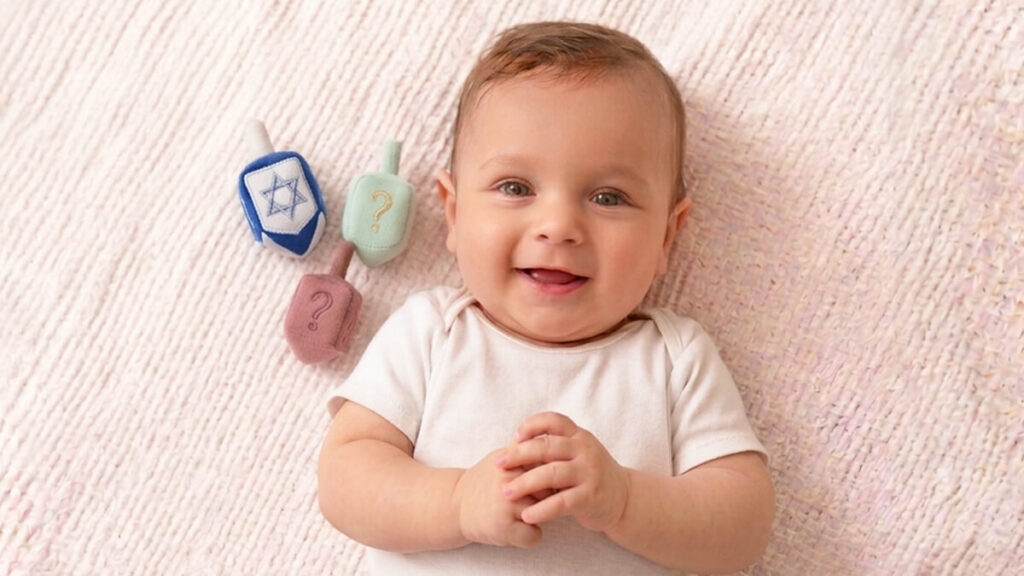
One of the most beautiful moments of many brit milah ceremonies is the announcement of the baby’s Hebrew name.
In traditional practice, the boy’s Hebrew name is formally announced during the brit.
A Jewish name can carry layers of meaning.
A child might be named after a biblical figure, a Jewish ancestor, a revered person, or someone whose qualities the family hopes the child will embody.
Naming practices also vary among Jewish communities. Ashkenazi Jews traditionally name children after deceased relatives, while Sephardic families have traditionally named children after living relatives as well.
The name therefore becomes more than an identifying label. It can become a link between generations.
When parents announce a name such as David ben Avraham v’Sarah, they are placing their child into a family and spiritual lineage.
9. Blessings for the Child
The brit includes blessings asking for the child’s future wellbeing.
One traditional blessing expresses the hope that the child will grow into a life of Torah, marriage, and good deeds. In Reform Jewish descriptions of the ceremony, these are expressed as hopes for a life enriched by Torah, a loving relationship symbolized by the wedding canopy, and good deeds.
These blessings reveal something important about Jewish thinking.
The ceremony is not simply celebrating the fact that a baby has been born. It is looking forward.
A newborn represents potential. The family is expressing a prayer for the person that this tiny child will eventually become.
10. The Festive Meal

Brit milah is traditionally followed by a seudat mitzvah, a celebratory meal connected to fulfilling a mitzvah.
The meal transforms the ceremony from something witnessed by a small group into a broader family celebration. Relatives and friends eat together, offer congratulations, share stories, and give blessings to the new parents.
Depending on the community, the meal might be an intimate gathering at home, a luncheon at a synagogue, or a larger celebration.
This is also one reason brit milah gifts have become such a meaningful part of Jewish family life.
A gift given at a brit can commemorate not only the baby’s birth but the child’s connection to generations of Jewish tradition.
11. Meaningful Brit Milah Gifts
For friends and relatives attending a brit, choosing a meaningful gift can sometimes be surprisingly difficult.
Traditional Jewish gifts can be particularly appropriate because they become part of the child’s home and family story.
Beautifully designed personalized artwork, Jewish blessing, sterling silver item, Kiddush cup, decorative mezuzah, or other piece of Judaica can serve as a lasting reminder of the occasion.
Personalization can make such a gift especially meaningful. Including the baby’s Hebrew name, date of birth, or Hebrew date can turn an attractive Jewish object into a family keepsake.
For grandparents, aunts and uncles, and close family friends, the goal is often not simply to give something valuable. It is to give something that will still have meaning years later.
A good brit milah gift can become the sort of object that a child eventually sees in the family home and asks, “Where did this come from?”
The answer then becomes part of his story.
12. Brit Milah Across Jewish Communities
Brit milah is observed across a remarkably broad spectrum of Jewish life, although the details can differ.
Orthodox communities generally follow traditional halachic requirements closely, including the eighth-day timing, traditional blessings, and customary roles such as the sandek and Chair of Elijah.
Conservative communities generally retain brit milah as an important Jewish lifecycle ritual while incorporating contemporary approaches to family participation and ceremony.
Reform communities also widely practice b’rit milah. Reform sources describe it as a ceremony welcoming a male child into the covenant of the Jewish people, while allowing families greater flexibility in how the ceremony is structured and who participates. Some families also choose to have a medically performed circumcision followed by a Jewish baby-naming ceremony.
There are also Jewish families who make different choices for personal, medical, or philosophical reasons.
The important point is that there is considerable diversity in contemporary Jewish practice, while the underlying themes of welcoming a child, Jewish identity, family, and covenant remain deeply recognizable.
13. Brit Milah as a Link Between Generations
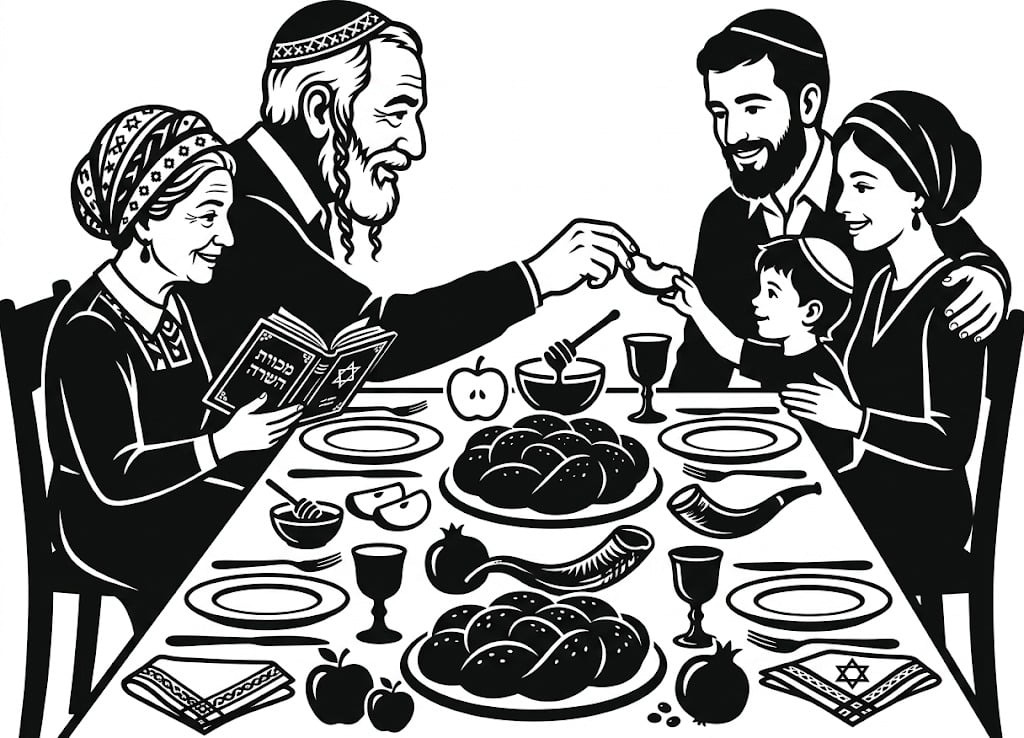
Perhaps the deepest meaning of brit milah is continuity.
Think about what happens at a typical ceremony.
A newborn is lying in the arms of his parents. His grandparents may be standing nearby. Someone holds him during the ceremony. His Hebrew name is announced. Ancient Hebrew words are recited. A blessing is made over wine. The family eats together.
And behind all of it is Abraham.
The same covenant described in Genesis is being remembered and renewed in another generation.
That is why brit milah has survived so many centuries of Jewish history. Jews have lived in Jerusalem, Babylon, Spain, Morocco, Poland, Germany, America, and countless other places. Languages changed. Clothing changed. Synagogues changed. Jewish communities developed different customs.
Yet the brit remained.
The Talmud’s emphasis on the extraordinary importance of circumcision reflects precisely this sense of permanence. The covenant is something that accompanies a person throughout life.
14. Frequently Asked Questions
What is a brit milah?.
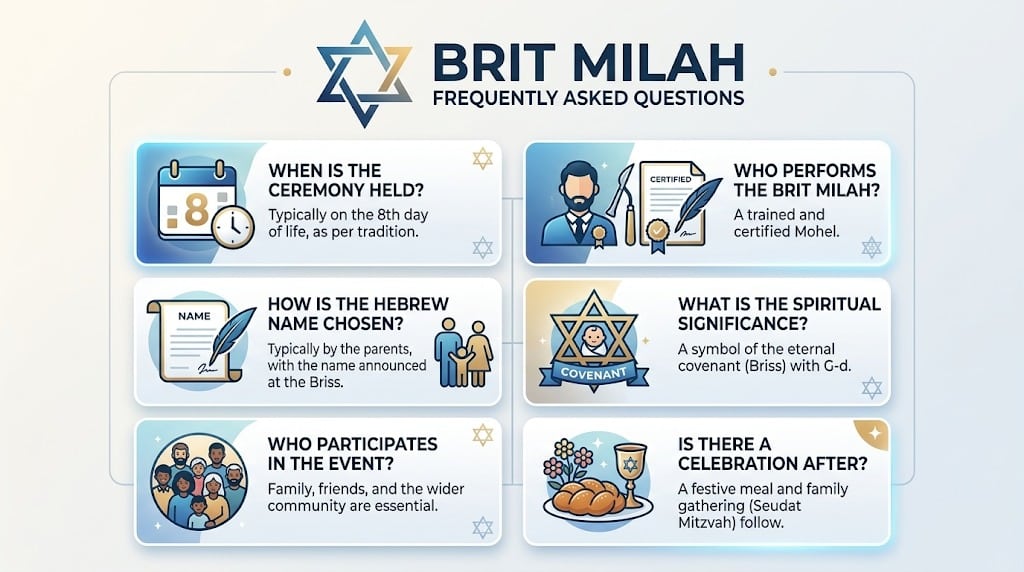
A brit milah, or bris, is the traditional Jewish covenant of circumcision. It is based primarily on God’s covenant with Abraham in Genesis 17 and is traditionally performed on the eighth day of a Jewish boy’s life. It is both a physical act and a religious ceremony welcoming the child into the covenant of Abraham.
Why is a brit milah performed on the eighth day?
Genesis 17 establishes the eighth day as the traditional time for circumcision, and Leviticus 12:3 repeats the command. Jewish law generally calls for a healthy baby to be circumcised on the eighth day. If the baby is ill or other circumstances create a halachic concern, the brit can be postponed.
What is a mohel?
A mohel is a person specially trained to perform brit milah according to Jewish tradition. Some contemporary Jewish communities also have trained female practitioners called mohelot. Families should choose an appropriately trained practitioner and discuss the baby’s health and aftercare with qualified professionals.
Who is the sandek?
The sandek is the person honored with holding the baby during the circumcision. The role is frequently given to a grandfather or another close family member. It is an important honor because the sandek physically supports the baby during one of the most significant moments of his entry into Jewish life.
Why is there a Chair of Elijah at a brit milah?
The Chair of Elijah is a traditional symbol associated with the prophet Elijah, who Jewish tradition connects with the covenant. A special chair is set aside for Elijah during the ceremony. Beyond its historical and religious associations, the chair can serve as a beautiful symbol of continuity, reminding the family that the newborn is entering a covenant that reaches back through countless generations.