

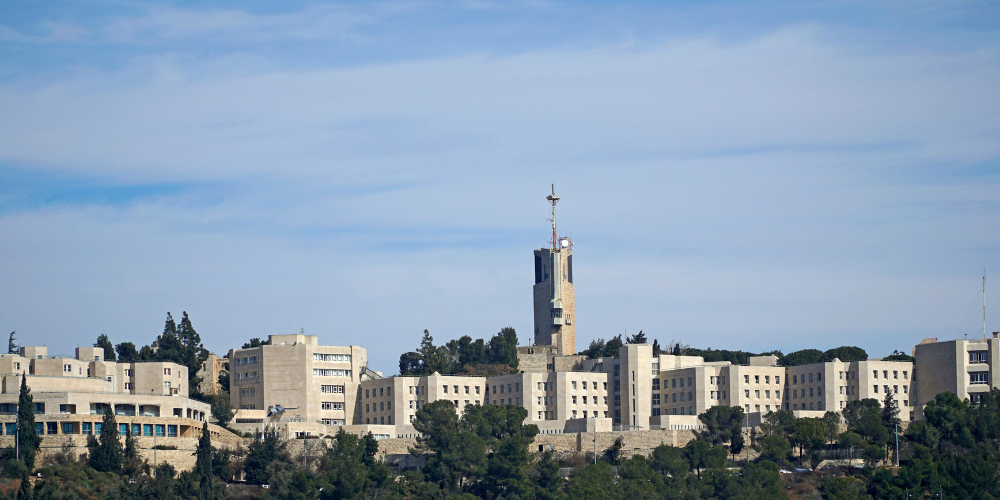
Hebrew University is Jerusalem’s oldest university, and the second university established in Israel. In 1918, the cornerstone was laid on Mount Scopus, the northern edge of Jerusalem, and in 1925, the Hebrew University officially opened its doors with an esteemed Board of Governors which included the genius minds of Albert Einstein, Sigmund Freud, and Chaim Weizmann. Hebrew University has become known as one of the top universities in the world due to its incredible research findings and the studies provided to the students, allowing many to become Nobel Prize winners, political leaders, top researchers, and authors.
Studies continued on the Mount Scopus campus, and by 1947, Hebrew University had about 1,000 students and an incredible variety of facilities, including the Faculty of Agriculture, Food and the Environment in the city of Rechovot. With the start of the War of Independence in 1948, studies were forced to come to a stop as Mount Scopus fell into Jordanian rule and the area had to be evacuated through a military operation after dozens of attacks and a blockade. Hebrew University believed that knowledge and learning were of the utmost importance and refused to stop teaching. The university used different buildings throughout Jerusalem to continue teaching, and in 1958, nearly ten years after the evacuation of Mount Scopus, Hebrew University opened its doors once again in Givat Ram in central Jerusalem. Hadassah Hospital had also suffered from the Mount Scopus attacks, and together with the university, a new medical campus was built in the south-west neighborhood of Ein Kerem.
By 1967, Hebrew University had over 12,000 students between the campuses in Givat Ram, Ein Kerem, and Rechovot. In June, the Six Day War broke out resulting in Jerusalem’s reunification and Hebrew University was able to rebuild their Mount Scopus campus. In 1981, Hebrew University proudly made Mount Scopus its main campus once again. As far as the Jerusalem campuses, Mount Scopus hosts the humanities and social science facilities, Givat Ram is home to the science and math facilities, and Ein Kerem still hosts the medical campus. The Hebrew University Rechovot campus expanded in the 1980s and also has Israel’s only veterinary school.
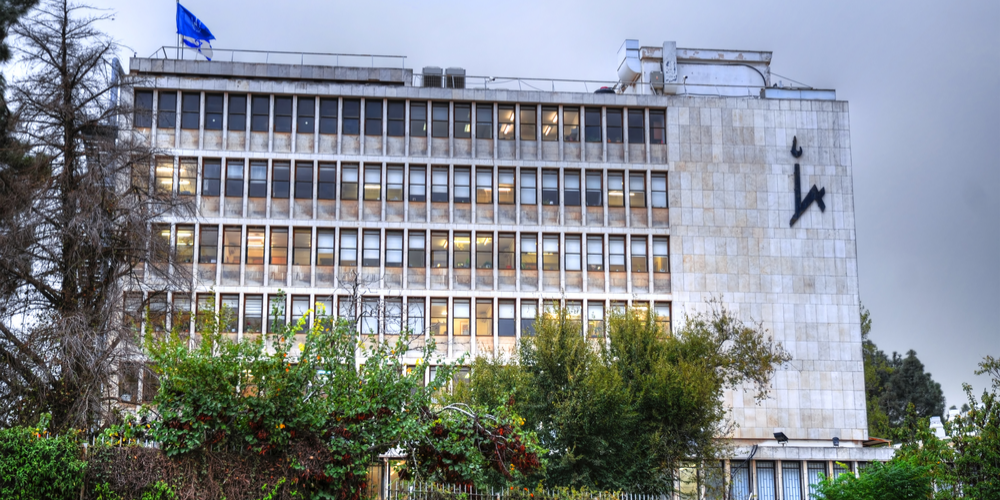
Students from around the world come to study at Hebrew University and according to the Times Higher Education, the university ranks 62nd for having the most employable graduates in the world. Aside from studies and research, Hebrew University also holds some incredible pieces of history, including 55,000 of Albert Einstein’s personal papers. Hebrew University has provided Israel with dozens of leaders and will continue to do so in its bright and shining future.