
Search
apple rosh hashanah

How-To Guide: Rosh Hashanah Seder

Yes, you read that right: seder! Although the word makes you think of Pesach (and perhaps of Tu B’Shvat), the Jewish New Year has a unique array of special customs, including a seder of its own.

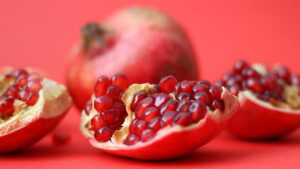
The Rosh Hashanah seder takes place only on the first night of the holiday – on the second night, it’s traditional to eat a new fruit (often a pomegranate) instead. Rather than matzah and wine, the Rosh Hashanah seder revolves around simanim – signs – for the year ahead. We eat a range of foodstuffs with different symbolic meanings; each has its own small prayer asking for it to be treated as a segulah – charm – for our futures.

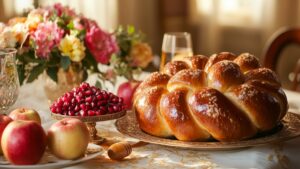
The night starts as normal: candles are lit, Kiddush is made, and fluffy round challot and crunchy apple are dipped into sweet honey. It’s traditional to use round challah loaves instead of the usual braids on Rosh Hashanah because the circular shape represents the never-ending circle of life. Honey replaces salt in our hope for a shana tova umetuka – a good and sweet year.

Click on the chart below for an explanation of the different foods used and the prayers said over them. Feel free to print it out to use at your Rosh Hashanah meal!


P.S. It doesn’t have to stop here! You can create your own simanim in any language to enjoy with your family. For example, eat a few raisins with a chunk of celery for a “raisin celery (raise in salary)”.

JWS POST YOU MAY LIKE

Round challah for Rosh Hashanah with honey
Round Challah for Rosh Hashanah with Honey
Rosh Hashanah recipes
What Are the Best Rosh Hashanah Recipes for a Sweet New Year?
When is Rosh Hashanah in 2026? In 2026, Rosh Hashanah begins at sundown on Friday, September 11, and ends at nightfall on Sunday, September 13. It falls on 1–2 Tishrei 5787 in the Hebrew calendar. Food plays a central role in Rosh Hashanah observance and tradition, with rich symbolism woven
A Jewish man blowing the Shofar (ram's horn), which is used to blow sounds on Rosh HaShana (the Jewish New Year) and Yom Kippur (day of Atonement)
Rosh Hashanah in the Bible: Origins of the Jewish New Year
Rosh Hashanah – the Jewish New Year, coming up September 11-12, 2026 – is one of the most important and widely celebrated holidays in Judaism. But while many are familiar with its modern customs, from apples dipped in honey to the sounding of the shofar, fewer know about its biblical
Rosh Hashanah fun for kids
Rosh Hashanah Activities for Kids: Fun & Meaningful Holiday Ideas
Looking for fun ways to keep kids busy this Rosh Hashanah? Discover hands-on crafts, apple-and-honey taste tests, family games and creative activities you can make with AI – all designed to bring more fun and meaning to the holiday.
Pomegranates for Rosh Hashanah
Why Do We Eat Pomegranates on Rosh Hashanah?
Pomegranates are a popular fruit to eat during Rosh Hashanah and a significant symbol in Judaism year-round, often gracing Judaica and Jewish jewelry. Since Rosh Hashanah 2026 begins on September 11 at sundown, now is the perfect time to learn more about the significance and symbolism of the pomegranate in Judaism and Rosh Hashanah!
A Jewish man blowing the Shofar (ram's horn), which is used to blow sounds on Rosh HaShana (the Jewish New Year) and Yom Kippur (day of Atonement)
From Reflection to Renewal: The Deep Meaning of Yom Kippur
Yom Kippur, the Day of Atonement, is the holiest day of the Jewish year: a time of reflection, forgiveness, and renewal. In 2026, it begins at sundown on Sunday, September 20, and lasts through the following evening. Marked by fasting, prayer, and other austere restrictions, Yom Kippur is often seen