
Search

If I Forget Thee: Remembering Jerusalem

What does it mean to remember Jerusalem in our happiest moments? From weddings to home-building, one ancient verse continues to shape Jewish life with longing, hope, and sacred memory.

How do you carry collective memory into your happiest moments?

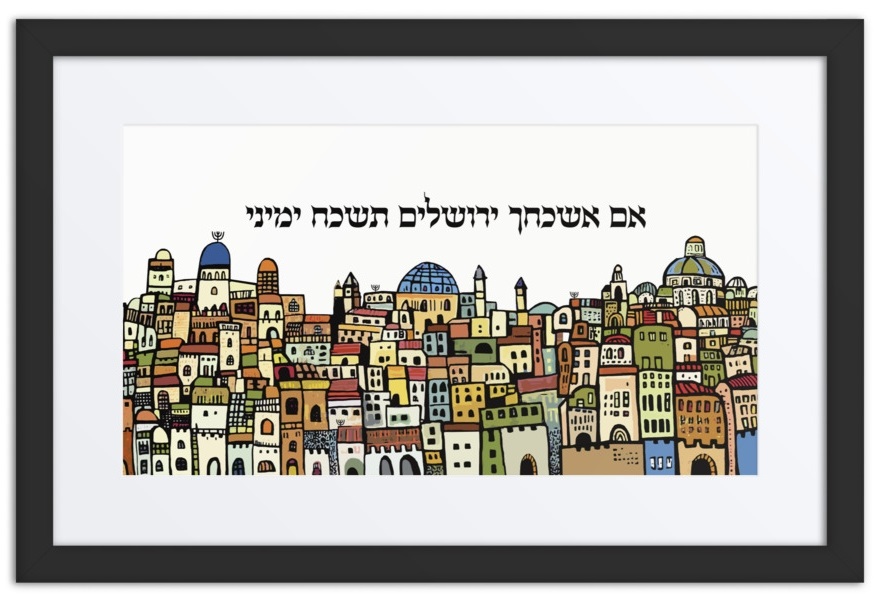
Few verses in Jewish tradition are as emotionally resonant, or as deeply embedded in daily life, as Im Eshkachech Yerushalayim (“If I forget thee, O Jerusalem”). Drawn from Psalm 137, this verse expresses more than nostalgia for a city. It captures the soul-deep yearning of a people in exile, and it continues to shape Jewish rituals and identity to this day.

But how exactly does a biblical lament become part of a wedding, or even the way we build our homes?

What Does “Im Eshkachech Yerushalayim” Mean, and Why is it So Central?

“If I forget you, O Jerusalem, let my right hand forget its skill. Let my tongue cling to the roof of my mouth if I do not remember you, if I do not place Jerusalem above my highest joy.”
Psalm 137:5–6

Written during the Babylonian exile, this psalm is a cry from the heart. The Jewish people, exiled from their homeland and mourning the destruction of the First Temple, made a vow: never to forget Jerusalem, not even in joy.

According to Midrash Tehillim, the “right hand” represents strength and productivity. Forgetting Jerusalem would mean a complete loss of direction and purpose. The Midrash goes so far as to say that Jerusalem is not just a place but a reflection of the Jewish soul, and to forget it is to forget oneself.

This verse isn’t only recited — it’s lived.

btn
Why Do We Break a Glass at a Wedding?

What does a broken glass have to do with a new beginning?

It’s a familiar moment: under the chuppah, just before the celebration bursts into music and dance, the groom suddenly crushes a glass beneath his foot. Cheers follow — but this gesture isn’t just a photo-op or quirky custom.

It’s rooted in Im Eshkachech Yerushalayim.

At traditional weddings, the groom recites this verse before the glass is broken. This act links the joy of marriage with the collective sorrow for the destruction of the Beit HaMikdash (Holy Temple). The Talmud (Berachot 30b) tells how the Sages would break vessels at joyful occasions to temper their celebration — a powerful reminder that even in joy, we remember loss.

The Midrash (Vayikra Rabbah 30:2) recounts how King David vowed not to enjoy comfort or music without remembering Jerusalem. The wedding glass is a modern echo of that sentiment. Joy doesn’t erase pain — it honors it.

btn
Leave a Wall in Your House Unfinished

Can the way you build your home express your deepest hopes?

Another lesser-known yet profound tradition is Zecher LeChurban, “a remembrance of the destruction.” When building or renovating a home, many Jews deliberately leave a small area — usually a square cubit, called an ama in Hebrew (about 18 inches) — unfinished. This is often done near the entrance so that it’s visible, quiet, and constant.

What's the source for this? According to the Talmud (Bava Batra 60b), after the Second Temple’s destruction, no Jewish home should feel fully complete.

This unfinished space is not a flaw. It’s a statement. It reminds the family, and any guest, that something in the world remains broken. It connects every personal space to a national longing.

Some families mark it with an unpainted patch. Others use a decorative plaque or artistic representation. However it’s done, the message is the same: this house stands, but the House of God does not — yet.


btn
What Can We Learn From These Traditions?

Jewish life is rich in joy, but it doesn’t ignore pain. Instead, it insists that we carry both. The broken glass and the unfinished wall are not interruptions; they are integrations. They teach us that memory is not a weight, but a thread that ties us to who we are.

As Rabbi Jonathan Sacks zt”l wrote, “There is no life without memory.” By weaving Im Eshkachech Yerushalayim into life-cycle events and home life, Judaism teaches that spiritual memory is not a separate ritual — it’s how we live.

btn

In every broken glass and bare wall, in every whispered psalm and quiet pause, Jews across the world continue to echo the words of Psalm 137: Im Eshkachech Yerushalayim. It isn’t just something we say, it’s something we do — in weddings, in homes, and in how we carry history.

Because forgetting Jerusalem would mean forgetting ourselves, and that — we will never do.

btn
Jerusalem-Gifts-CAT-M-2021

JWS POST YOU MAY LIKE

Round challah for Rosh Hashanah with honey
Round Challah for Rosh Hashanah with Honey
Rosh Hashanah recipes
What Are the Best Rosh Hashanah Recipes for a Sweet New Year?
When is Rosh Hashanah in 2026? In 2026, Rosh Hashanah begins at sundown on Friday, September 11, and ends at nightfall on Sunday, September 13. It falls on 1–2 Tishrei 5787 in the Hebrew calendar. Food plays a central role in Rosh Hashanah observance and tradition, with rich symbolism woven
A Jewish man blowing the Shofar (ram's horn), which is used to blow sounds on Rosh HaShana (the Jewish New Year) and Yom Kippur (day of Atonement)
Rosh Hashanah in the Bible: Origins of the Jewish New Year
Rosh Hashanah – the Jewish New Year, coming up September 11-12, 2026 – is one of the most important and widely celebrated holidays in Judaism. But while many are familiar with its modern customs, from apples dipped in honey to the sounding of the shofar, fewer know about its biblical
Rosh Hashanah fun for kids
Rosh Hashanah Activities for Kids: Fun & Meaningful Holiday Ideas
Looking for fun ways to keep kids busy this Rosh Hashanah? Discover hands-on crafts, apple-and-honey taste tests, family games and creative activities you can make with AI – all designed to bring more fun and meaning to the holiday.
Pomegranates for Rosh Hashanah
Why Do We Eat Pomegranates on Rosh Hashanah?
Pomegranates are a popular fruit to eat during Rosh Hashanah and a significant symbol in Judaism year-round, often gracing Judaica and Jewish jewelry. Since Rosh Hashanah 2026 begins on September 11 at sundown, now is the perfect time to learn more about the significance and symbolism of the pomegranate in Judaism and Rosh Hashanah!
A Jewish man blowing the Shofar (ram's horn), which is used to blow sounds on Rosh HaShana (the Jewish New Year) and Yom Kippur (day of Atonement)
From Reflection to Renewal: The Deep Meaning of Yom Kippur
Yom Kippur, the Day of Atonement, is the holiest day of the Jewish year: a time of reflection, forgiveness, and renewal. In 2026, it begins at sundown on Sunday, September 20, and lasts through the following evening. Marked by fasting, prayer, and other austere restrictions, Yom Kippur is often seen