

Search

Discover Stunning Historic Hanukkah Menorahs at the Israel Museum

The Israel Museum

Ranked among the world’s leading art and archaeology museums and one of Jerusalem’s top attractions for Jewish history, the Israel Museum holds countless artifacts that were found throughout Israel and the Jewish Diaspora. Its impressive collection spans the vast history and cultural heritage of both the Land of Israel and the Jewish People from all different time periods, from the Stone Age to the modern era.

Some of the most well-known Israel Museum exhibits are the Shrine of the Book, housing the famous Dead Sea Scrolls and other ancient Jewish manuscripts, as well as the historically accurate, scaled model of Jerusalem in the Second Temple period, which includes the Temple itself.

However, a lesser-known but just as awe-inspiring aspect of the Museum is its historical Hanukkah menorahs collection. See how Jews throughout centuries and around the world celebrated Hanukkah with the Israel Museum’s stunning collection of menorah artifacts!

Historical Menorahs

The Museum holds hundreds of Hanukkah menorahs in its collection, with only some of them available for public viewing. Some of the most interesting and surprising examples include:

1. An ancient Yemenite Hanukkah oil lamp carved into locally quarried stone – showing that Jews always used whatever fireproof materials were available to them!

2. A menorah made by Israeli artist Ludwig Yehuda Wolpert in the 1950s, using leftover scraps from ashtrays that he designed for Israel Railways train cars.

3. Hanukkah menorahs from early 20th-century Central and Eastern European Jewish communities, showing Zionist motifs such as Star of David designs – a bittersweet image of longing for the Land of Israel right before the Holocaust.
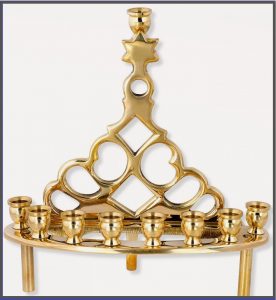
Early 20th century Zionist Polish menorah with Star of David

4. A Moroccan menorah made out of a repurposed sardine can – a not uncommon method in a country where Jews dominated tin can production.

5. Intricately decorated brass Hanukkah oil menorahs from 18th-century Poland, with a surprising distinctive feature – shabbat candlesticks prominently attached to the sides, which were used year-round.
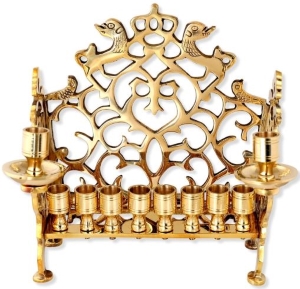
Example of an 18th-century Polish menorah along with shabbat candlesticks

6. Hanukkah lamps from repurposed brass artifacts, including Prussian army helmets!

7. European Hanukkah menorah designs from the 18th and 19th centuries that evoke benches, sofas, and chairs.
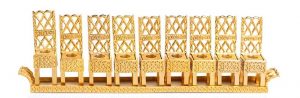
Hanukkah menorah chair design from 19th-century Poland

8. Medieval European oil menorahs that were made to be hung up on doors and walls.
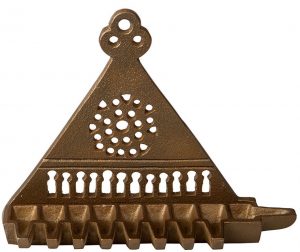
14th-century Southern European menorah intended to be hung up


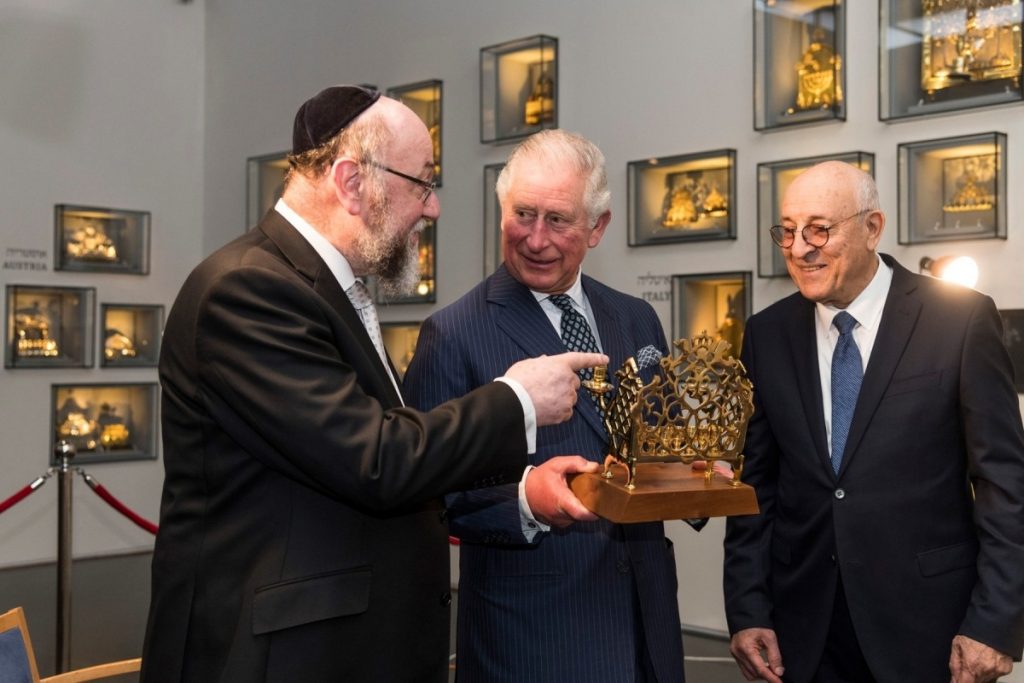
The Israel Museum presenting a replica of an 18th-century Polish brass menorah to Prince Charles of England

Replicas for Home Purchase

Another unique aspect of this impressive collection is that the Israel Museum also makes its own accurate replicas and adaptations of some of the historical menorahs – creating a very special way to connect with and learn about Jewish culture!

Some have been presented to dignitaries around the world, and others are available for sale and fully functional to use in your own Hanukkah celebrations. We have a number available for purchase in our store, and we’ve even compiled a detailed explainer of some of our favorites.

The Israel Museum’s adaptation of a 19th-century traditional Moroccan Hanukkah menorah, available for purchase and home use!

If you love connecting your Jewish rituals to our people’s rich history and heritage, a historical Hanukkah menorah is a truly special and magnificent piece of Judaica to own and cherish!

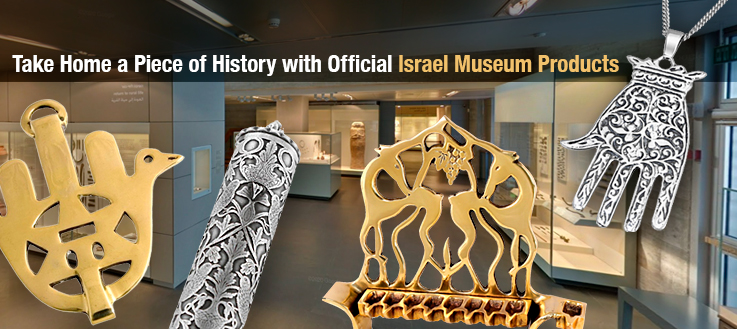
Want to learn more about the Israel Museum's treasures and how to take home your own piece of Jewish history? Check out our guide to all the amazing Israel Museum reproductions and adaptations in our store, from jewelry and Judaica, to Dead Sea Scrolls items, to books and artwork prints.

And shop all Israel Museum products here!

btn
Israel-Museum_category_mobile

JWS POST YOU MAY LIKE

Round challah for Rosh Hashanah with honey
Round Challah for Rosh Hashanah with Honey
Rosh Hashanah recipes
What Are the Best Rosh Hashanah Recipes for a Sweet New Year?
When is Rosh Hashanah in 2026? In 2026, Rosh Hashanah begins at sundown on Friday, September 11, and ends at nightfall on Sunday, September 13. It falls on 1–2 Tishrei 5787 in the Hebrew calendar. Food plays a central role in Rosh Hashanah observance and tradition, with rich symbolism woven
A Jewish man blowing the Shofar (ram's horn), which is used to blow sounds on Rosh HaShana (the Jewish New Year) and Yom Kippur (day of Atonement)
Rosh Hashanah in the Bible: Origins of the Jewish New Year
Rosh Hashanah – the Jewish New Year, coming up September 11-12, 2026 – is one of the most important and widely celebrated holidays in Judaism. But while many are familiar with its modern customs, from apples dipped in honey to the sounding of the shofar, fewer know about its biblical
Rosh Hashanah fun for kids
Rosh Hashanah Activities for Kids: Fun & Meaningful Holiday Ideas
Looking for fun ways to keep kids busy this Rosh Hashanah? Discover hands-on crafts, apple-and-honey taste tests, family games and creative activities you can make with AI – all designed to bring more fun and meaning to the holiday.
Pomegranates for Rosh Hashanah
Why Do We Eat Pomegranates on Rosh Hashanah?
Pomegranates are a popular fruit to eat during Rosh Hashanah and a significant symbol in Judaism year-round, often gracing Judaica and Jewish jewelry. Since Rosh Hashanah 2026 begins on September 11 at sundown, now is the perfect time to learn more about the significance and symbolism of the pomegranate in Judaism and Rosh Hashanah!
A Jewish man blowing the Shofar (ram's horn), which is used to blow sounds on Rosh HaShana (the Jewish New Year) and Yom Kippur (day of Atonement)
From Reflection to Renewal: The Deep Meaning of Yom Kippur
Yom Kippur, the Day of Atonement, is the holiest day of the Jewish year: a time of reflection, forgiveness, and renewal. In 2026, it begins at sundown on Sunday, September 20, and lasts through the following evening. Marked by fasting, prayer, and other austere restrictions, Yom Kippur is often seen