
Search

Israeli Summer Salads – Tabbouleh

Israel is well known for growing gorgeous vegetables. Situated between the Mediterranean’s generous seasonal rainfall and the Middle East’s scorching heat, it’s the perfect location for growing delicious fresh produce.

An abundance of beautiful vegetables means that Middle Easterners make some truly exceptional salads. Many of the region’s cultures have interchanged ideas through the years: that’s why Tunisian shakshuka and Iraqi sabich are Israeli mainstays. Tabbouleh is no different: originally Lebanese, it has become a staple on every Israeli table.

Contrary to popular belief, tabbouleh is not a grain salad. Although cracked wheat kernels – also known as bulgur – feature, they’re not the star here. Nope… humble parsley takes front and centre stage in this delicious Middle Eastern side.

Serve as a starter with soft pitta or crunchy lettuce leaves to scoop up morsels of this super salad. Or, use as a fresh side to accompany a light meal like grilled chicken.

To make a tabbouleh a Mideast mamma would be proud of, you need:

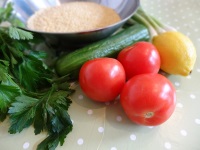
  • 1 cup of flat-leaf parsley, leaves only, washed and dried
  • A few sprigs of mint
  • 50g dried fine or extra tabbouleh (cracked wheat)
  • 1 cucumber (best type is English/hothouse – thin skinned with few seeds)
  • 1 cup ripe cherry tomatoes
  • 1 lemon
  • A few tablespoons of good-quality olive oil
  • Salt and freshly ground black pepper
  • (Finely sliced spring onions to taste – optional)


  • Pour boiling water over the tabbouleh; cover tightly and allow to sit
  • Finely shred, then finely chop, the parsley and mint
  • Finely dice cucumber (remove seeds if necessary)
  • Quarter the cherry tomatoes lengthways, then in half across
  • Time to combine! Gently mix all the leaves, vegetables, and wheat together. Dress generously with freshly squeezed lemon juice, olive oil, and seasoning. Enjoy!

JWS POST YOU MAY LIKE

Round challah for Rosh Hashanah with honey
Round Challah for Rosh Hashanah with Honey
Rosh Hashanah recipes
What Are the Best Rosh Hashanah Recipes for a Sweet New Year?
When is Rosh Hashanah in 2026? In 2026, Rosh Hashanah begins at sundown on Friday, September 11, and ends at nightfall on Sunday, September 13. It falls on 1–2 Tishrei 5787 in the Hebrew calendar. Food plays a central role in Rosh Hashanah observance and tradition, with rich symbolism woven
A Jewish man blowing the Shofar (ram's horn), which is used to blow sounds on Rosh HaShana (the Jewish New Year) and Yom Kippur (day of Atonement)
Rosh Hashanah in the Bible: Origins of the Jewish New Year
Rosh Hashanah – the Jewish New Year, coming up September 11-12, 2026 – is one of the most important and widely celebrated holidays in Judaism. But while many are familiar with its modern customs, from apples dipped in honey to the sounding of the shofar, fewer know about its biblical
Rosh Hashanah fun for kids
Rosh Hashanah Activities for Kids: Fun & Meaningful Holiday Ideas
Looking for fun ways to keep kids busy this Rosh Hashanah? Discover hands-on crafts, apple-and-honey taste tests, family games and creative activities you can make with AI – all designed to bring more fun and meaning to the holiday.
Pomegranates for Rosh Hashanah
Why Do We Eat Pomegranates on Rosh Hashanah?
Pomegranates are a popular fruit to eat during Rosh Hashanah and a significant symbol in Judaism year-round, often gracing Judaica and Jewish jewelry. Since Rosh Hashanah 2026 begins on September 11 at sundown, now is the perfect time to learn more about the significance and symbolism of the pomegranate in Judaism and Rosh Hashanah!
A Jewish man blowing the Shofar (ram's horn), which is used to blow sounds on Rosh HaShana (the Jewish New Year) and Yom Kippur (day of Atonement)
From Reflection to Renewal: The Deep Meaning of Yom Kippur
Yom Kippur, the Day of Atonement, is the holiest day of the Jewish year: a time of reflection, forgiveness, and renewal. In 2026, it begins at sundown on Sunday, September 20, and lasts through the following evening. Marked by fasting, prayer, and other austere restrictions, Yom Kippur is often seen