


Everyone knows that Israel’s national anthem is Hatikva, and it is obvious that the national colors are blue and white, but do you know about the rest of Israel’s national symbols? Some of the rest of Israel’s symbols might be obvious, while others might make you think, but all have some kind of origin in this tiny country. Many of these national symbols were chosen by Israelis in a Ynet (one of Israel’s popular online newspapers) poll in 2007. Take a look at what else Israel’s uses to identify with.
National Tree: Olive
The olive tree is an obvious choice as to why it is Israel’s national tree. Some of the oldest olive trees in the world grow in Jerusalem! The olive is considered one of the Seven Species native to Israel, a list that was created during Biblical times. An olive branch is a symbol of peace, something Israel strongly identifies with.
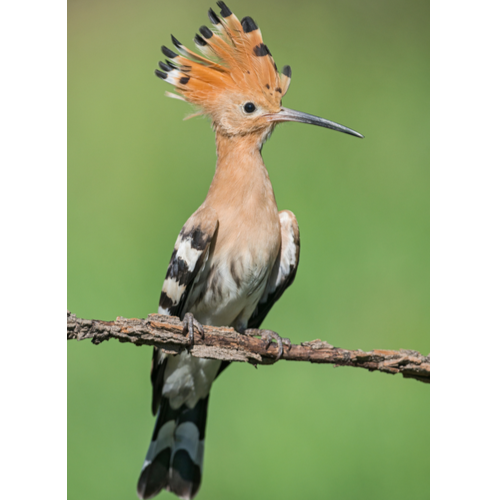
National Bird: Hoopoe
This little orange bird with a crown on its head became Israel’s national bird in 2008 in honor of celebrating 60 years of Israeli independence. The president at the time, Shimon Peres, announced the bird’s new position, which again, was chosen by the people of Israel. These birds have been in Israel for thousands of years and are even mentioned in Deuteronomy.
National Dog: Canaan Dog
Although it seems a little odd to have a national dog, Israel’s national dog is the Canaan breed. To give some backstory, before Israel was called Israel, Palestine, and Judea, it was called Canaan, as early as the times of Abraham, which is actually what it is called in the Bible. The oldest Canaan dog was found in an ancient dog cemetery in Ashkelon, where most of the skeletons found, match those of the modern day Canaan dog.
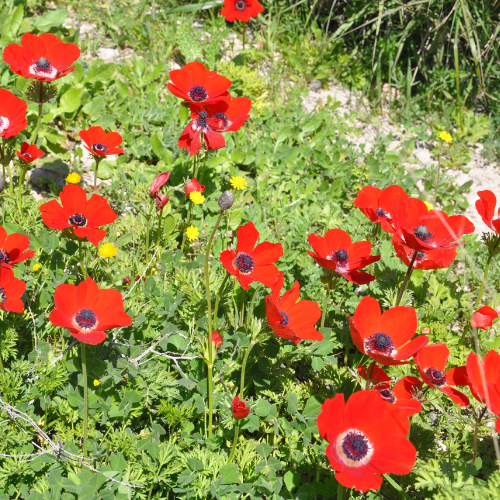
National Flower: Anemone coronaria
Israel’s national flower actually changed in 2013 from the cyclamen to the incredibly popular Anemone coronaria, also known as poppy anemone. During the winter in southern Israel, Eshkol area of the Negev desert turns red with anemones, bringing a lot of tourism to Israel’s south and it even started a festival called Darom Adom– Red South.
National Snake: Palestine Viper
A rather new addition to Israel’s national symbols, the Palestine Viper was made Israel’s national snake in 2018. This poisonous snake, whose venom can be combated with a serum made by Israel, lives throughout the country, but was originally found in Haifa. There is even documentation of the Palestine Viper during the British Mandate.
National Food: Falafel
While Israel does not technically have a national food, many consider the favorite falafel to be it. Sold on nearly every street corner, and probably also on the street itself, this delicious meal in a pita can’t be beat. The basic falafel consist of hummus, Israeli salad, tehini, and of course falafel balls, which is ground chickpeas mixed with different herbs and then deep-fried, stuffed into a pita. While you can make it at home, nothing beats a fresh Israeli falafel.

Israel’s list of national symbols enhance’s Israel’s pride, and allows the citizens to feel as one, since they are the ones choosing most of Israel’s new and modern national symbols. While things like the flag and anthem will never change, who knows what polls are to come and what might be. For now, these are Israel’s national symbols and they will continue to represent our diverse nation.