
No two weddings — let alone Jewish weddings — are alike. Depending on how religiously observant the couple and their families are, as well as their community’s minhagim (customs), proper etiquette and festivities at Jewish weddings vary wildly.
However, there are a few traditions that just about every Jewish wedding will have.
So as wedding season approaches, here’s your 101 guide to attending Jewish weddings as a guest!
What To Know Before The Wedding
The two biggest questions that you will have before attending a Jewish wedding are probably “What do I wear?!” and “What do I bring?!” Like we mentioned earlier, the answers to both of these questions will depend on the customs of the couple and their communities.
As with any wedding, you should ask yourself a few questions: is it indoors or outdoors? What time of year will it be? Did the invite offer any tips on what to wear? What will be comfortable yet appropriate? In more traditional communities, women often cover their knees and upper arms, and all men will wear a kippah (yarmulke) for the ceremony and party. If the bride or groom are Israeli, the dress code might be more relaxed than a typical wedding. If you aren’t sure what to wear, it never hurts to ask the couple or mutual friends.
Gift-giving should be more straightforward. Many couples will have a registry and will provide links well before the wedding. If you want to think outside the box and give the couple something thoughtful and meaningful, Judaica and Jewish ritual items make great wedding gifts!
The ceremony celebrates the couple’s love and their new journey to build a Jewish home together, and by picking out a Seder plate, Shabbat candlesticks, or a Mezuzah that the newlyweds can cherish for the rest of their lives together, you get to play a part in that journey.
Unsure of which Judaica items make the best wedding gifts? We rounded up our favorites in this Jewish Wedding Gift Guide!
Wedding Day: Before the Ceremony
A few things happen on the day of the wedding. Before the ceremony, there are three main festivities: the kabbalat panim, the signing of the Ketubah, and the bedeken. Many Jewish wedding invitations will list two start times — the first one is for the kabbalat panim, and the second one is for the actual ceremony.
Kabbalat Panim: This refers to the time during the wedding day when the bride and groom will sit in chairs (sometimes separately, sometimes together) and will greet their guests and offer blessings and thanks. As a guest, it is traditional for you to offer your own well wishes for the couple and their life ahead.
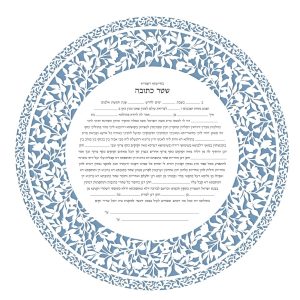
The Ketubah: The Ketubah is the Jewish wedding document. At some weddings, the signing of the Ketubah is quick. At others, it can be a large event. The Ketubah is signed before the ceremony, but sometimes will be read aloud later on.
Bedeken: Bedeken is a Yiddish word that refers to the groom covering the bride’s face with her veil. This is a common part of Jewish weddings, especially more traditional ones, as there are some communities that hold that the ritual is required by Jewish law.
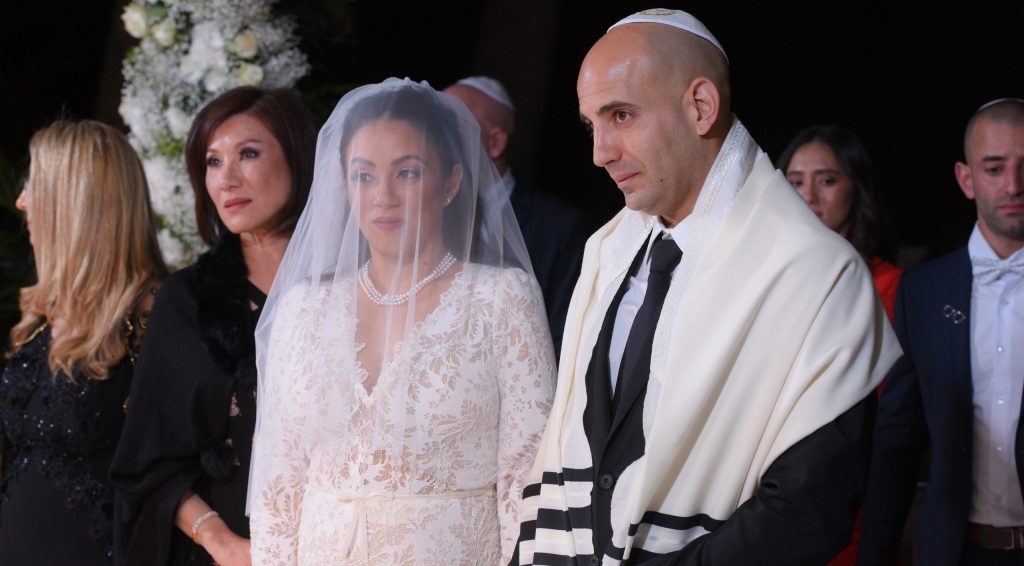
Mazal Tov! – The Ceremony
The ceremony is sometimes colloquially called the chuppah. The “chuppah” literally refers to the wedding canopy that the bride and groom will stand under during the ceremony, but if someone says “It’s time for the chuppah!” that means you should make your way to your seat for the ceremony.

There are several parts of a Jewish wedding ceremony, which we have outlined below. Some weddings — especially ones with non-Jewish guests — will include booklets or a pamphlet that explains each part of the ceremony, as well as any meaningful adjustments that the couple has made to fit their own traditions, values, and cultures. If there isn’t a booklet to guide you through the ceremony, just sit back and relax. As a guest, you are simply expected to watch, so there is nothing major to keep in mind — until the very end, when everyone yells “Mazal tov!”
- The Walk to the Chuppah: The bride and groom are escorted to the chuppah by their respective parents. Some parents stay with the couple under the chuppah, while others will go sit. The officiant, often a rabbi or cantor, will also be under the chuppah with the couple.
- Circling the Groom: At traditional Jewish weddings, especially in Ashkenazi tradition, the bride will approach the groom and circle him seven times. There are a variety of reasons given as to how this ritual came about, including the seven days of the week, the word “bride” appearing in the Song of Songs seven times, and the Jewish people
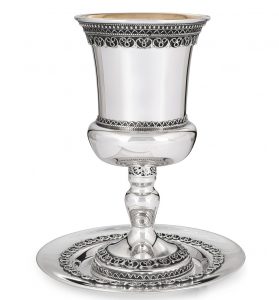
Traditional Kiddush cup circling the walls of Jericho seven times. At egalitarian weddings, the bride and groom may circle each other three times, and then circle each other together once, adding up to seven.
- Kiddush: The next part of the ceremony is reciting Kiddush, the blessing over wine. The bride and groom both take a sip of wine from the Kiddush cup.
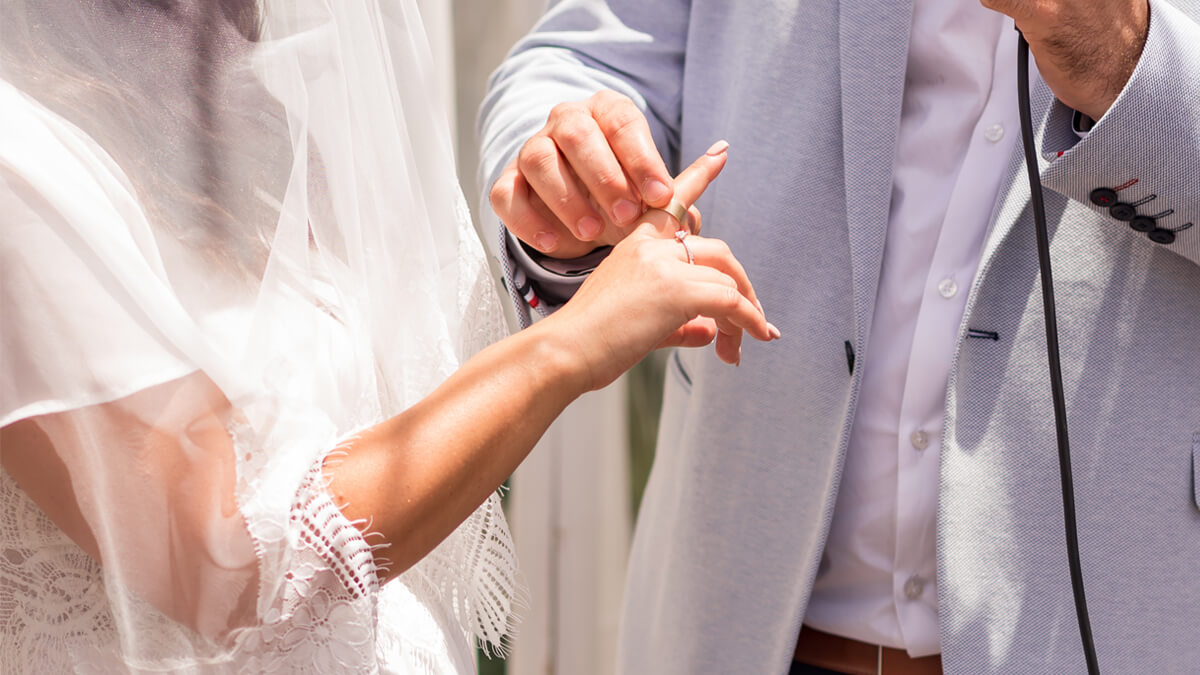
- The Rings: The groom recites an ancient Aramaic phrase that translates to “Behold, by this ring you are consecrated to me as my wife according to the laws of Moses and Israel” and places a wedding ring on her index finger, which traditional Jewish sources believed led straight to the heart. At an egalitarian wedding, the bride will then recite something similar and put a ring on the groom’s finger.
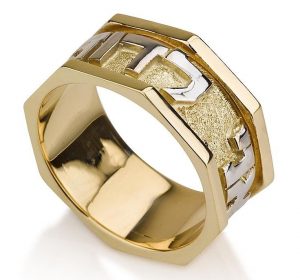
Jewish wedding ring - The Ketubah Reading: If the couple chooses to have their Ketubah read aloud during the wedding, it will happen after the ring-giving.
- Nissuin: Nissuin is the second part of the ceremony. It begins with the reciting of the Sheva Brachot (Seven Blessings) over a second cup of wine. The seven blessings may be given by different family members and friends, but don’t worry! If you’re asked to do it, you’ll be given advance notice.
- Breaking of the Glass: The breaking of the glass is one of the most widely known Jewish wedding traditions. Like many rituals, the exact meaning and origin are disputed. The most common explanation is that it represents the destruction of the Temple in Jerusalem. Others say it represents the fragility of relationships or that it is a reminder that all marriages include sorrow and pain alongside joy. Either the groom will break the glass, or the couple will do it together. As soon as it breaks, many yell “Mazal tov!” which means “Congrats!” in Hebrew, though at traditional weddings this may be done earlier so the reminder of sorrow is not mixed with cheer.

After the Ceremony
Immediately after the ceremony, in many Jewish weddings the couple will go into a Yichud room, and be alone for some amount of time. Many couples choose to use this time to eat or just to be alone with each other during their first moments as a married couple. Some couples will also take their wedding photos at this time. Don’t fret — as a guest, you will definitely be directed on where to go.
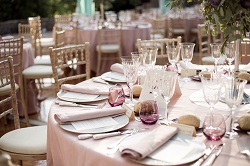
This “in between” time is most commonly spent socializing, getting drinks, and finding your seat. Many weddings will also have spreads or appetizers available if not a full meal during this time until the couple return and the party really gets going.
Once the couple rejoins everyone, the reception begins with Hamotzi, the blessing recited over bread. Then, the meal is served. After the meal, the party occurs. In more traditional communities, men and women will dance separately. If you’re unsure, you can always ask other guests (or the bride and groom before the big day!)

Jewish Wedding Glossary
Throughout the wedding planning process and the big day itself, there are several Yiddish and Hebrew phrases that you may hear or see used. Here are the most common ones and what they mean:
- Aufruf – Yiddish. The ceremony that occurs on the Saturday before the wedding at synagogue where the groom is “called up” to the Torah.
- Ashkenazi – Hebrew. This term refers to Jews of European descent and often comes up at weddings, as Ashkenazi customs differ greatly from Sephardi and Mizrahi customs.
- Bentcher – Yiddish. A small book that guests may receive at the reception which will include all of the prayers, blessings, and songs that are recited and sung. (Also known as a birkon in Hebrew.)
- Chatan – Hebrew. The groom.
- Chossen – Yiddish. The groom.
- Hava Nagila – Hebrew. A Jewish song traditionally sung at weddings.
- Hora – Yiddish/Hebrew. A traditional dance that occurs during an Ashkenazi Jewish wedding.
- Kallah – Hebrew. The bride.
- Kiddushin – Hebrew. The first part of the ceremony where Kiddush is recited and the ring(s) are given.
- Kippah/Kippot – Hebrew. Kippah is singular, kippot is plural. A kippah is the traditional Jewish headcovering worn by men. In Yiddish, it is known as a yarmulke (pronounced ya-meh-kuh).
- Mizrahi – Hebrew. Jews of Middle Eastern origin.
- Sephardi – Hebrew. Jews of Spanish origin.
- Seudah Mitzvah – Hebrew. The wedding meal.
- Simcha – Hebrew. Simcha literally means joy, but can also refer to the wedding or any celebratory Jewish ritual.
- Tenaim – Hebrew. The engagement contract.
- Tisch – Yiddish. Literally, tisch means table, but it refers to a ritual where men (or women, at an egalitarian wedding) sit around a table with the groom at the center. Toasts are made, jokes are told, songs are sung, and a lot of alcohol is served.