
Friday night dinner. What comes to mind? Hot chicken soup, maybe some gefilte fish, and of course, hot fluffy challah. Unlike the other foods mentioned, challah is actually a religious ritual, just as Kiddush is. This fluffy braided bread has its place at the Shabbat table, as Motzi– breaking bread- is done after Kiddush and washing hands. Challah, challah boards, and challah covers are actually reminiscent to when the Jews were wandering in the desert for 40 years, making it one of the oldest Jewish traditions out there.
Challah
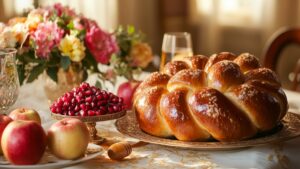
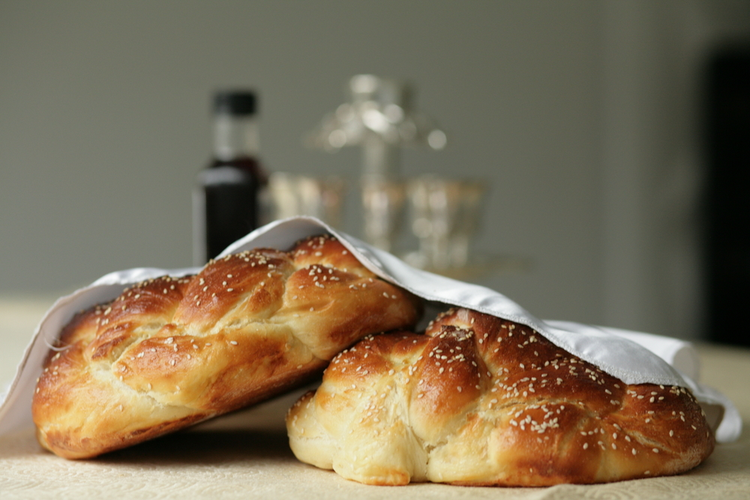
Every Shabbat table has two loaves of bread, and while traditionally it is braided bread with sesame seeds on top, it can really be any two loaves of whole bread. When the Jews were wandering in the desert for 40 years, manna fell from the sky as sustenance with one portion per person, and before Shabbat began, two loaves fell from the sky, which explains why two loaves are used on Shabbat. During the year, the one saying Hamotzi sprinkles salt on the slices of bread cut up after the blessing is said to resemble the days of the Temple, when offerings would be sprinkled with salt. Others say that salt, a preserving spice, resembles preserving the relationship between G-d and the Jewish people. Over Rosh Hashanah, the beginning of the Jewish new year, challah is made into sweet round rolls, often with raisins inside. Rather than using salt, honey is used to symbolize a sweet new year.
Challah Board
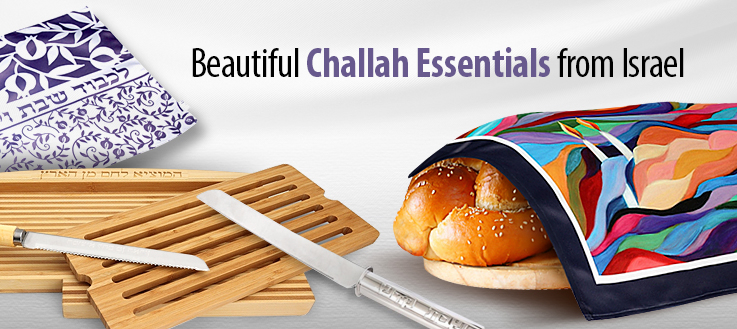
When the Jews were wandering in the desert for forty years, food was a scarcity since they were moving from place to place. Rather than searching for food every day, manna, a bread-like food, fell from the sky. Before it fell, a layer of dew fell first, so that the bread would be protected from the ground, followed by another layer of dew on top of the manna. On Shabbat, double portions fell which is why two Challah breads are used for Hamotzi. In order to remember the miracle of the dew that fell below the manna, a Challah board is used for the challah to sit on, protecting it from the table.
Challah Cover
Besides for a layer of dew landing below the manna the Jews received when wandering through the desert, there was also a layer on top that is represented by the challah cover. Another reason a challah cover is an important part of Judaism relates to Kiddush. During the week, the prayer over bread is said before eating, whereas on Shabbat, the prayer of wine is said first. The challah is then covered on Shabbat so it does not get embarrassed for being blessed second. Obviously, food cannot get embarrassed but it goes to teach a lesson about being sensitive to others around us and the great lengths people should go to so that others do not ever feel embarrassed.
Challah will forever be one of the most delicious parts of any Shabbat table, and nothing beats a homemade recipe.