

Search
Jewish calendar

Judaism’s Solar-Lunar Calendar

Today is Rosh Chodesh. This literally means, “Head of the Month” and is when we celebrate the beginning of the new Jewish month. The Jewish year doesn’t fall in step with the “regular” Gregorian calendar; we take special steps to make that happen.

Summary: What is Rosh Chodesh?

Rosh Chodesh is the beginning of the new Hebrew month. Hebrew months are based on the lunar cycle and are either twenty-nine or thirty days long. The length of the months is devised according to a complicated system that ensures that certain holidays cannot fall on certain days.

When the month is 29 days, Rosh Chodesh is celebrated on the first day of the new month. We celebrate Rosh Chodesh on the thirtieth day of the outgoing month and the first day of the new one when the month is 30 days long.

In Biblical times, Rosh Chodesh was celebrated with special sacrifices. Today, we sing the Hallel prayer and have a special Torah reading to commemorate the new month.

The Lunisolar Calendar

The Jewish year uses lunar months: the time it takes for the moon to orbit the Earth, or appear to go through a full waxing and waning cycle. However, it also uses solar years: the time it takes for the Earth to orbit the sun. A lunar year is 48 weeks, and a solar year is 52.

As a lunar and solar year are two different lengths, Judaism takes measures to maintain the confluence of the two cycles. Seven times in 19 years, an extra 30-day month called Adar Sheni is added to the calendar, making sure that the two cycles stay abreast of each other.

These solar calculations help keep the Jewish holidays in the appropriate season. This is different from other religions that are based purely on the lunar calendar like Islam. That’s why Ramadan can fall at any time during the year, but Passover is Chag HaAviv – the spring festival.

It’s a complicated system, but vital to the Jewish holidays. So many of our festivals are designated by season and chime with the agricultural year: Sukkot and Shavuot are both harvest festivals, and this system means that they are always celebrated in their proper time.

JWS POST YOU MAY LIKE

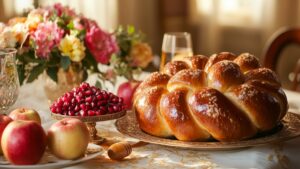
Round challah for Rosh Hashanah with honey
Round Challah for Rosh Hashanah with Honey
Rosh Hashanah recipes
What Are the Best Rosh Hashanah Recipes for a Sweet New Year?
When is Rosh Hashanah in 2026? In 2026, Rosh Hashanah begins at sundown on Friday, September 11, and ends at nightfall on Sunday, September 13. It falls on 1–2 Tishrei 5787 in the Hebrew calendar. Food plays a central role in Rosh Hashanah observance and tradition, with rich symbolism woven
A Jewish man blowing the Shofar (ram's horn), which is used to blow sounds on Rosh HaShana (the Jewish New Year) and Yom Kippur (day of Atonement)
Rosh Hashanah in the Bible: Origins of the Jewish New Year
Rosh Hashanah – the Jewish New Year, coming up September 11-12, 2026 – is one of the most important and widely celebrated holidays in Judaism. But while many are familiar with its modern customs, from apples dipped in honey to the sounding of the shofar, fewer know about its biblical
Rosh Hashanah fun for kids
Rosh Hashanah Activities for Kids: Fun & Meaningful Holiday Ideas
Looking for fun ways to keep kids busy this Rosh Hashanah? Discover hands-on crafts, apple-and-honey taste tests, family games and creative activities you can make with AI – all designed to bring more fun and meaning to the holiday.
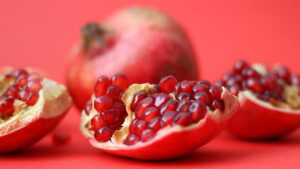
Pomegranates for Rosh Hashanah
Why Do We Eat Pomegranates on Rosh Hashanah?
Pomegranates are a popular fruit to eat during Rosh Hashanah and a significant symbol in Judaism year-round, often gracing Judaica and Jewish jewelry. Since Rosh Hashanah 2026 begins on September 11 at sundown, now is the perfect time to learn more about the significance and symbolism of the pomegranate in Judaism and Rosh Hashanah!
A Jewish man blowing the Shofar (ram's horn), which is used to blow sounds on Rosh HaShana (the Jewish New Year) and Yom Kippur (day of Atonement)
From Reflection to Renewal: The Deep Meaning of Yom Kippur
Yom Kippur, the Day of Atonement, is the holiest day of the Jewish year: a time of reflection, forgiveness, and renewal. In 2026, it begins at sundown on Sunday, September 20, and lasts through the following evening. Marked by fasting, prayer, and other austere restrictions, Yom Kippur is often seen