
Search

Mezuzah Necklaces

Mezuzah necklaces are among a number of beautiful Jewish amulets people wear for style, blessing, and to show off Jewish pride. Read about the history and contemporary direction modern desires are taking the mezuzah necklace.

People have been wearing Jewish amulets going back milenia. Some such items are worn as a commandment like tefillin, which comes from the word meaning ‘prayer’ but in the Torah are called word ot (sign), or zicharon (memorial), and as such are often translated as ‘amulet’. After all, an amulet is just a way to remember G-d and in so doing hope to channel some of His power for a particular purpose. 

Many people have been inspired by the notion of walking with an amulet wherever they go that encapsulates so many positive attributes: remembering G-d, protection, and meaning of the verses that go in a mezuzah. There are even antique examples of these mezuzah necklaces that people wore in ages long since passed. 

Mezuzahs (literally ‘doorpost’), mentioned in the Torah alongside tefillin are another such amulet, though these have the commandment to be placed on doorways of all Jewish homes and businesses. Putting up the mezuzah scroll with specific Torah verses additionally offers protection within that people are tapping into in new and creative ways.


Different Mezuzah Necklace Styles
mezuzah-751650

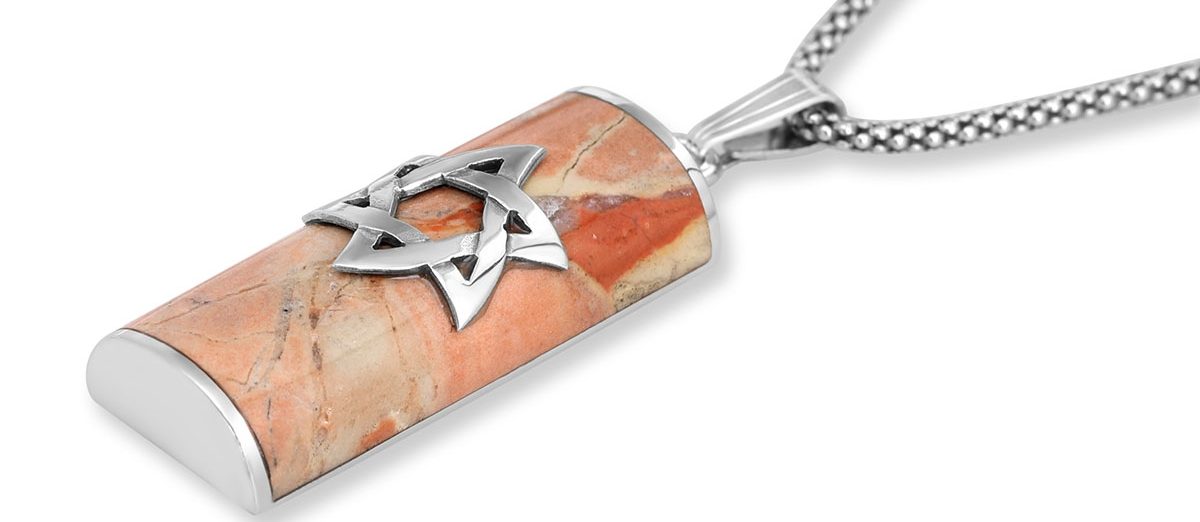
Each mezuzah necklace is a pendant shaped like a classic mezuzah case, but just as there are many different styles for those, there is no shortage of different designs and materials. For instance, many feature a solid piece of stone quarried in the Holy Land, on which other symbols may be engraved or placed on with fine metals. 

Other ones are made entirely of silver, gold, or stainless steel, while others containing glass may even feature something inside visible to read. Like mezuzahs, common features like the Hebrew word Sha-dai, one of G-ds names, or just the first letter of that, shin. Others display the Star of David, the Hebrew chai (life) or the Hamsa. In a few cases, full phrases and Torah verses, like Ani Ledodi Vedodi Li (I am my beloved's and my beloved is mine). 

With such variety in styles and materials, there is something to fit every style.

btn
Why Wear a Mezuzah Necklace?
ra-573-2

There are numerous reasons why you might want to wear a mezuzah necklace. 

Mezuzahs are a timeless symbol of one’s Jewish identity with a particular focus on the home. All Jewish imagery evokes different things, and the mezuzah is a symbol of the power of the Jewish home. While we await the rebuilding of the Temple in Jerusalem, a kosher home is the next best spiritual sanctuary. A mezuzah necklace is a piece of Judaica that allows you to tap into that anywhere.

Of course, no one would wear jewelry that doesn’t look nice, whatever the significance. Mezuzah necklaces are fashioned and crafted by artists who specialize in Jewish design. You would be wearing an amulet to evoke spiritual protection, showing off your Jewish pride, and looking stunning while doing it.

btn
Do Mezuzah Necklaces Have a Mezuzah Scroll?
scroll-1410168

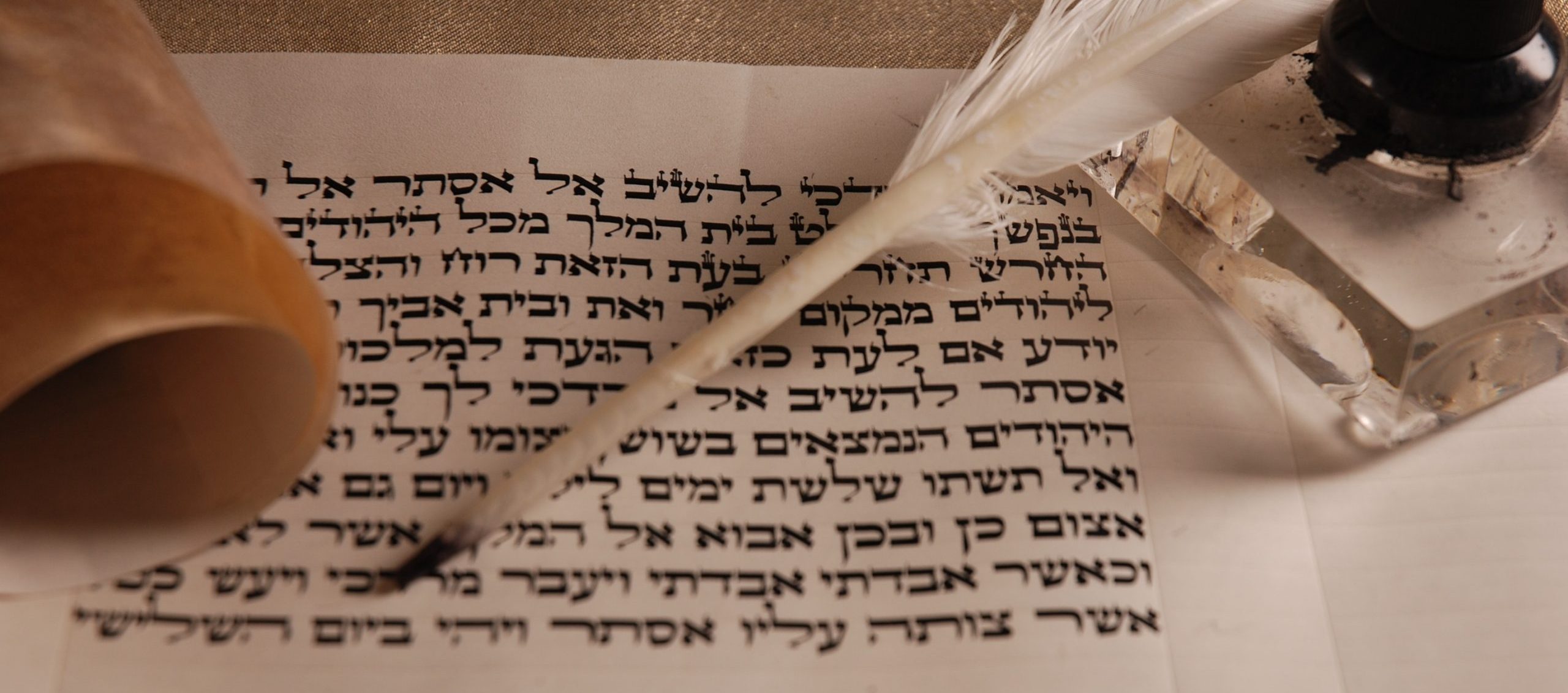
Mezuzah necklaces do not have a mezuzah scroll in them, and there are a couple reasons for this. First of all, while the mitzvah (commandment) for a mezuzah is to have the scroll encased on a doorpost, the mezuzah necklace would not need to contain a scroll in Hebrew on parchment written by a professional scribe. Some mezuzah necklaces do have other messages either engraved or stamped onto it, or in a glass case. 

Also, just as one does not put a mezuzah on the doorway of a bathroom, it is not appropriate to bring in words of Torah into a bathroom or other such place. That said, the Jewish kings were commanded to carry an entire Torah scroll with them wherever they went, and would sometimes hang it off them. Likewise, it is certainly a beautiful idea to carry something with you to remind you of your Jewish heritage and connection to G-d. The vision behind a mezuzah necklace is to tap into the multifaceted beauty and power of a mezuzah, to keep close to heart. 

Visit the site to see the whole collection of mezuzah jewelry, perfect for yourself or as a gift.

btn
Luxurious-Jewish-jewelry-cat_1_7

JWS POST YOU MAY LIKE

Round challah for Rosh Hashanah with honey
Round Challah for Rosh Hashanah with Honey
Rosh Hashanah recipes
What Are the Best Rosh Hashanah Recipes for a Sweet New Year?
When is Rosh Hashanah in 2026? In 2026, Rosh Hashanah begins at sundown on Friday, September 11, and ends at nightfall on Sunday, September 13. It falls on 1–2 Tishrei 5787 in the Hebrew calendar. Food plays a central role in Rosh Hashanah observance and tradition, with rich symbolism woven
A Jewish man blowing the Shofar (ram's horn), which is used to blow sounds on Rosh HaShana (the Jewish New Year) and Yom Kippur (day of Atonement)
Rosh Hashanah in the Bible: Origins of the Jewish New Year
Rosh Hashanah – the Jewish New Year, coming up September 11-12, 2026 – is one of the most important and widely celebrated holidays in Judaism. But while many are familiar with its modern customs, from apples dipped in honey to the sounding of the shofar, fewer know about its biblical
Rosh Hashanah fun for kids
Rosh Hashanah Activities for Kids: Fun & Meaningful Holiday Ideas
Looking for fun ways to keep kids busy this Rosh Hashanah? Discover hands-on crafts, apple-and-honey taste tests, family games and creative activities you can make with AI – all designed to bring more fun and meaning to the holiday.
Pomegranates for Rosh Hashanah
Why Do We Eat Pomegranates on Rosh Hashanah?
Pomegranates are a popular fruit to eat during Rosh Hashanah and a significant symbol in Judaism year-round, often gracing Judaica and Jewish jewelry. Since Rosh Hashanah 2026 begins on September 11 at sundown, now is the perfect time to learn more about the significance and symbolism of the pomegranate in Judaism and Rosh Hashanah!
A Jewish man blowing the Shofar (ram's horn), which is used to blow sounds on Rosh HaShana (the Jewish New Year) and Yom Kippur (day of Atonement)
From Reflection to Renewal: The Deep Meaning of Yom Kippur
Yom Kippur, the Day of Atonement, is the holiest day of the Jewish year: a time of reflection, forgiveness, and renewal. In 2026, it begins at sundown on Sunday, September 20, and lasts through the following evening. Marked by fasting, prayer, and other austere restrictions, Yom Kippur is often seen