
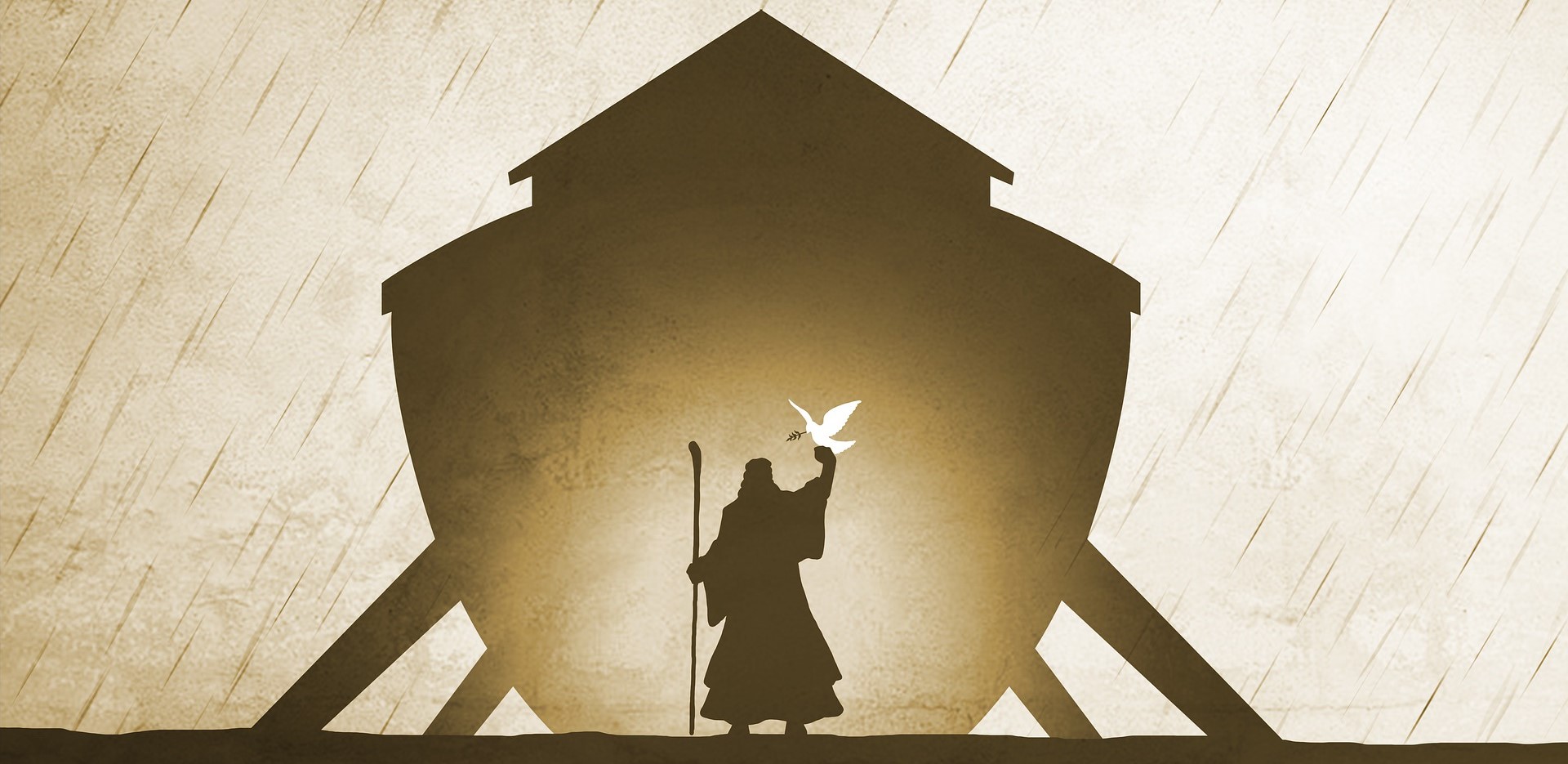
In the famous story of Noah’s Ark, God destroys all the people and creatures on Earth via a massive flood, sparing only Noah and his family and the animals they took with them in their ark. Noah was warned of the Earth’s impending destruction and instructed to build a giant wooden ark, along with precise specifications, and to take his family and pairs of animals to save.
Hope and promise after the storm
The rain and storm raged for many days, and once it seemed it be calm, Noah sent out a raven from a window of the ark, but it returned after failing to find a place to land. Seven days later (note that seven days are an already-established Jewish motif, from the week of Creation from the last Torah portion), he sent out a dove which also returned; after another seven days he sent out a dove again, which this time came back carrying an olive branch in its beak – symbolizing a promise of calm and a future ability to land, and hence today a common symbol of peace.
Following another seven days Noah sent out the dove again and this time it did not return – showing that the promise of subsided waters has been fulfilled, and that the land is dry and suitable for resettlement.
A special covenant
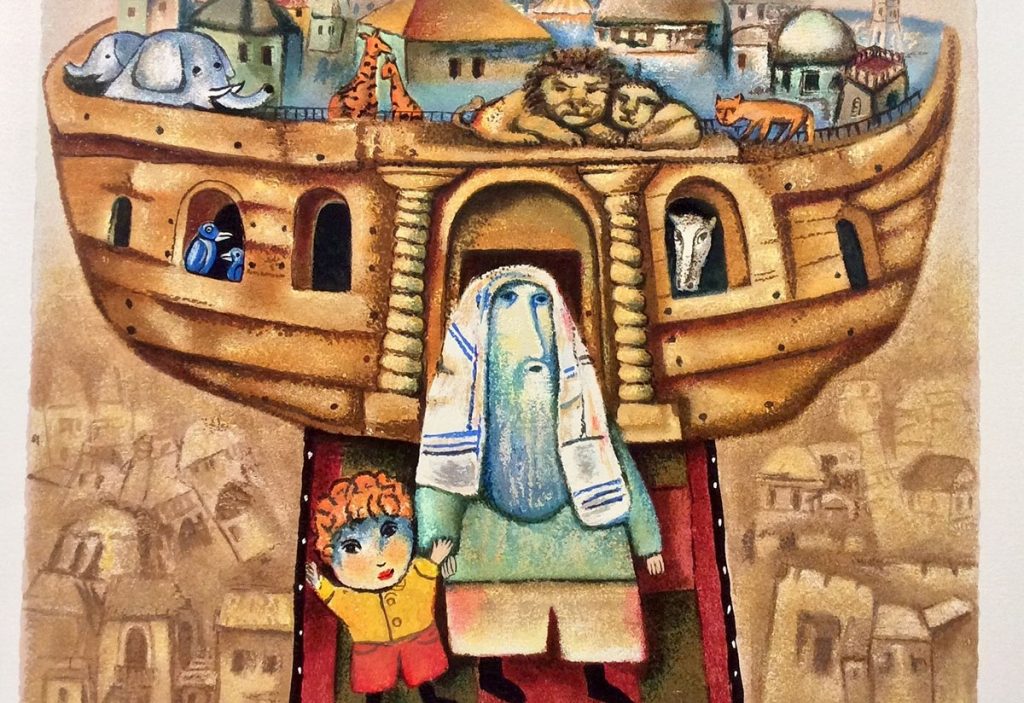
Upon disembarking Noah made an altar and offered a sacrifice to God, and God subsequently promised to never cause such a destruction again, assuring a continuation of harvests, seasons, days, and nights. God also tells Noah and his family that the animals, fish, and birds are food for them to eat just like vegetation – this is actually the first time that humanity is given Divine permission to consume animals, and it comes with an admonition to never eat the flesh or blood of a creature while it is still alive.
A covenant is established between God and all of humanity, marked with a rainbow as its symbol and reminder. Today the rainbow is still viewed in Judaism as a special sight and a sign of the covenant from God, and seeing one is traditionally marked by saying a blessing.
Powerful lessons for today
This ultimate story of humanity’s survival is marked with hope and promise, something we can take inspiration from today. Particularly as we re-emerge from our Covid isolations and try to determine whether the world is safe to congregate and return to the regular rhythms of human life again, we shouldn’t lose hope but look for the rainbows and olive branches that hint at better times to come.
At the end, a warning
The other famous story in this Torah portion is that of the Tower of Babel. After a list of Noah’s many descendants, we learn that at this point, humans are united under one language, and decide to come together to build a tower to the Heavens to reach God.
God becomes dismayed at this, and stops their project by confusing their language so they can no longer understand one another and scattering them across the earth. We can see this as a warning tale against hubris or using our powers for inappropriate aims.