

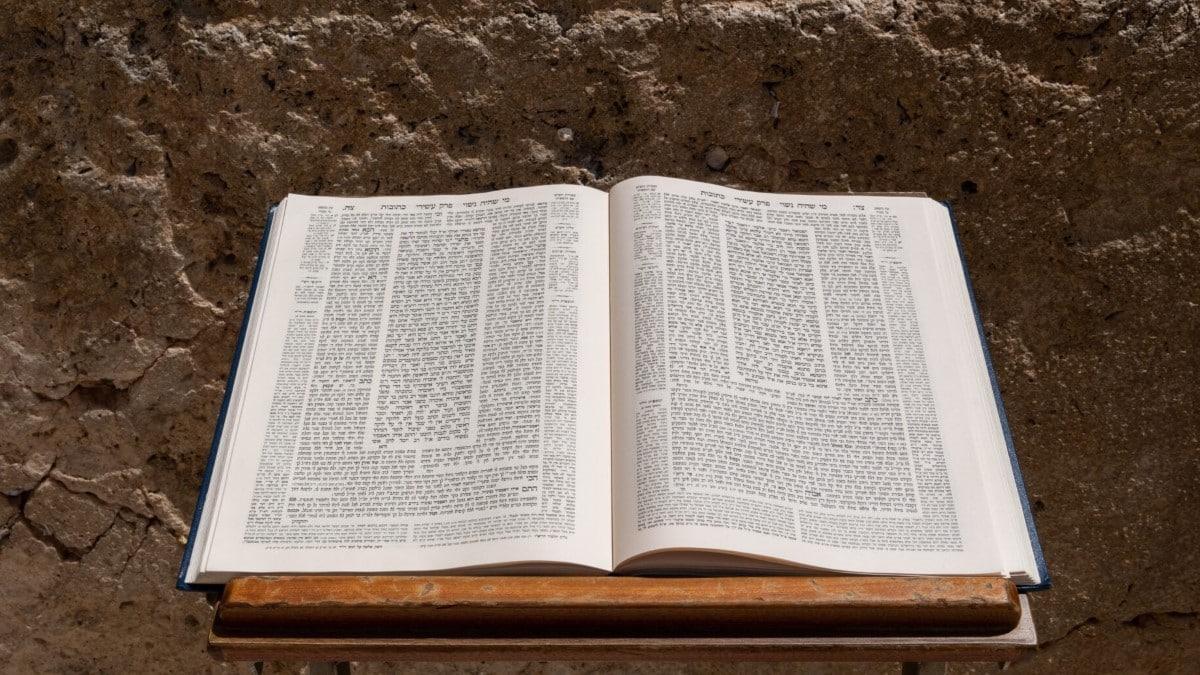
Ask two Jews what the Talmud is, you’ll be lucky to get just three answers.
Ask a lawyer, and they’ll tell you it’s the bedrock of Jewish law, the operating system Judaism has run on for over a thousand years. Ask a storyteller, and they’ll light up talking about the wildest, funniest, most human collection of tales you’ll ever read. Ask a yeshiva student pulling an all-nighter, and they’ll laugh and say it’s an argument that simply refuses to end.
Here’s the secret: they’re all right.
That’s what makes the Talmud so wonderfully strange. It’s not a rulebook. It’s not a storybook. It’s not a philosophy text. It’s somehow all three, stitched together across centuries by rabbis who couldn’t stop talking to each other, even generations apart.
Flip open a page at random and this is what you’ll find: a law. Then, immediately, a question poking holes in that law. Then three rabbis jumping in, each one sure the other two have missed the point entirely. And then, just when you think you’ve got the rhythm, the page pivots, out of nowhere, into a story about a sage who once got into an argument with the sea.
That’s not a typo. That’s just Tuesday in the Talmud.
It sounds chaotic, and honestly? It kind of is. But that chaos is the whole point. The Talmud isn’t trying to hand you a tidy answer, it’s inviting you into the conversation itself. It wants you leaning in, asking your own questions, disagreeing a little. That’s not a bug in the system. That’s Judaism working exactly as intended.
1. What Does “Talmud” Mean?
2. What Is the Talmud Made Up Of?
3. Babylonian Talmud vs. Jerusalem Talmud
4. How Was the Talmud Written?
5. What Does the Talmud Contain?
6. Talmud and Torah – What’s the Relationship?
7. Talmudic Judaism
8. Why Do Jews Study the Talmud Today?
9. Talmud and Kabbalah
10. The Talmud in Daily Life
11. Frequently Asked Questions
8. Sources
What Does “Talmud” Mean?
What does Talmud mean? The word comes from the Hebrew root l-m-d, to learn, to study. The word Talmud means, quite simply, “learning” or “study.” That simplicity is the point: the name itself tells you that this isn’t a fixed code handed down once and frozen in place. It’s an ongoing act of learning, an argument still in progress on every page.
You’ll often hear the Talmud referred to in Aramaic as the Gemara, from the root g-m-r, meaning “to complete” or “to learn.” In everyday speech, Jews use “Talmud” and “Gemara” almost interchangeably, when someone says they’re “learning Gemara” tonight, they mean they’re studying the Talmud.
What Is the Talmud Made Up Of?
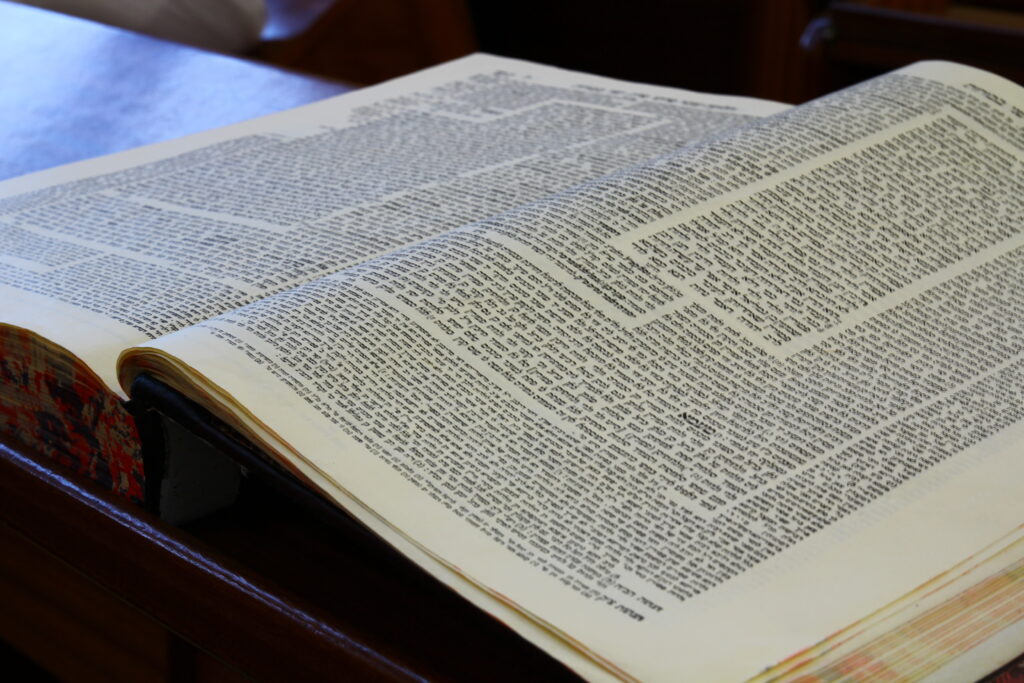
The Talmud has two layers: the Mishnah and the Gemara. The Mishnah came first, the earliest written codification of the Oral Torah, compiled by Rabbi Yehuda HaNasi around 200 CE after generations in which this material had been transmitted only by memory, teacher to student. The Gemara is the layer built on top of it: centuries of rabbinic discussion, debate, and elaboration on every line of the Mishnah.
Think of it this way: the Mishnah states a law. The Gemara asks why. It challenges the law, tells a story around it, brings in a contradicting source, and draws out implications nobody saw coming. The Mishnah and the Talmud are not separate works competing for your attention, together, they are the Talmud.
So how many tractates are in the Talmud, and what books are in the Talmud? The Mishnah is organized into six sedarim (orders), each covering a different domain of Jewish life: Zeraim (agriculture and prayer), Moed (Shabbat and holidays), Nashim (marriage and family), Nezikin (civil and criminal law), Kodashim (Temple service), and Taharot (ritual purity). Within those six orders sit 63 masechtot (tractates), which is the answer, in one number, to “how many tractates are in the Talmud.”
Naming a few of them brings the structure to life. Berakhot, the laws of prayer and blessings, is the tractate most people meet first, sitting at the very front of the Talmud, fittingly, since blessing comes before everything else. Bava Metzia works through the practical texture of daily life: found objects, labor disputes, the obligation to return what isn’t yours.
Sanhedrin lays out the structure of Jewish courts and the laws of capital cases, some of the most intellectually demanding material in the entire Talmud. And Pirkei Avot, ethics and the wisdom of the sages, is, by a wide margin, the most-read tractate in the world, the one even people who’ve never opened a page of Gemara have probably quoted.
One date worth holding onto clearly: the Mishnah was compiled around 200 CE, the Babylonian Talmud reached its final form around 500-600 CE, and the Jerusalem Talmud was completed earlier, around 400 CE. Three different centuries, three different milestones, easy to blur together, worth keeping straight.
Babylonian Talmud vs. Jerusalem Talmud
Here’s something that surprises a lot of people: there are two Talmuds. The Babylonian Talmud, Talmud Bavli, and the Jerusalem Talmud, Talmud Yerushalmi, also known by the older academic term, the Palestinian Talmud. All three names point to the same work.
The Babylonian Talmud took shape in the great academies of Babylon, chiefly Sura and Pumbedita, over several centuries, reaching its final form around 500-600 CE under the editorial hand of the Savoraim. The Jerusalem Talmud, meanwhile, was compiled in the academies of Tiberias and Caesarea in the Land of Israel, completed earlier, around 400 CE.
When people say “the Talmud” without qualification, they almost always mean the Babylonian Talmud. It’s the authoritative version, larger, more thoroughly edited, and the primary text of Jewish study for more than 1,500 years.
The Jerusalem Talmud, by contrast, lives mostly in academic circles and advanced yeshiva settings. It preserves traditions specific to the Land of Israel, and it occasionally rules differently than its Babylonian counterpart. “Palestinian Talmud” isn’t a separate work, it’s simply an older scholarly name for the Jerusalem Talmud, used interchangeably with it.
How Was the Talmud Written?
The Torah was never meant to stand alone. From the beginning, it was accompanied by an oral tradition, explanations, rulings, and interpretations passed from teacher to student, generation after generation. For centuries, this companion tradition was deliberately kept oral; writing it down felt almost like a betrayal of how it was meant to live.
Then came 70 CE: the destruction of the Second Temple and the dispersal of the Jewish people. Facing the real possibility that this entire body of teaching could be lost, the rabbis made a fateful decision, to commit it to writing.
The process unfolded over centuries. The Mishnah came first, around 200 CE. Over the next three hundred years, the Gemara developed as academies in Babylon and the Land of Israel debated, questioned, and elaborated on every line of that earlier text.
What we have today is the product of generations of editors, the Savoraim, in particular, who gave the Babylonian Talmud its final shape. No single person and no single place produced the Talmud; it is the accumulated work of thousands of sages across centuries.
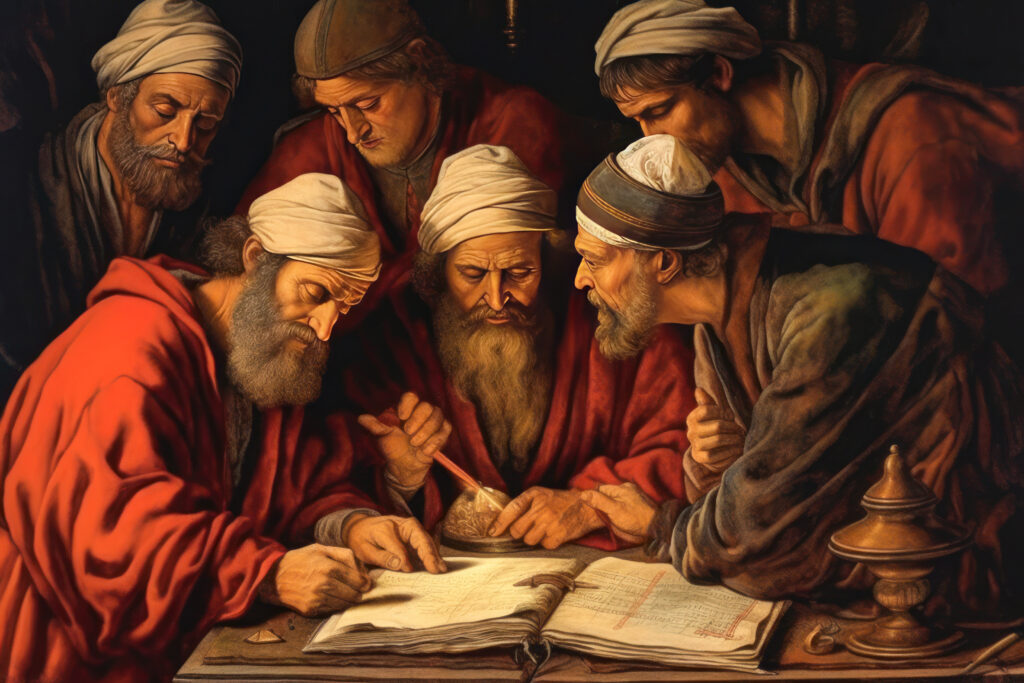
For a long time, the Talmud existed only as a talmud scroll and, later, hand-copied manuscripts, each one slightly different from the next. That changed with print. The first complete edition was produced by the Venetian printer Daniel Bomberg between 1520 and 1523, and the page layout he established, with the Talmud text framed by Rashi’s commentary on one side and Tosafot’s on the other, is still the layout used today.
The pagination from that printing became the universal standard for citing the Talmud, a convention that has outlasted the printing press itself. Centuries later, the Vilna edition, printed in the nineteenth century, became the standard text and remains the basis for nearly all modern printings.
One more detail worth knowing if you’re picturing this text in your hands: most of the Gemara is written not in Hebrew but in Aramaic, the everyday spoken language of the Jewish communities of Babylon at the time. The Mishnah is in a more formal Mishnaic Hebrew. So opening the Talmud means moving between two languages on the same page.
What Does the Talmud Contain?

So, what does the Talmud say, what does it actually contain? Two kinds of material, woven together throughout: halacha and aggadah. Halacha is the legal material, the rules, rulings, and step-by-step derivations that govern Jewish practice. Aggadah is everything else: stories, parables, ethical teachings, folklore, medical knowledge, cosmology, and the kind of wisdom sayings that get quoted at dinner tables centuries later.
What makes the Talmud unlike almost any other legal text in human history is that these two categories aren’t kept in separate volumes. A page of dense legal argument can open, mid-discussion, into a parable, a piece of history, or a folk legend, and then snap back to the law a moment later, as if nothing happened. That tonal whiplash is one of the Talmud’s most distinctive and most loved features.
On the halachic side: the laws of Shabbat fill Tractate Shabbat, the longest tractate in the entire Talmud. Marriage and divorce run through Tractate Ketubot and Tractate Gittin. Business ethics are worked out in Bava Metzia. The structure of courts and criminal procedure belongs to Sanhedrin.
On the aggadic side: the story of Rabbi Akiva’s martyrdom. The legends surrounding the destruction of the Temple. Extended discussions of the afterlife and the messianic era. Folk figures appear too, Lilith among them, a presence in Talmudic folklore that has fascinated readers for centuries, though she occupies a small corner of a much larger aggadic world rather than a chapter of her own.
And what does the Talmud teach about ethics specifically? Some of its most quoted material lives here: the obligation to save a life as if it were the whole world, the prohibition against humiliating another person in public, and the striking idea that each individual contains an entire world within them (a teaching found in Sanhedrin 37a). These threads run throughout the aggadic literature, not confined to any single tractate.
Talmud and Torah – What’s the Relationship?

What is the Talmud and Torah’s relationship to each other? The Torah, in the narrow sense, is the Five Books of Moses, the written scripture itself. The Talmud belongs to the Oral Torah: the tradition of interpretation and practical application that has always accompanied the written text, never standing apart from it.
This isn’t a competition between two rival authorities. The Torah lays down the foundational commandments; the Talmud works out what they actually mean in daily life. Without the Oral Torah, much of the written Torah would be impossible to put into practice, the Torah commands you to keep Shabbat, but it’s the Talmud that spells out what “keeping Shabbat” requires, down to the details.
Together, the Tanakh, the full Hebrew Bible, comprising Torah, Nevi’im, and Ketuvim, and the Talmud form the dual pillars of Jewish religious literature, Talmud and Tanakh standing as the two great bodies a Jewish education is built on. And the Talmud isn’t the end of the line, either.
The Midrash, the great halachic codes like the Mishneh Torah and the Shulchan Aruch, and the vast responsa literature all grew out of the Talmud and continued to develop alongside it, a living tradition that the Talmud set in motion but never closed.
Talmudic Judaism
Talmudic Judaism is the name historians give to the form of Jewish life that emerged after the destruction of the Second Temple, a Judaism rebuilt around the synagogue, the rabbi, and the study of Torah, rather than the Temple and its system of sacrifice. It’s the form of Judaism most American Jews would recognize today, and it traces directly back to the world that produced the Talmud.
The rabbis behind the Talmud weren’t only legal scholars settling disputes. They were, in effect, the architects of an entirely new structure for Jewish life, one resilient enough to survive two thousand years without a Temple, a sacrificial system, or a fixed geographic center. Their defining innovation was treating learning itself as a form of divine service, something you could do anywhere, with anyone, at any hour.
So what is a Talmudic Jew, in plain terms? In common usage, the phrase describes a Jew who lives according to the halachic system derived from the Talmud, the system followed today by Orthodox and Traditional communities, where Talmudic tradition continues to shape daily practice in ways both large and small.
Why Do Jews Study the Talmud Today?

Reading the Talmud today looks nothing like it did even a century ago, and yet, in the ways that matter most, it hasn’t changed at all.
The clearest example is Daf Yomi, a worldwide cycle of studying one page of Talmud a day, completing the entire Babylonian Talmud in seven and a half years before starting again from the beginning. Rabbi Meir Shapiro launched the program in 1923, and today hundreds of thousands of Jews around the world take part.
When a cycle finishes, the Siyum HaShas, a mass celebration marking the completion, fills stadiums and arenas with tens of thousands of people who’ve just spent seven and a half years on the same pages, on the same days, scattered across the globe.
Then there’s chevruta, paired study, the traditional method of working through the Talmud out loud with a partner, pushing back on each other’s reading line by line. It’s not just a teaching technique; it mirrors the Talmud itself, which is, after all, a written record of debate. Studying it in argument is studying it as it was made.
In the yeshiva world, intensive Talmud study sits at the very center of Jewish life, for many students, it’s less a subject than an entire occupation, pursued for years on end.
And plenty of people return to Talmud study for reasons that have little to do with halacha at all, for the ethics, the stories, the distinctive way of reasoning the text demands. The Talmud doesn’t hand you settled answers so much as a discipline of thought: holding several opinions in your head at once, questioning every premise no matter how obvious, and finding meaning less in conclusions than in the argument itself.
Talmud and Kabbalah
Kabbalah and Talmud are related but distinct, and it’s worth being precise about how. The Talmud is primarily a halachic and aggadic text, it operates at the level of law, narrative, and ethical teaching. Kabbalah is the mystical tradition of Judaism, and it reads many of the same texts for hidden, esoteric meaning beneath the surface.
The Zohar, the central work of Kabbalistic literature, emerged in the medieval period and draws heavily on Talmudic material, but it reinterprets that material through a thoroughly mystical lens. A Talmudic ruling about the laws of prayer and a Kabbalistic teaching about that same prayer aren’t contradicting each other; they’re simply speaking about different dimensions of the same act.
The Talmud in Daily Life
What makes the Talmud remarkable isn’t just its scale, it’s how directly it still shapes the textures of ordinary Jewish life. The laws of tefillin as derived from the Talmud, the details that determine how tzitzit are tied and worn, the precise choreography of Shabbat candle lighting each week, all of it traces back through centuries of Talmudic discussion to the page.
The Talmud isn’t a museum piece; it’s the reason so many small, daily rituals look exactly the way they do. Order the objects that carry out these mitzvot, and you’re holding a small piece of an argument that started two thousand years ago and never really stopped.
Frequently Asked Questions
What is the Talmud?
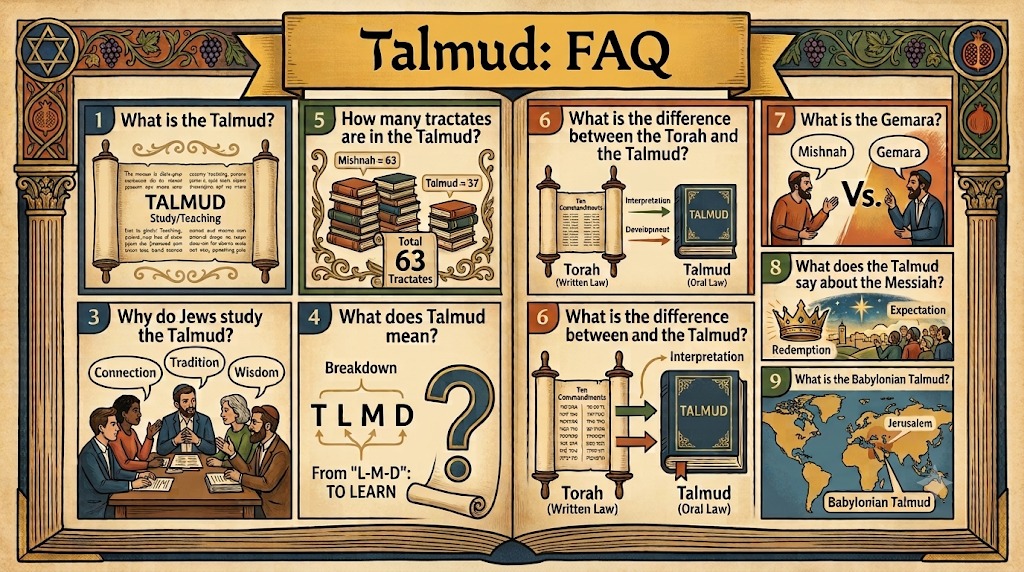
The Talmud is the central text of Rabbinic Judaism, compiled over several centuries by generations of rabbis. It contains the Mishnah and the Gemara, the earlier legal code and the later rabbinic discussion built around it, covering Jewish law, ethics, history, and wisdom in a single, interwoven work.
What does Talmud mean?
The word Talmud means “learning” or “study” in Hebrew, from the root l-m-d.
What is the difference between the Torah and the Talmud?
The Torah is the written scripture, the Five Books of Moses. The Talmud is the codified oral tradition: centuries of rabbinic discussion of Jewish law and ethics built around and explaining the Torah’s commandments.
What is the Babylonian Talmud?
The Babylonian Talmud is the authoritative version of the Talmud, compiled in the academies of Babylon and completed around 500-600 CE. When people simply say “the Talmud,” they mean this one.
What is the Gemara?
The Gemara is the rabbinic discussion and debate that forms the second layer of the Talmud, built around and elaborating on the Mishnah.
How many tractates are in the Talmud?
The Talmud contains 63 tractates (masechtot), organized into six orders (sedarim): Zeraim, Moed, Nashim, Nezikin, Kodashim, and Taharot.
What language is the Talmud written in?
The Mishnah is written in Mishnaic Hebrew. The Gemara is written primarily in Aramaic, Babylonian Aramaic in the Babylonian Talmud, and Palestinian Aramaic in the Jerusalem Talmud.
What language is the Talmud written in?
The Talmud contains extensive discussion of the messianic era, primarily in Tractate Sanhedrin. It describes the conditions associated with the Messiah’s arrival and the nature of the messianic age, without offering a single, simple timeline.
Why do Jews study the Talmud?
Many Jews study the Talmud because learning itself is regarded as a form of divine service. The Daf Yomi cycle and the tradition of chevruta (paired study) keep that practice alive today, and the Talmud remains the foundation of halachic practice across Orthodox and Traditional Jewish life.