Search

Where does Jewish prayer come from?

Jewish prayer is robust and elaborate, but that doesn’t mean that it is difficult to access or confusing to get started if you’re not used to it.

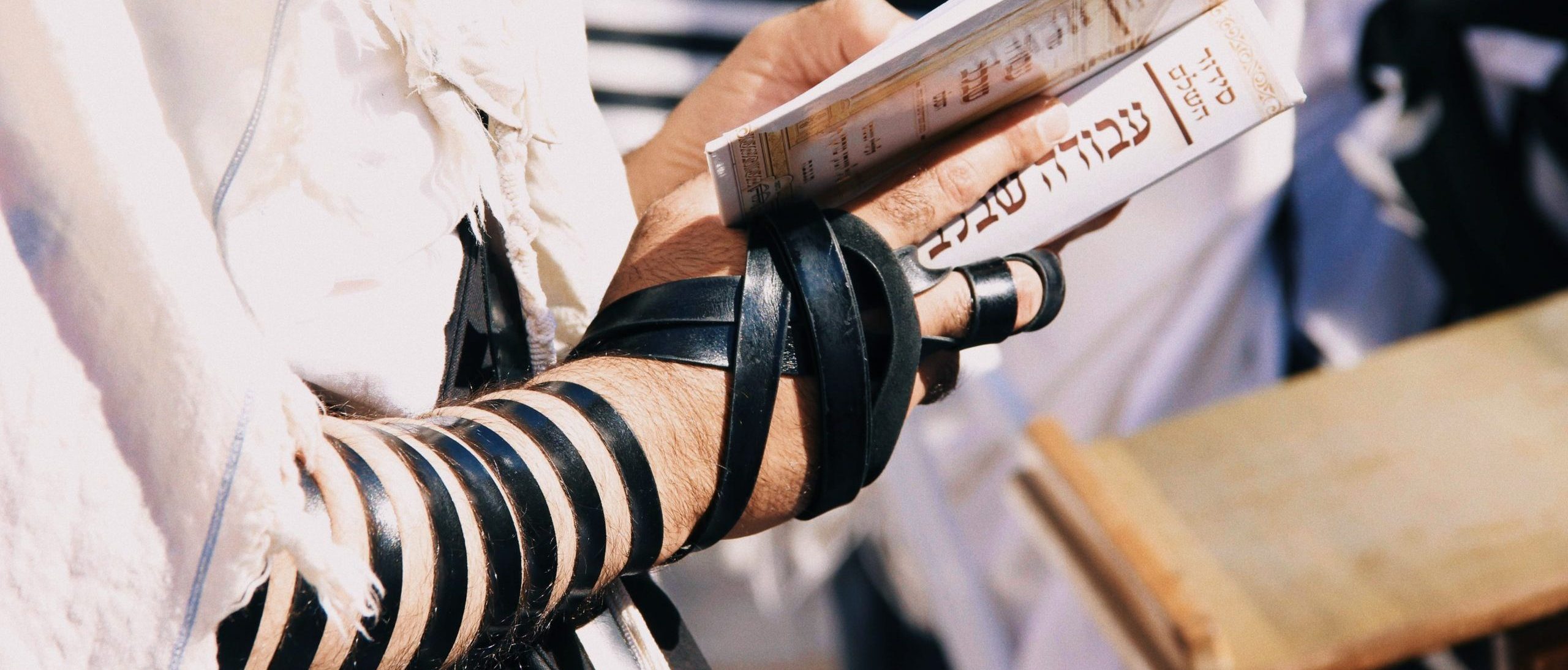
The type of Jewish prayer that may stand out the most is tefilla, also commonly discussed with the Yiddish word ‘daven’, is the sort of prayer one does in a synagogue, three times daily. This is laid out in a siddur (prayer book) with each time of day Shacharit, Mincha, and Maariv / Aravit, or morning, afternoon and evening services respectively. A siddur will usually also have many other useful prayers and blessings. 

The three of these times are derived from the prayer we observe the 3 forefathers, Abraham, Isaac, and Jacob, as they are described praying at these three times respectively. Each time for prayer is also associated with their trait, lovingkindness, steadfast devotion, and finding light in darkness.

Formal Prayer

While the mitzvah (commandment) to daven like this throughout the day is seen in the Torah already in the early chapters of Genesis, the texts used now are a compilation from a few places. Some sections like the Shema are commanded in the Torah specifically and in this case the text is lifted straight from Deuteronomy. Other sections also use verses or whole sections too. Then in the case of the Amida, also known as Shemoneh Esrei, this was composed by the Sandhedrin to ensure that people don’t forget to hit certain aspects of prayer, generally broken up as praise for Hashem, then requests like wisdom, health, sustenance, and the rebuilding of the Temple, and then gratitude. 

Keep in mind that this doesn’t mean tefilla is rigid or impersonal. This does not preclude personal prayers, and one should also take time to speak to Hashem from the heart while in shul. This might be adding your own prayers afterwards, and/or having something related in mind while making a prayer, such as praying an exam should go well in the prayer for knowledge. Even when following the siddur, prayer should never feel impersonal.

In a synagogue setting, there will also be communal prayers. The leader will repeat the Shemoneh Esrei once everyone has prayed individually during which in some contexts Bircat Kohanim, the Priestly Blessing, is recited, Torah sections are read on some days, and other things not done if praying alone. All of those steps before, and others like mourners Kaddish are only said with a minyan of 10, so it is important for the community to pray in a shul. 

btn
Jewish-Prayer-Books-2020-CAT-M
Less Formal Types of Prayer
pexels-cottonbro-studio-4033813

Brachas

On top of set prayers at set intervals, brachas are a type of prayer that would more typically translate as blessing. However, unlike in other cultures who may understand ‘blessing’ as an invocation for divine goodness, brachas are usually a type of gratitude and praise for G-d. For example, before drinking wine, the bracha would translate to

“Blessed are You, L-rd our G‑d, King of the universe who creates the fruit of the vine”. 

Some are longer, or have added sections, like the longer paragraphs around the blessings for kiddush but thematically it serves the same purpose. 

There are a few exceptions, like bircat habayit, the blessing for the home, which is a modern invention asking for a guard against negative things existing in the home. It does not have the normal structure of a Jewish blessing, but it is seen hanging on walls of Jewish homes in every community. 

Recitation

One typical way that people access prayer is via reading certain texts. Particularly common would be reciting tehillim (psalms), or mishnayot that are part of the Oral Torah. Many individual sections have come to be associated with things like health, success having children, safety, and so on, but may also just be associated with times of year like the start of a month. Learning Torah, especially with relevant themes to whatever you are praying for, is a very common way to enhance one’s prayers by doing a mitzvah. 

Ultimately, every single mitzvah will bring you closer to Hashem, and in turn enhance your spiritual life. There’s no better time to find the Judaica you need for a rich Jewish life.


btn
designer-judaica_category_mobile

JWS POST YOU MAY LIKE

Round challah for Rosh Hashanah with honey
Round Challah for Rosh Hashanah with Honey
Rosh Hashanah recipes
What Are the Best Rosh Hashanah Recipes for a Sweet New Year?
When is Rosh Hashanah in 2026? In 2026, Rosh Hashanah begins at sundown on Friday, September 11, and ends at nightfall on Sunday, September 13. It falls on 1–2 Tishrei 5787 in the Hebrew calendar. Food plays a central role in Rosh Hashanah observance and tradition, with rich symbolism woven
A Jewish man blowing the Shofar (ram's horn), which is used to blow sounds on Rosh HaShana (the Jewish New Year) and Yom Kippur (day of Atonement)
Rosh Hashanah in the Bible: Origins of the Jewish New Year
Rosh Hashanah – the Jewish New Year, coming up September 11-12, 2026 – is one of the most important and widely celebrated holidays in Judaism. But while many are familiar with its modern customs, from apples dipped in honey to the sounding of the shofar, fewer know about its biblical
Rosh Hashanah fun for kids
Rosh Hashanah Activities for Kids: Fun & Meaningful Holiday Ideas
Looking for fun ways to keep kids busy this Rosh Hashanah? Discover hands-on crafts, apple-and-honey taste tests, family games and creative activities you can make with AI – all designed to bring more fun and meaning to the holiday.
Pomegranates for Rosh Hashanah
Why Do We Eat Pomegranates on Rosh Hashanah?
Pomegranates are a popular fruit to eat during Rosh Hashanah and a significant symbol in Judaism year-round, often gracing Judaica and Jewish jewelry. Since Rosh Hashanah 2026 begins on September 11 at sundown, now is the perfect time to learn more about the significance and symbolism of the pomegranate in Judaism and Rosh Hashanah!
A Jewish man blowing the Shofar (ram's horn), which is used to blow sounds on Rosh HaShana (the Jewish New Year) and Yom Kippur (day of Atonement)
From Reflection to Renewal: The Deep Meaning of Yom Kippur
Yom Kippur, the Day of Atonement, is the holiest day of the Jewish year: a time of reflection, forgiveness, and renewal. In 2026, it begins at sundown on Sunday, September 20, and lasts through the following evening. Marked by fasting, prayer, and other austere restrictions, Yom Kippur is often seen