Search

Yiddish Slang in English

Let’s learn some Yiddish slang!

Numerous communities of Jews in Europe, America, and Israel who use Yiddish as a primary or at least frequent common language, and many words have seeped into the common culture. Those who moved to North America or Israel usually switched to the local languages and around 85% of those who perished in the Holocaust were Yiddish speakers. Yiddish lived on and continues to leave an indelible mark on how Jews around the world speak. Many Yiddish words are commonly used in English and Modern Hebrew to convey and emphasize concepts that no other word can. 


Unlike Hebrew or Aramaic, it is not really used for liturgical purposes, with only a few modern customs standing out. In fact, it’s not even a Semitic language but rather its closest relative is German, with ‘Yiddish’ short for ‘Yiddishe Taitsh’ (Jewish German), so you may even be able to recognize a few of these if you don’t speak Hebrew.


Nu, what’s the hold up? Weiter!

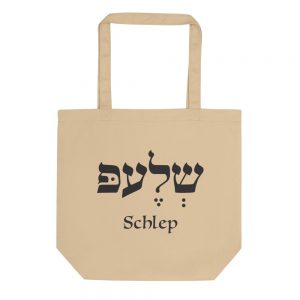
1. שלעפ- Shlep (Drag, move, work)

‘Schlep’ has made its way around the US and parts of Europe, both in Jewish and even non-Jews circles, since it so eloquently captures the feeling of annoying tasks. Whether that’s schlepping yourself across town or you have to schlep your groceries home, or when life is just feeling like a bit of a schlep, it is a sort of “keep grumpy and carry on”.


As with many English words taken from Yiddish, there is more depth when used natively. In the famous Yiddish song Oyfen Pripechik, featured in Schindler’s List, the line “az ir vet kinder dem goles shlepn…” (when you, children, will bear the burden of exile…) also conveys a graver dimension.

2. שמאלץ – Shmaltz(y) – Overly Sentimental


Shmaltz is probably what every man would accuse a typical rom-com of being full of. ‘Shmaltz’, literally meaning ‘fat’ or ‘tallow’ is used in the case when something is overly sentimental. Ever said goodbye to a Jewish mother on your way to the airport? That would be pretty shmaltzy. Ever listened to honeymooners talk to each other? You get the point.


3. מענטש – Mentsh – Stand Up Character

While in Yiddish the word ‘mentsh’ literally means ‘person’, it is used to describe someone of real standup character, not so dissimilar to how man ‘man’ is used in ‘you da man’. You might use it to describe how a “mentsh offered his seat on the bus”, or “my coworker brought us pastries. What a mentsh?!”. Anyone who lives an honest life with integrity is a mentsh.


3 ½. דער מענטש טראכט און ג-ט לאכט

 Der Mentsh Tracht Un Got Lacht


Here we see when ‘mentsh just means ‘person’. The phrase

“der mentsh tracht un Got lacht” (Man plans (lit. ‘thinks’) and G-d laughs) is a humbling Yiddish. When things don’t go your way, remember that you’re not really the one planning, and some things were fated to not exceed.


4. נו – Nu? – Yeah? So?


Nu is used by plenty of Ashkenazi Americans, but all Israelis say nu when in response to a cliffhanger — “Nu?! Get to the point!” — or to let you know they’re listening throughout a long story. Nu starts things off with a bang also great to start things of, “Nu, you wouldn’t believe what happened at school.” 

5. שטייג– Steig – Learn (Elevate)

Yiddish gets a reputation for loaning English bad words, or complaint words, but that may speak more to who’s using it. Shteig’ means to ‘elevate’ or ‘ascend’ as in literally on a mountain, but also to shteig in the Torah, as you learn.

In more religious circles you may hear the phrase “shteiging in the Torah” or whatever else is being learned. “To shteig” is pretty much synonymous with Torah study.

6. קיין עין הרע – Kayn Ayin Hara– No Evil Eye / Bli Ayin Hara

Unisex "Kein Ayin Hara" Shirt

While the “ayin hara” is a phrase from Hebrew, the phrase “kein ayin hara” is from Yiddish meaning “(there should be) no ayin hora”. The “ayin hara” is usually misleadingly rendered ‘Evil Eye’ in English, but that would be “ayin ra’a”.


Rather, the “Evil Focus” is a concept that if someone looks at you with jealousy or contempt, that could by itself be a sort of curse. Many people say “kein ayin hara” in order to humble themselves, such as “I have 4 children, kein ayin hara”, or “kein ayin hara, the picnic should have great weather”. 


We love this popular Yiddish phrase. Just another example of the powerful sensitivity to others’ emotions Judaism instills, and importance of humility when everything—be it health or wealth—is from Hashem.

7. שכ׳ח– Shkoyach – Congrats


Shkoyach, the Yiddish equivalent to Hebrew “chazak uvaruch” (strength and blessing) meaning ‘congratulations’, from Hebrew “yesher koach(echa)” meanig “(your) strength should go forward”. This got abbreviated to “shkoyach” to congratulate someone for any job well done, especially common for someone who leads services or gets an aliyah in shul (a bonus Yiddish word, ‘a synagogue’).


8. קוועטש– Kvetch – Whine


To kvetch is to complain, whinge, whine, etc.. This is definitely the more common meaning when used in English, but you may also hear it in the sense of forcing poor excuses or having a bad understanding since this word literally means ‘press; crush’, as in “I don’t think he meant that. I think you’re kvetching that in”.


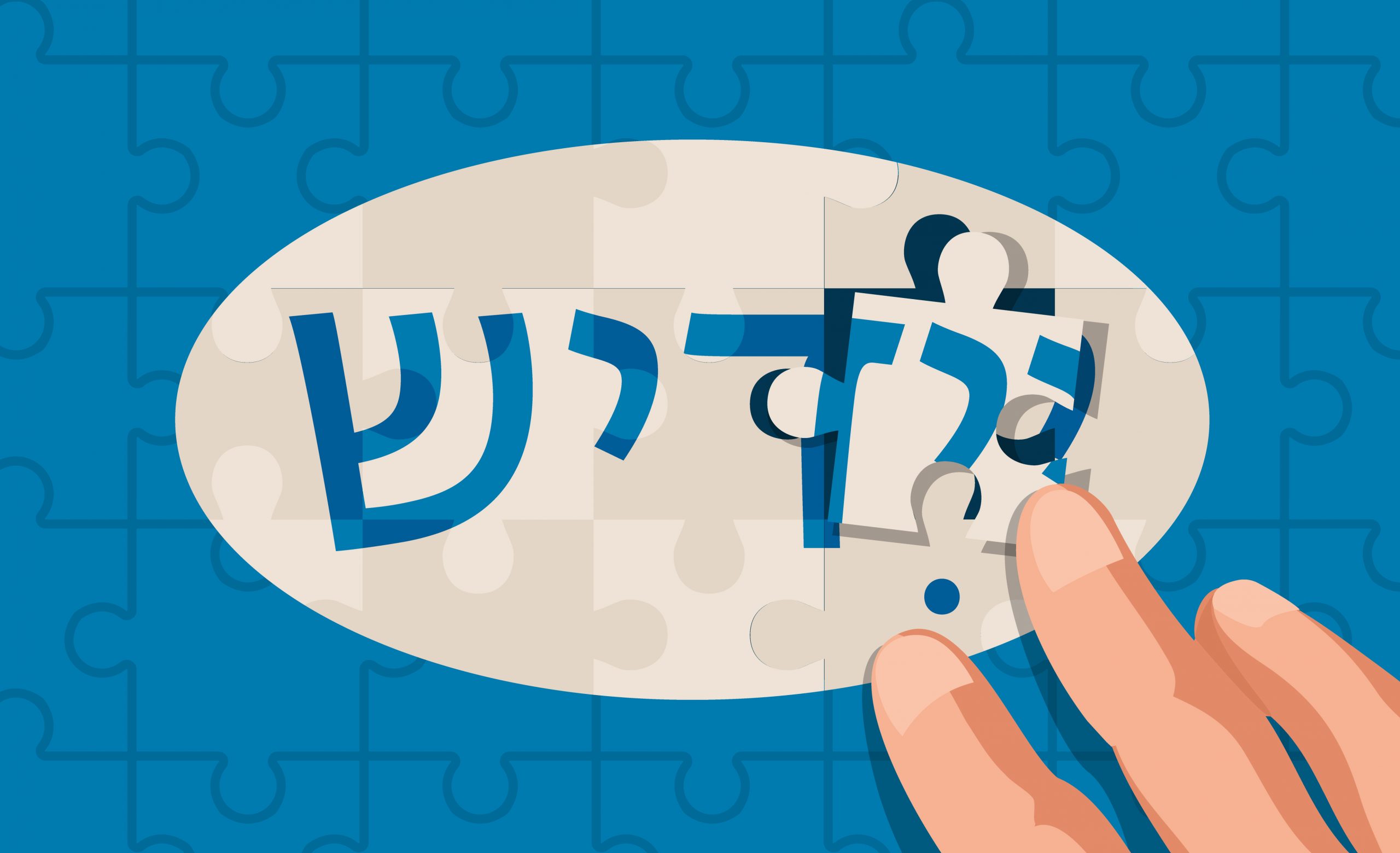
9. גליטש – Glitch

Glitch is a word now notably used in high tech, but few people know of its Yiddish roots. Natively the word meant ‘slip’ or ‘trip’ so the way it transferred for computer bugs that can trip up a whole piece of software is pretty applicable.

Out of all the words on this list, this is probably the most common, with the least cultural recognition.

10. קיביצער – Kibitzer– Giver of Unwanted Advise

A kibitzer is a bit of a backseat driver, but for everything: card games, relationships, business, etc.. It refers to someone who is an observer, giving unwanted advice. I’m sure you can think of somebody who fits that bill. To ‘kibitz’ also refers to idle chat, much like shmooze, but not as neutral. Notably, this is from the Hebrew ‘kibbutz’ which means ‘collective’, originally meaning ‘joking around’ in Yiddish. Any negative connotations only came in when the word entered English.

11. גלאט – Glatt – Smooth

The phrase Glatt Kosher–equivalent to the Hebrew chalakrefers to high quality meat that has no tears or punctures in the organs, rendering the meat treif, or nonkosher. It has entered common lexicon though similar to its English translation, smooth, to mean ‘easy, good’, as in,

“Hey, did you sort out that issue?”

“Yeah. Everything’s glatt.”

12. אוי געוואַלד – Oy Gevalt  Oh no!


A frustrated exclamation, like “oh no” but a bit more forceful. Literally, it means ‘oh, violence’, but it is used in most generic situations from anger to frustration and sarcasm. Very similar to ‘oy vey’ and used like “oy gevalt, this post is over!”

Now that you’ve brushed up on some Yiddish words, make them come to life with stunning Yiddish gifts from Israel!

Show off your love for Yiddish with amazing gifts from Israel’s best artists!

btn
Modern-Shtetl_category_mobile

JWS POST YOU MAY LIKE

Round challah for Rosh Hashanah with honey
Round Challah for Rosh Hashanah with Honey
Rosh Hashanah recipes
What Are the Best Rosh Hashanah Recipes for a Sweet New Year?
When is Rosh Hashanah in 2026? In 2026, Rosh Hashanah begins at sundown on Friday, September 11, and ends at nightfall on Sunday, September 13. It falls on 1–2 Tishrei 5787 in the Hebrew calendar. Food plays a central role in Rosh Hashanah observance and tradition, with rich symbolism woven
A Jewish man blowing the Shofar (ram's horn), which is used to blow sounds on Rosh HaShana (the Jewish New Year) and Yom Kippur (day of Atonement)
Rosh Hashanah in the Bible: Origins of the Jewish New Year
Rosh Hashanah – the Jewish New Year, coming up September 11-12, 2026 – is one of the most important and widely celebrated holidays in Judaism. But while many are familiar with its modern customs, from apples dipped in honey to the sounding of the shofar, fewer know about its biblical
Rosh Hashanah fun for kids
Rosh Hashanah Activities for Kids: Fun & Meaningful Holiday Ideas
Looking for fun ways to keep kids busy this Rosh Hashanah? Discover hands-on crafts, apple-and-honey taste tests, family games and creative activities you can make with AI – all designed to bring more fun and meaning to the holiday.
Pomegranates for Rosh Hashanah
Why Do We Eat Pomegranates on Rosh Hashanah?
Pomegranates are a popular fruit to eat during Rosh Hashanah and a significant symbol in Judaism year-round, often gracing Judaica and Jewish jewelry. Since Rosh Hashanah 2026 begins on September 11 at sundown, now is the perfect time to learn more about the significance and symbolism of the pomegranate in Judaism and Rosh Hashanah!
A Jewish man blowing the Shofar (ram's horn), which is used to blow sounds on Rosh HaShana (the Jewish New Year) and Yom Kippur (day of Atonement)
From Reflection to Renewal: The Deep Meaning of Yom Kippur
Yom Kippur, the Day of Atonement, is the holiest day of the Jewish year: a time of reflection, forgiveness, and renewal. In 2026, it begins at sundown on Sunday, September 20, and lasts through the following evening. Marked by fasting, prayer, and other austere restrictions, Yom Kippur is often seen