See the amazingly preserved, 1,900-year-old Roman-era swords found in a cave in the Judean desert, most likely used by Jewish fighters during the Bar Kochba Revolt!
Israeli archeologists have recently announced one of their most incredible finds yet: a set of four well-preserved swords believed to have been hidden by Judean rebels fighting the Roman empire 1,900 years ago!
Dr. Eitan Klein of the Israel Antiquities Authority has called this “an extremely rare find, the likes of which have never been found in Israel.”
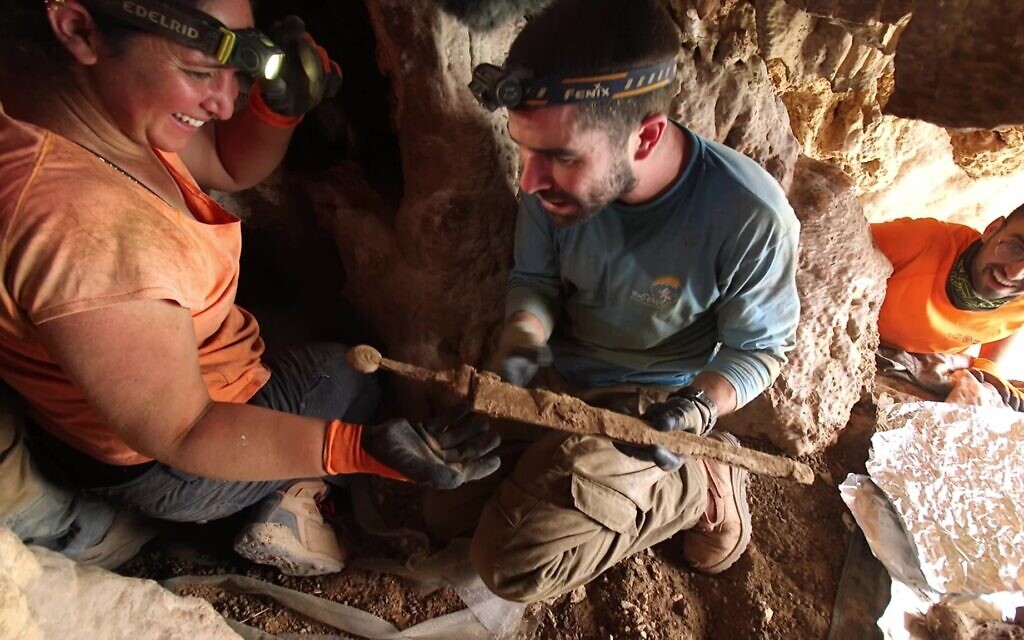
Archaeologists remove the swords from the Judean cave where they were hidden around 1,900 years ago (Photo credit: Emil Aladjem/IAA)
The Incredible Discovery
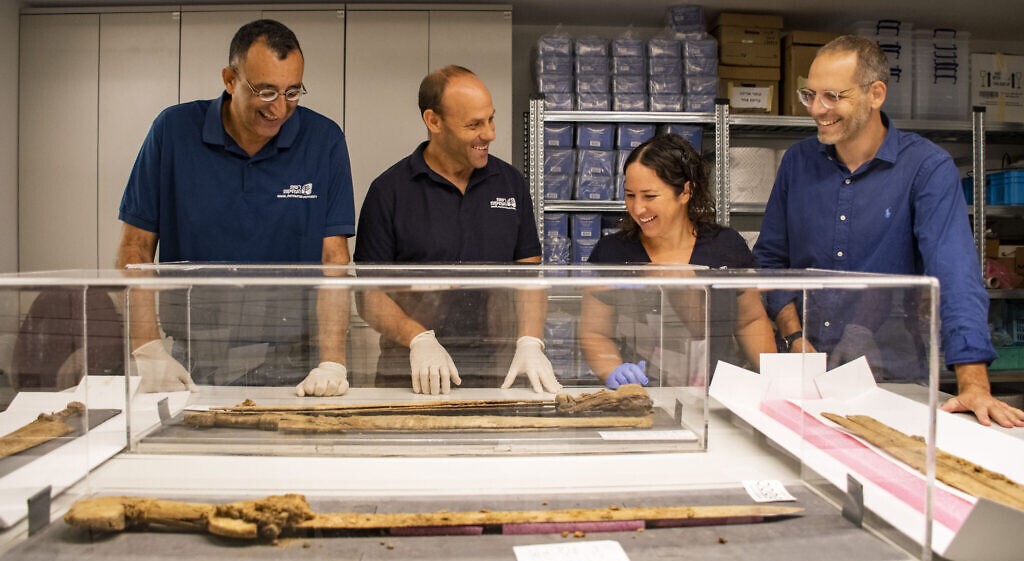
Israeli scholars (left to right) Amir Ganor, Dr. Eitan Klein, Oriya Amichay, and Dr. Asaf Gayer with the recently discovered swords, currently held at the Israel Antiquities Authority office in Jerusalem (Photo credit: Yoli Schwartz/IAA)
But this newest discovery, just announced a few days ago, is one of the most impressive to date!
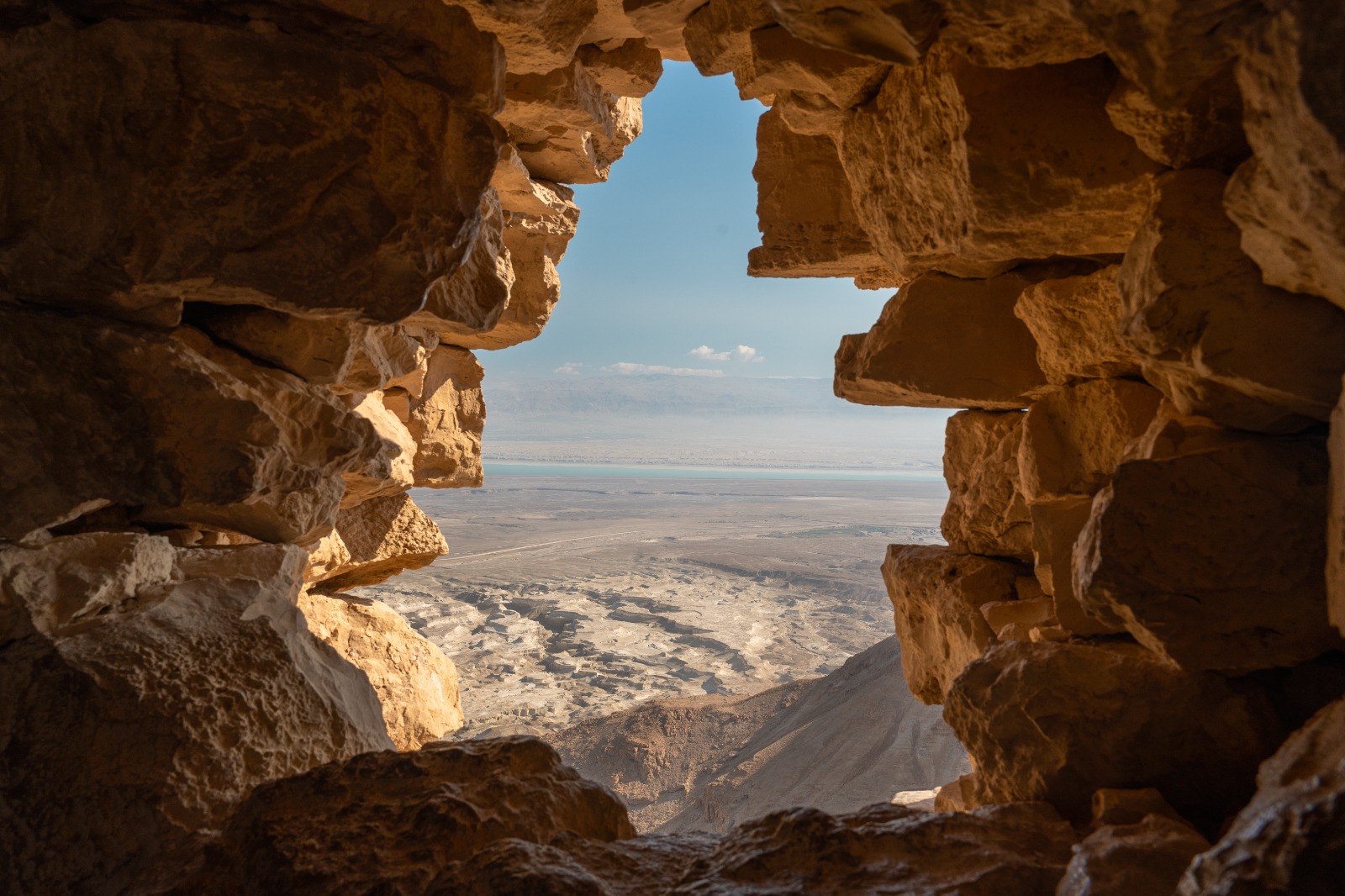
Israeli researchers happened to notice an ancient weapon wedged into a crack in a rock, while investigating and photographing an ancient Hebrew inscription inside a cave in the Judean desert. A team of archeologists was dispatched to the cave, located near the Dead Sea and Jerusalem, and ended up uncovering not one but four intact swords - three of them still inside their protective scabbards.
The pieces have been identified as Roman-made and likely dating to around the second century - and as for how they ended up in a Judean cave, it's believed that they must have been stolen from the Romans by Jewish fighters and hidden during the Bar Kochba Revolt of 132-135 CE.
According to archeologist Dr. Eitan Klein, "this is a very rare and unique find on an international level that will shed light on the last moments of the war between the Jewish rebels and the Roman army at the time of the Bar Kochba revolt.”
Archaeologists removing the swords from the entrance of the cave where they were found in the Judean desert (Photo credit: Emil Aladjem/IAA)
Part of what makes this particular discovery so remarkable is the excellent condition in which the swords were found. The dry, arid climate of Israel's desert has kept the artifacts from eroding over the past two millennia. “The blades have been preserved so well, they look like they could be picked up and used right now, even 2,000 years after they were forged,” said Israeli geologist Boaz Langford of Hebrew University.
These ideal conditions, combined with Israel's long and rich history, have made the hills and caves of Judea home to some of the world's most famous and inspiring archeological finds.
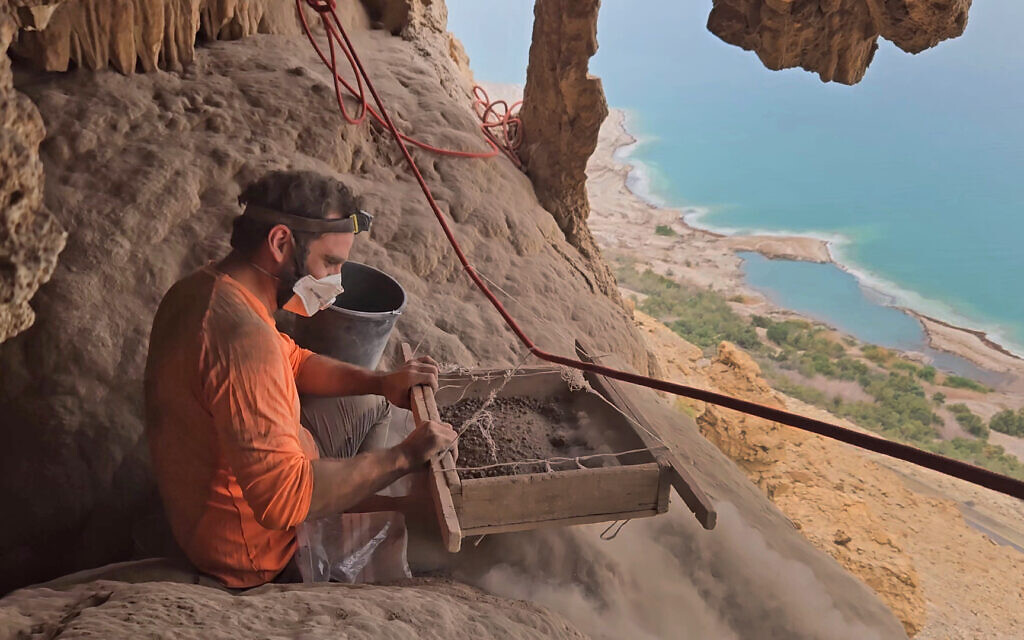
Israeli archaeologist sifting dirt in the Judean cave where the Roman swords were discovered, near Jerusalem and the Dead Sea (Photo credit: Matan Toledano/IAA)
Want to learn about other amazing artifacts found in the Judean desert? Click below to read about:
Eli Escusido, director of the Israel Antiquities Authority, refers to the area as a “unique time capsule” allowing for the discovery of some of the most impressive and well-preserved treasures.
What Are the Best Rosh Hashanah Recipes for a Sweet New Year?
When is Rosh Hashanah in 2026? In 2026, Rosh Hashanah begins at sundown on Friday, September 11, and ends at nightfall on Sunday, September 13. It falls on 1–2 Tishrei 5787 in the Hebrew calendar. Food plays a central role in Rosh Hashanah observance and tradition, with rich symbolism woven
Rosh Hashanah in the Bible: Origins of the Jewish New Year
Rosh Hashanah – the Jewish New Year, coming up September 11-12, 2026 – is one of the most important and widely celebrated holidays in Judaism. But while many are familiar with its modern customs, from apples dipped in honey to the sounding of the shofar, fewer know about its biblical
Rosh Hashanah Activities for Kids: Fun & Meaningful Holiday Ideas
Looking for fun ways to keep kids busy this Rosh Hashanah? Discover hands-on crafts, apple-and-honey taste tests, family games and creative activities you can make with AI – all designed to bring more fun and meaning to the holiday.
Why Do We Eat Pomegranates on Rosh Hashanah?
Pomegranates are a popular fruit to eat during Rosh Hashanah and a significant symbol in Judaism year-round, often gracing Judaica and Jewish jewelry. Since Rosh Hashanah 2026 begins on September 11 at sundown, now is the perfect time to learn more about the significance and symbolism of the pomegranate in Judaism and Rosh Hashanah!
From Reflection to Renewal: The Deep Meaning of Yom Kippur
Yom Kippur, the Day of Atonement, is the holiest day of the Jewish year: a time of reflection, forgiveness, and renewal. In 2026, it begins at sundown on Sunday, September 20, and lasts through the following evening. Marked by fasting, prayer, and other austere restrictions, Yom Kippur is often seen