Search
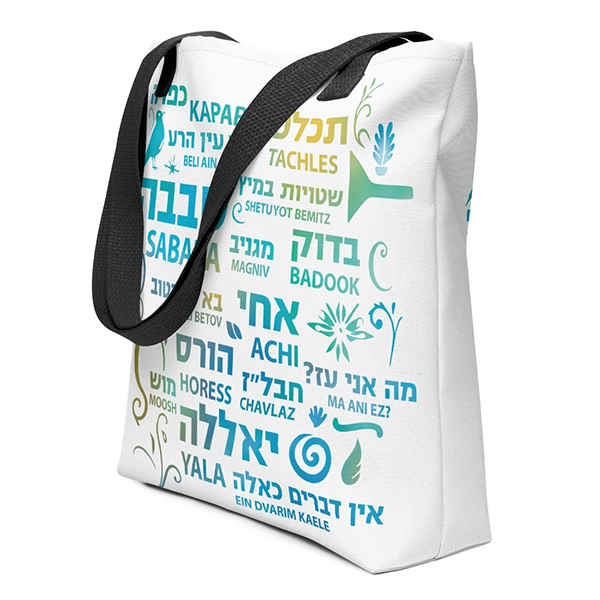
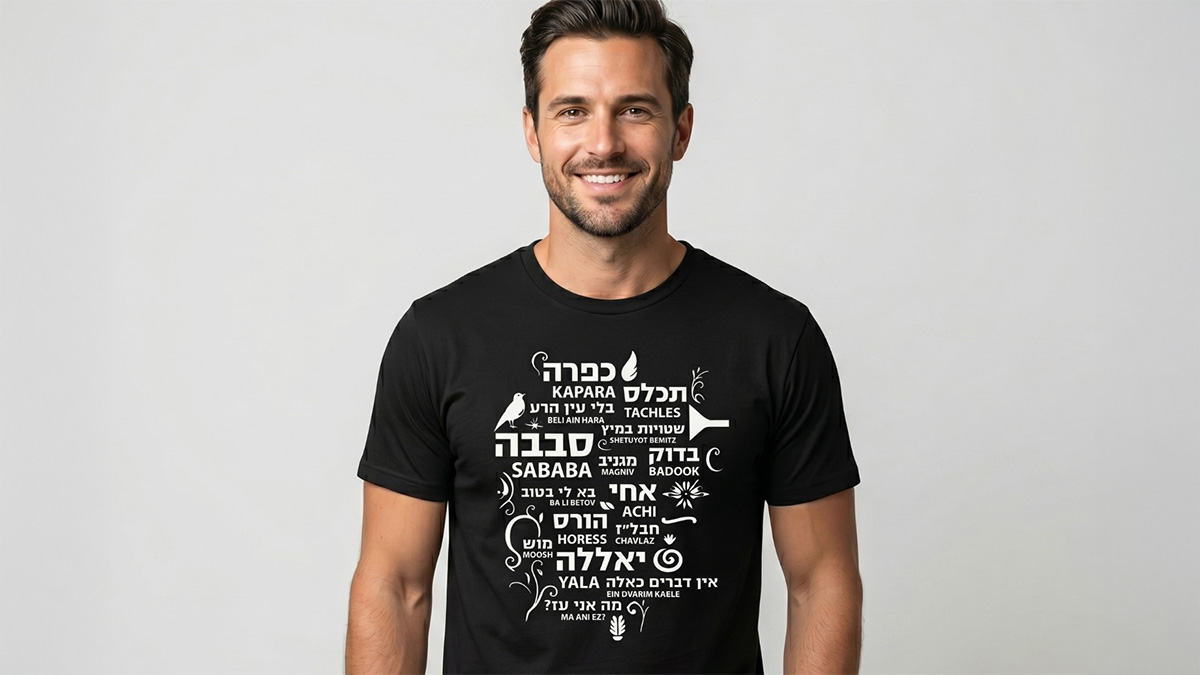
Hebrew slang T-shirt

Hebrew slang words that somehow follow you home

While many Jews use Hebrew when they pray or study Jewish texts, the ancient Hebrew of the Torah is very different from the modern, spoken Hebrew you’ll hear on the streets of Tel Aviv and Jerusalem today. Hebrew was revived in the late 19th and early 20th centuries (which you can read more about here!), leading to the development of words for everyday objects and situations that couldn’t be found in the Bible. And naturally, the development of Modern Hebrew also led to a rise of Hebrew slang!

Whether you have a trip planned to the Holy Land or you just want to impress your Israeli friends and family, we have compiled a list of Hebrew phrases that everyone should know.

You probably already know the famous Israeli term yalla – “come on” or “let’s go” – so here are our favorite 10 phrases you didn’t know but should!

Yalla, Let’s Learn Some Modern Hebrew Slang!

סבבה – Sababa – Cool/Ok/Very good

Sababa comes from Arabic, but it has made its way into everyday Hebrew. It’s often translated to English as “cool,” but it can also be used similarly to “okay!” or “nice or even “yes” or “good.”

Want to meet at the movies at 8? Sababa. I bought this dress half-off! Sababa!

פעם שלישית, גלידה – Pa’am shlishit, glida – Third time, ice cream!

This is a phrase that doesn’t totally make sense when translated to English. Literally, it means “third time, ice cream!” You can say it the same way you’d say “third time’s a charm” in English, but it can also be used when you run into someone repeatedly throughout a day.

מת עליך – Met alaicha/alaich – I am dying for you

Literally, “I die for you,” this phrase isn’t nearly as grim as it sounds. It’s actually flattering and romantic

If someone says met alaicha to you, it means they’re really into you, so much that they’re dying for you! Hebrew is a gendered language, so you change the pronunciation of the last letter based on who you are speaking to. Met alaicha is how you would say the phrase to a male, while you would say met alaich to a female.

נו – Nu? – Yeah? So?

Nu might sound familiar if you have Yiddish-speaking family, as the word became integrated into Hebrew thanks to Ashkenazi immigrants to Israel in the 20th century. Israelis say nu when in response to a cliffhanger — “Nu?! Get to the point!” — or to let you know they’re listening throughout a long story. Nu can also be used if someone is staring or laughing at you — “Nu? What are you looking at?”

ממש – Mamash – Really/A lot

Mamash is one of those words that is so catchy, you’ll start weaving it into English sentences. Mamash adds emphasis, like “really.” I love this cafe, mamash. She mamash needs a haircut. Are you hungry? Mamash!

A common phrase is “mamash toda” – like saying “thank you, really” or “many thanks.”

יש – Yesh – Yes!/Yay!

You might already know the word yesh. It means “there is” in the literal sense. However, the inflexion and tone of voice here matters!

If someone says yeshhhhhh and really stretches out the sounds, it’s meant to convey excitement, like “yay!” It’s easier to understand while texting, as Israelis often write ישששששששש to emphasize.

You found tickets to the sold-out concert? Yeshhhh!

You just received the coolest gift from Israel? Yeshhhh

חי בסרט – Chai B’seret – Living in a Movie

Chai B’seret, literally “living in a movie,” is an expression used when someone is being unrealistic. It can also be used sarcastically, similarly to “Yeah, right…” in colloquial English. He quit his job because he thinks he will win the lottery? He’s really chai b’seret, huh?

סתם – Stam – Just Kidding/Nothing/Just because

This word is a little trickier to explain because it has a few different uses. You can say stam the same way you’d say, “Just kidding!” after poking fun or making a joke. It can also mean “nothing” or “nevermind” or “just because.” Why are you being so quiet today? Stam.

שטויות במיץ עגבניות – Shtuyot b’mitz agvaniot – Utter Nonsense

Like so much of Israeli slang, this phrase shouldn’t be taken literally. Meaning “nonsense in tomato juice,” this Hebrew phrase comes from a similar saying in Germany that translates to, “nonsense in sauce.”

Much like the phrase itself, shtuyot b’mitz agvaniot just means utter or complete nonsense. That t-shirt costs $200? Sheesh, shtuyot b’mitz agvaniot.

בלאגן – Balagan – Chaos

If you have ever traveled to Israel, you have definitely experienced a balagan, whether you went shopping at the shuk (outdoor market) just before Shabbat or you got stuck in traffic in Tel Aviv. Balagan means chaos, used as a noun. Trying to get a new ID at the DMV? What a balagan! Similarly, someone who is chaotic and always making messes can be called a balagani.

An additional and newer usage of the word balagan combines it with the iconic yalla and means chaos in a good way, like a party or exceptionally fun time. Israelis pump each other up by saying “yalla balagan!” before going out to a party, rock concert, or sporting event – like saying “let’s party!” or “let’s go rumble!”

Yiddish on Aliyah

Frayer: A sucker or pushover. In modern Israel, avoiding being a frayer is a core cultural principle. It describes someone who blindly follows rules, gets stuck paying too much, or doesn’t stand their ground when being cheated. The Jewish mafia in Odessa used the Yiddish frayer to describe anyone who was “free,” meaning outside the criminal underworld.

Shvitzer: A show-off or braggart. Literally translates to “sweater” (someone who sweats), meaning they are trying way too hard to impress.

Shluker: Derived from the Yiddish shluk, meaning a sip or gulp, a shluker is a hydration pack – the backpack water bladder with a long drinking tube used by hikers, soldiers, and cyclists. The Academy of the Hebrew Language tried replacing it with the biblical term chemet, but if you walk into a shop in Israel asking for a chemet, good luck with that.

All the Way into Grammar

Shpritz: A squirt, spray, or splash of liquid. When making a salad, you might ask for a “shpritz shel limon” (a squeeze of lemon).
Usually, slang words remain separate from formal Hebrew grammar. However, shpritz was so heavily adopted by Israelis that the language forced it into a four-letter Hebrew root, as in the verb lehashpritz.

Achla: “Great” or “awesome”. You can use it on its own (“Achla!”) or before a noun, like achla gever, meaning a great guy. The Arabic root means “sweetest.”

What makes achla completely unique in Hebrew is that it brought its native Arabic word order along with it. In Hebrew, adjectives normally come after the noun. For example, a good movie is seret tov. In Arabic, the superlative acḥla comes before the noun. So when Israelis adopted achla, they unconsciously adopted the Arabic word order as well. That is why everyone says “achla gever”, overriding standard Hebrew word order.

Show off your love of the Hebrew language with amazing Hebrew alphabet t-shirts, watches, home décor and more!

JWS POST YOU MAY LIKE

Round challah for Rosh Hashanah with honey
Round Challah for Rosh Hashanah with Honey
Rosh Hashanah recipes
What Are the Best Rosh Hashanah Recipes for a Sweet New Year?
When is Rosh Hashanah in 2026? In 2026, Rosh Hashanah begins at sundown on Friday, September 11, and ends at nightfall on Sunday, September 13. It falls on 1–2 Tishrei 5787 in the Hebrew calendar. Food plays a central role in Rosh Hashanah observance and tradition, with rich symbolism woven
A Jewish man blowing the Shofar (ram's horn), which is used to blow sounds on Rosh HaShana (the Jewish New Year) and Yom Kippur (day of Atonement)
Rosh Hashanah in the Bible: Origins of the Jewish New Year
Rosh Hashanah – the Jewish New Year, coming up September 11-12, 2026 – is one of the most important and widely celebrated holidays in Judaism. But while many are familiar with its modern customs, from apples dipped in honey to the sounding of the shofar, fewer know about its biblical
Rosh Hashanah fun for kids
Rosh Hashanah Activities for Kids: Fun & Meaningful Holiday Ideas
Looking for fun ways to keep kids busy this Rosh Hashanah? Discover hands-on crafts, apple-and-honey taste tests, family games and creative activities you can make with AI – all designed to bring more fun and meaning to the holiday.
Pomegranates for Rosh Hashanah
Why Do We Eat Pomegranates on Rosh Hashanah?
Pomegranates are a popular fruit to eat during Rosh Hashanah and a significant symbol in Judaism year-round, often gracing Judaica and Jewish jewelry. Since Rosh Hashanah 2026 begins on September 11 at sundown, now is the perfect time to learn more about the significance and symbolism of the pomegranate in Judaism and Rosh Hashanah!
A Jewish man blowing the Shofar (ram's horn), which is used to blow sounds on Rosh HaShana (the Jewish New Year) and Yom Kippur (day of Atonement)
From Reflection to Renewal: The Deep Meaning of Yom Kippur
Yom Kippur, the Day of Atonement, is the holiest day of the Jewish year: a time of reflection, forgiveness, and renewal. In 2026, it begins at sundown on Sunday, September 20, and lasts through the following evening. Marked by fasting, prayer, and other austere restrictions, Yom Kippur is often seen