Search

Kiddush Cups: Everything You’ve Wanted To Know

You might be familiar with the phrase ‘kiddush’ in a few different scenarios, so let’s just clarify the situation before discussing the cup in question. 

Kiddush, means ‘separation’ from the same root as the Hebrew for ‘holy; distinguished’. It is said before the Shabbat meals Friday night and Saturday morning, as well as the other holidays. This is not be confused with kaddish, said in a synagogue service. You will also hear this word used for certain blessings that have nothing to do with cups of wine, like kiddush levanah (sanctification of the Moon), but that is just using same word in a different context. 

What is Kiddush?
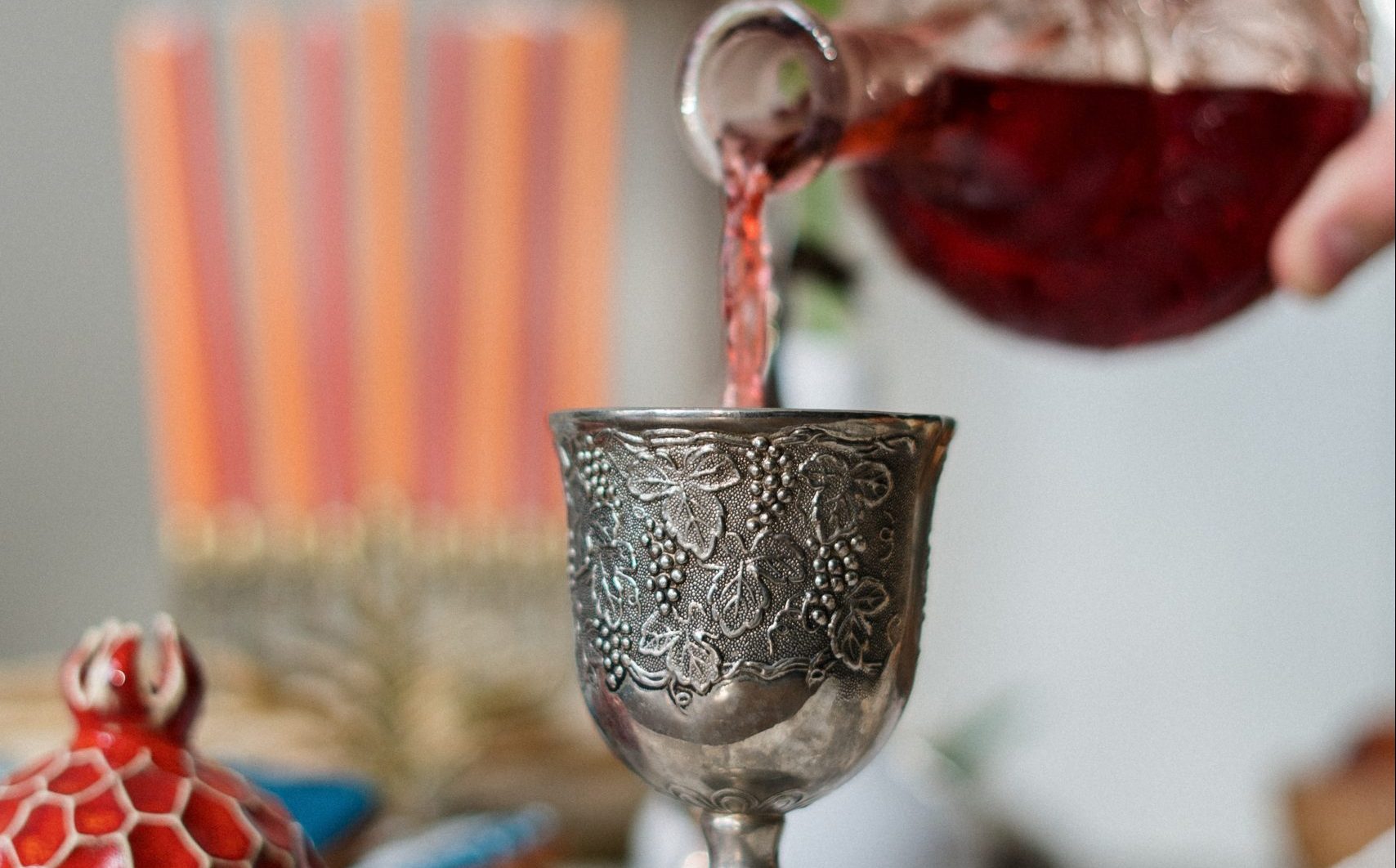
pexels-rodnae-productions-9241913

In addition to kiddush said on Shabbat, a kiddush cup is often brought out for Havdalah that ends Shabbat, at a Passover seder, and at a wedding ceremony. Strictly speaking, the wine needed for each of these different important Jewish events is not kiddush except over wine at Pesach seders, but many like to use a kiddush cup in order to fulfill these other wine-demanding commandments.

So just to boil it down, true kiddush precedes dinner and lunch meals on Shabbat and holidays commanded to Moses like Passover and Sukkot, though not later ones like Hanukkah and Purim.

btn
Kiddush Cup Requirements
pexels-cottonbro-studio-4038239

Technically any cup could be a kiddush cup must if it holds a revi'it of wine, (3.8 fl. oz. or 112 ml.), but traditionally silver or otherwise ornate has been a favorite for kiddush cups to embellish the mitzvah. Nowadays many new modern kiddush cup designs have emerged with unique designs. 

The person who said the blessing or bracha for kiddush should have an amount that could fill one cheek, roughly half of the cup, and if there isn't enough for all of your guests after, just mix in new wine and dole it out in small cups.

btn
What Wines Can Go in a Kiddush Cup
pexels-timur-saglambilek-87224

Many wines are specifically branded as being kiddush wines, though these tend to be extremely sweet and not the nicest to drink a whole glass of. Otherwise, other kosher wines are going to be a good bet, with more varieties today than ever before, from vineyards on every inhabited continent. 


Even if it would be enjoyable, pomegranate wine and other non-grape drinks should be saved for the meal. Some people prefer to use 100% grape juice instead of wine, which is fine too. This will almost always have a label saying it is kiddush grape juice.

btn
kosher-gift-baskets_1200x628
Traditional Kiddush Cup
jewish-4294990

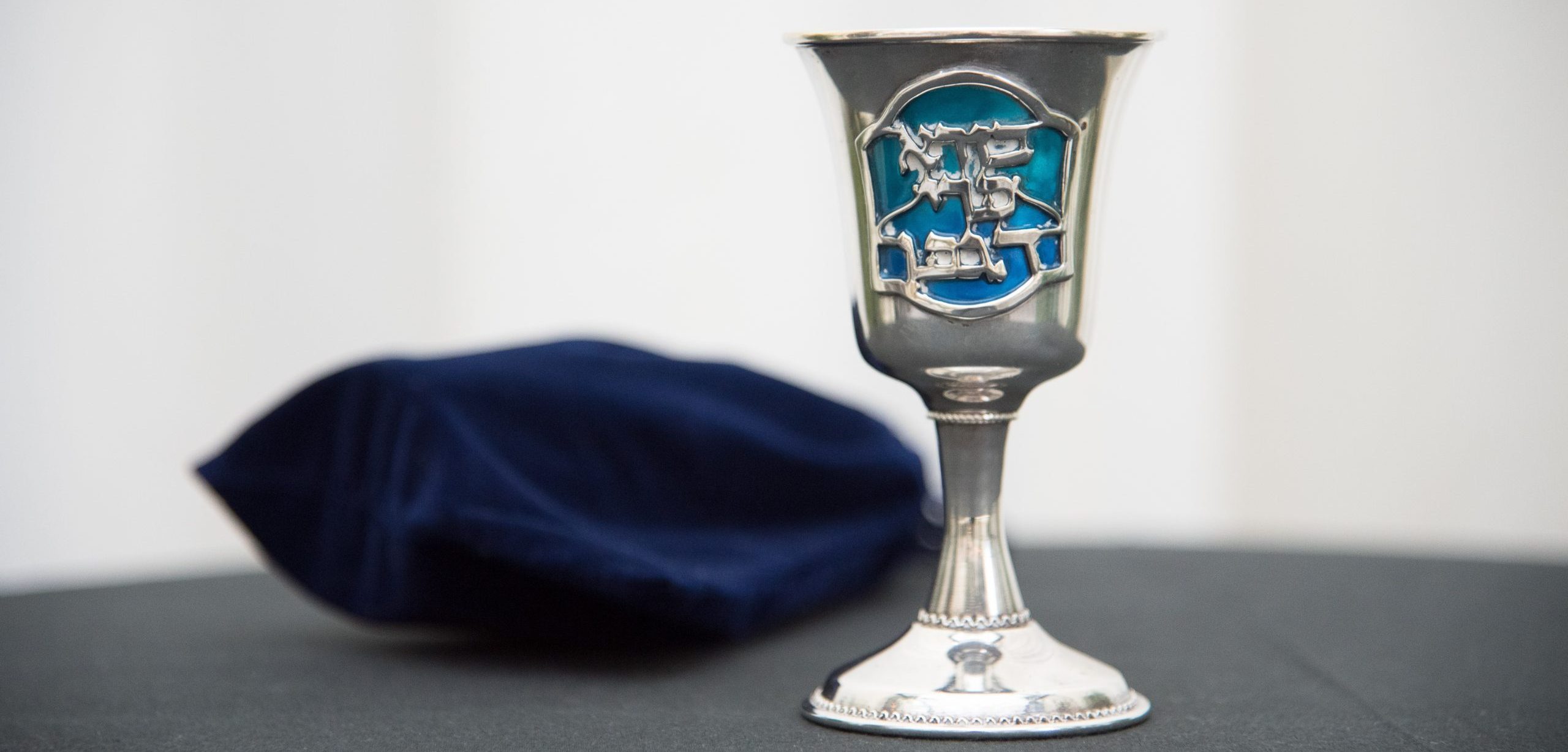
Many people like to use traditional kiddush cups in order to evoke the memory of a beloved relative who made kiddush for the family, or just to add history and gravity to a very important mitzvah. Traditional kiddush cups will either have a flat bottom so as to hold it from underneath with the palm facing upwards, or they will stand on a stem like a typical wine-glass. 


Traditionally, silver cups have been the norm, though a number of ceramic varieties are also used. These will be decorated with different messages such as “Shabbat kodesh” (holy Sabbath), “borei pri hagen” which is the ending of the blessing for wine, or will contain iconography of the Old City of Jerusalem and the Temple. Others may have other time tested designs to look floral or lace.

btn
Modern Kiddush Cup
handmade_ceramic_and_sterling_silver_kiddush_cup_with_ancient_hebrew

Many cups might be suitable, but it is best to make the blessings over something that is beautiful and special for Shabbat and holidays. Most importantly, it should be something that speaks to you. 

Newer, more modern kiddush cup designs feature gorgeous combinations of materials, like glass or ceramics with metal, and have a greater variety of colors and textures than more traditional looks. This is a great way to showcase your family’s unique style and give your own flavor to this beautiful mitzvah.

btn
Small Kiddush Cups and Kiddush Fountains
Yair-Emanuel-Anodized-Aluminum-Kiddush-Fountain-Silver_large

There are a number of kiddush cups that might look like they could be repurposed for a toddler or used as a shot glass, but the reasoning is much deeper. The real purpose for these cups is to have something small to pour the kiddush wine so that it can be passed around. Some ornate kiddush cups have a fountain that allows you to pour the kiddush wine from the main cup into the others all at once. 

Many Jews, especially with Lithuanian customs, use 6 small cups placed in a circle to form a ‘crown’ around the kiddush cup when reciting the prayers. Even with other customs, it is good to have a set of small kiddush cups on hand to dole out to others at the table.

btn
Elijah’s Cup
yair_emanuel_large_hand-painted_cup_of_elijah_with_jerusalem_design

The Cup of Elijah is a special cup brought out for the Pesach seders to (hopefully) present to the prophet who is believed will announce the arrival of Moshiach, and end the exile. These special cups are not specifically for kiddush, though it will be used for the holiday to hold a glass of wine. These are often decorated to look great on the table for Pesach, and to display year round. 


No matter what the day is, you should make sure that all your kiddush cups are special, and look beautiful to you. Look at the full set of modern kiddush cups or more traditional kiddush cup designs on the site.

btn
kiddush-cups-cat-m-2020

JWS POST YOU MAY LIKE

Round challah for Rosh Hashanah with honey
Round Challah for Rosh Hashanah with Honey
Rosh Hashanah recipes
What Are the Best Rosh Hashanah Recipes for a Sweet New Year?
When is Rosh Hashanah in 2026? In 2026, Rosh Hashanah begins at sundown on Friday, September 11, and ends at nightfall on Sunday, September 13. It falls on 1–2 Tishrei 5787 in the Hebrew calendar. Food plays a central role in Rosh Hashanah observance and tradition, with rich symbolism woven
A Jewish man blowing the Shofar (ram's horn), which is used to blow sounds on Rosh HaShana (the Jewish New Year) and Yom Kippur (day of Atonement)
Rosh Hashanah in the Bible: Origins of the Jewish New Year
Rosh Hashanah – the Jewish New Year, coming up September 11-12, 2026 – is one of the most important and widely celebrated holidays in Judaism. But while many are familiar with its modern customs, from apples dipped in honey to the sounding of the shofar, fewer know about its biblical
Rosh Hashanah fun for kids
Rosh Hashanah Activities for Kids: Fun & Meaningful Holiday Ideas
Looking for fun ways to keep kids busy this Rosh Hashanah? Discover hands-on crafts, apple-and-honey taste tests, family games and creative activities you can make with AI – all designed to bring more fun and meaning to the holiday.
Pomegranates for Rosh Hashanah
Why Do We Eat Pomegranates on Rosh Hashanah?
Pomegranates are a popular fruit to eat during Rosh Hashanah and a significant symbol in Judaism year-round, often gracing Judaica and Jewish jewelry. Since Rosh Hashanah 2026 begins on September 11 at sundown, now is the perfect time to learn more about the significance and symbolism of the pomegranate in Judaism and Rosh Hashanah!
A Jewish man blowing the Shofar (ram's horn), which is used to blow sounds on Rosh HaShana (the Jewish New Year) and Yom Kippur (day of Atonement)
From Reflection to Renewal: The Deep Meaning of Yom Kippur
Yom Kippur, the Day of Atonement, is the holiest day of the Jewish year: a time of reflection, forgiveness, and renewal. In 2026, it begins at sundown on Sunday, September 20, and lasts through the following evening. Marked by fasting, prayer, and other austere restrictions, Yom Kippur is often seen