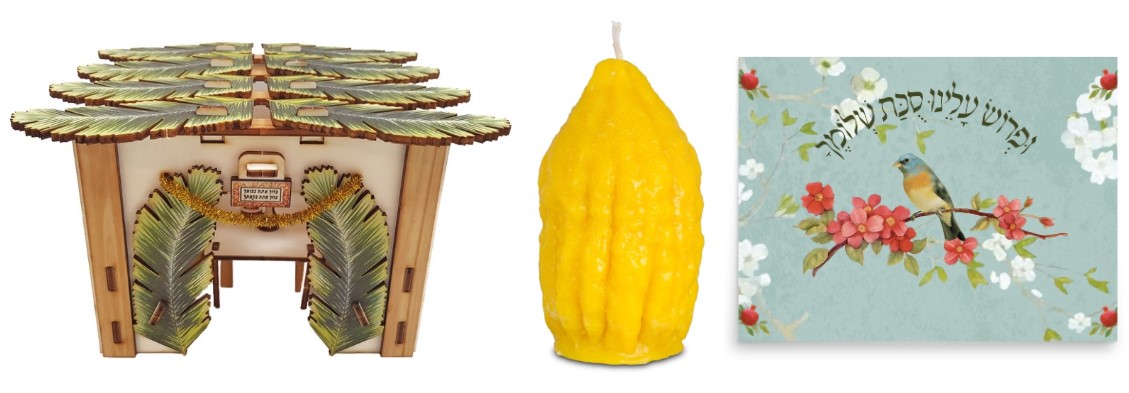


After the intensity of Rosh Hashanah and Yom Kippur, it’s time for the joyous holiday of Sukkot! For 7 days in Israel or 8 in the diaspora, we relax in beautifully decorated Sukkahs, shake our Lulavs and Etrogs, and eat delicious meals outdoors under the stars and sky.
Arriving in the early fall when the weather couldn’t be better, Sukkot gives us a wonderful opportunity to spend quality time with family, try new recipes, and get creative with our decorating skills as we furnish our little makeshift home away from home. And while Sukkot is fondly known for its rather enjoyable customs, it is also identified as one of the most deeply significant holidays in Judaism. Symbolically, each of its observances and traditions has a great and profound meaning behind them – and we’re here to help you learn about them!

What is Sukkot and why is it celebrated?
Let’s start at the beginning. While most Jewish holidays are observed in commemoration of historic events, Sukkot is a bit different because it doesn’t seem to be connected to a specific event, but rather it’s celebrated to remember the wondrous miracles G-d performed in the desert, namely the divine shelters G-d gave to the Jewish people to protect them as they wandered for 40 years.
Observed on the 15th of the Hebrew month of Tishrei, just five days after Yom Kippur, Sukkot also celebrates the harvest season, which is why Sukkot’s other name in the Torah is Chag HaAsif – the Festival of the Ingathering.

What do people do on Sukkot?
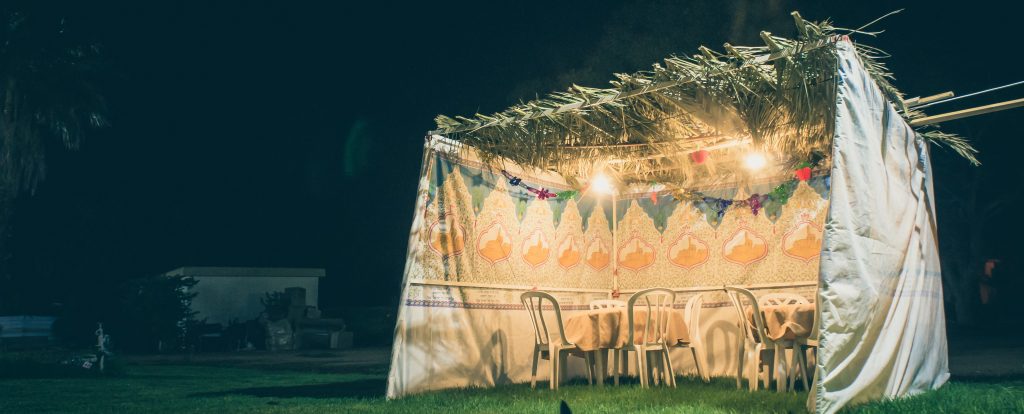
The main objective of Sukkot is to fulfill the obligation of building a Sukkah and “dwelling” in it to commemorate the temporary homes the Israelites lived in after being liberated from Egypt. A Sukkah is a type of makeshift hut, either freestanding or using the support of existing structures like the side of a building or a porch, and with a roof made from organic materials such as leaves and branches, referred to as S’chach. The S’chach is arranged in order to provide shade from the sun while at the same time leaving enough gaps to see the stars. Many families decorate their Sukkahs, which can be a particularly fun and festive activity for children.
From the first night of Sukkot until the last, Jews traditionally try to spend as much time as possible in their own or others’ Sukkahs. Mealtimes in the Sukkah are a popular tradition, and many people visit family and friends to share meals in the Sukkah together. Some people even sleep in their Sukkah!
Why do we eat in the Sukkah?
Over Sukkot, the Sukkah essentially becomes an extension of our homes, and we are encouraged to do our best to regard it as a fully functional, temporary substitute to our permanent residences. This means that for all intents and purposes, the Sukkah becomes the place where we should ideally pray, sleep, eat, or otherwise operate in as though it were our real home.
Of course, that’s not always as easy to do as it sounds. Practically speaking, because of the way a kosher Sukkah is built, it can be rather exposed to the elements, making them potentially uncomfortable in bad weather. Therefore, many people choose to fulfill the minimum of just eating meals in the Sukkah. (And if you’re looking for recipe ideas for your Sukkot meals, see our blog post here!)

Is Sukkot a High Holiday?
No. The two major Jewish holidays commonly referred to as the High Holidays (or ‘Yomim Norei’im’ in Hebrew) are Rosh Hashanah and Yom Kippur; however, Sukkot is one of the Shalosh Regalim, or the Three Pilgrimage Festivals.
Back in the days of the Holy Temple, the Shalosh Regalim – which includes Sukkot, Passover, and Shavuot – were the three major festivals when every Jewish man over the age of 20 was obligated to journey to Jerusalem for special services at the Temple. As Sukkot was also a harvest festival in Biblical times, the secondary purpose for Sukkot’s yearly pilgrimage to Jerusalem would be to celebrate the harvest and offer appreciation to G-d for that year’s fruitful bounty.
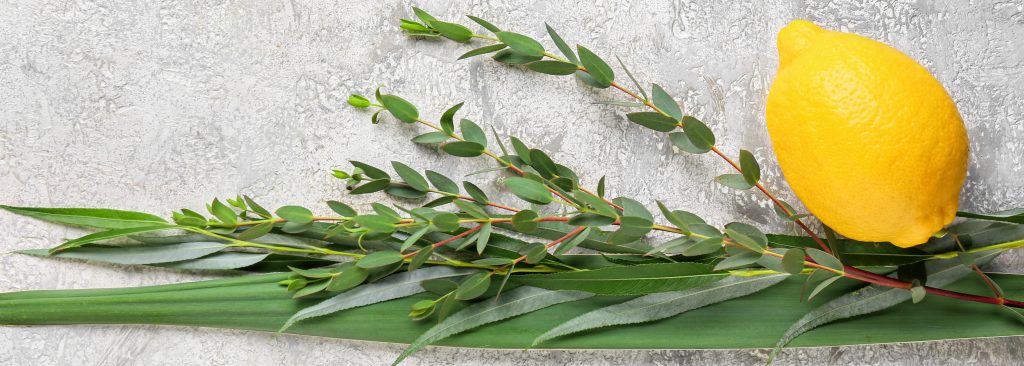
What are the Four Species of Sukkot?
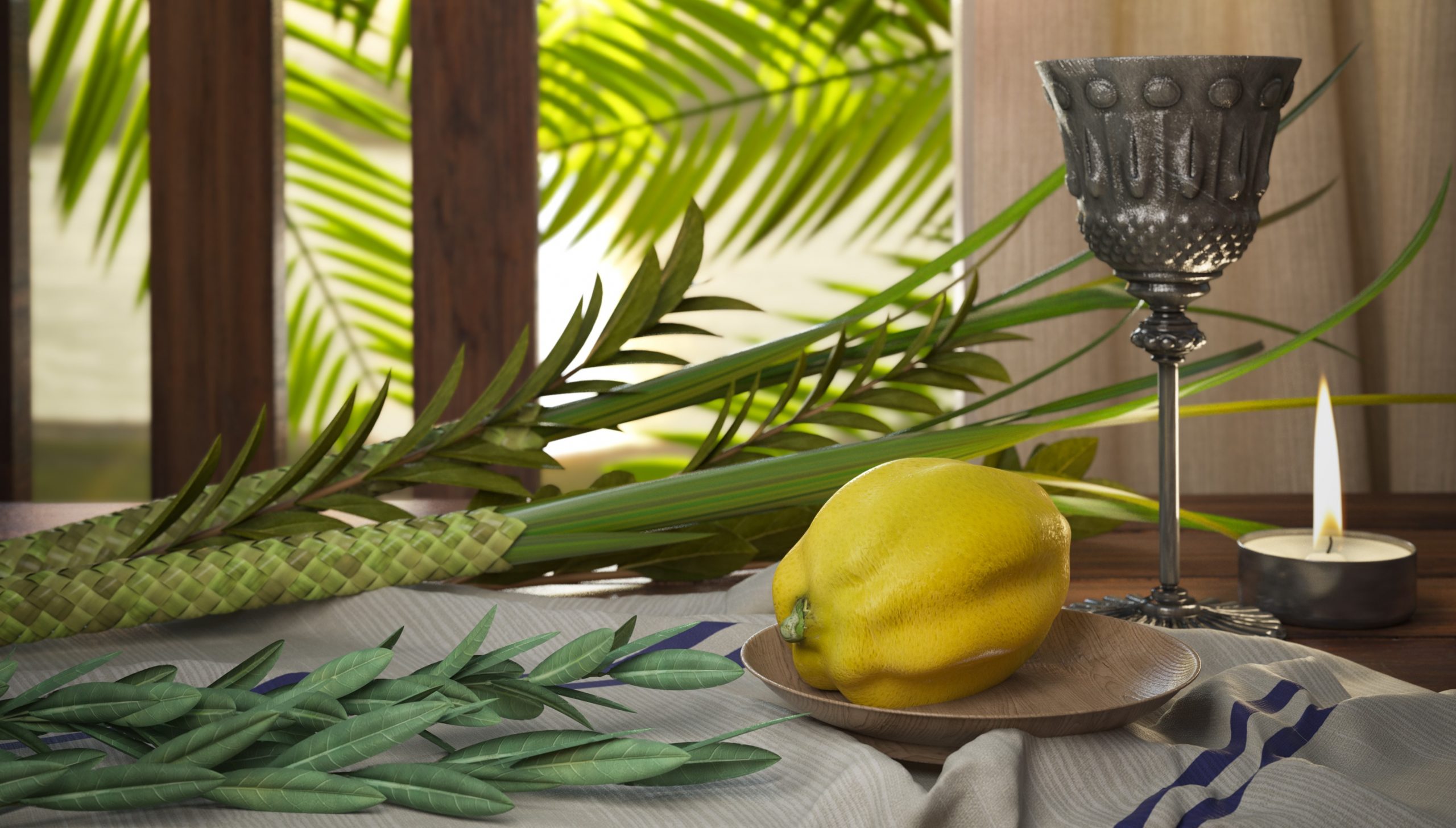
The Four Species of Sukkot, or the Arba Minim, consists of an Etrog (citron), a Lulav (the closed frond of a date palm), a branch of Hadass (myrtle), and a branch of Aravah (willow.) Three of the species, the Lulav, the Hadass, and the Aravah – are bound together to be held in one hand, while the Etrog is held in the other. They will be used to fulfill the mitzvah of shaking the Lulav and Etrog.
What is the purpose of the Lulav and Etrog?
According to Jewish tradition, the Four Species represent the Four Types of Jews: each one at a different level of observance or knowledge, yet together, comprising the identity of the Jewish nation.
Unity is always an important theme in Judaism, but on Sukkot, this idea of the unity of the Jewish people is especially significant. Thus when we bring the Etrog and Lulav together and shake them together, we are representing the wholeness of the Jewish people!

One of the defining mitzvahs (commandments) of the Sukkot holiday is to shake the Lulav and Etrog in six directions: South, North, East, Upwards, Downwards, then West, in that order. The simplest explanation for this is that we are acknowledging G-d’s divine presence in every corner of the world, but the great Kabbalistic teacher, the Arizal, offers another perspective, in which each direction represents an emotion: South is Chessed – kindness; North is Gevurah – discipline; East is Tiferet – harmony; while Upwards is Netzach – perseverance; Downwards is Hod – submission; and West is Yesod – connection.
A seventh attribute, Malchut – communication, is represented by the heart, and since between each wave, the Lulav and Etrog are repeatedly brought close to the heart, this action is thought to symbolize the four types of Jews continually returning to the heart of Judaism: the Torah, which communicates the ideology and legacy of what it means to be a Jew to people in every corner of the world!