

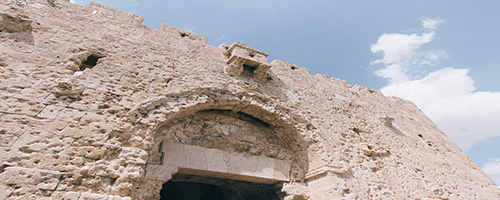
With bullet-ridden stones, Jerusalem’s Zion Gate has a fascinating story. Originally built between 1537 and 1541 under Ottoman Empire rule, Zion Gate became the prominent scene of a short, but fierce battle fought during the 1948 Israeli War of Independence, when Arab forces laid siege to Jerusalem’s Old Jewish Quarter, forcing Israeli combatants to retaliate in order to rescue Jewish residents trapped inside.
Badly outmatched, the desperate Israeli troops opened fire at the Jordanian militants guarding the gate, wreaking havoc and breaking the siege long enough to evacuate the Jewish inhabitants and leaving the walls of Zion Gate covered in bullet holes, which earned it the nickname the “Wounded Gate.”
However, battle scars aren’t the only remnants left behind from the 1948 skirmish. If you look closely, you’ll also find a curiously shaped Mezuzah, which is said to have been made from the casings of bullets collected from the shootout to commemorate the bravery of those who fought to liberate Jerusalem from totalitarian control. And just a bit further away, you’ll find another similar Mezuzah on Jaffa Gate, this one made from Jordanian artillery shells.
At first glance, they may not seem very grand, but in truth, the Mezuzahs are far more than just the fulfillment of a biblical commandment or the memorials leftover from a decades-old war. Beyond their history, what makes the Jaffa and Zion Gate Mezuzahs special is that they were created from objects normally used to spread violence, transforming them into something wonderful. These Mezuzahs embody the message of modern Israel, proving that with enough perseverance, beauty can be born from the ashes of destruction. With their design and their origins, they manage to capture the principles and attitude of the men and women who helped shape Israel into the thriving democracy it is today, paving the way for artists, entrepreneurs, scholars, and scientists to build upon what they started.
Looking back at this pivotal moment in Israel’s timeline, it’s clear that Israel has grown a lot since 1948, but one thing certainly remains the same: Israel has a talent for beauty. Throughout the years, Israeli artists have shone brightly among their peers and their craftsmanship has become legendary, particularly where Jewish art is concerned. So if you’re ever on the hunt for a spectacular piece of art or Judaica that will outshine all the rest, look no further than the outstanding works of Israel’s finest artists and designers!