


Thousands of years ago, when the First and Second Holy Temples stood in Jerusalem, the Jewish people prospered for centuries as they flourished in the golden ages where everything in Israel, from its unique culture to its judicial system and its societal structure, were built around worshiping God and the teachings of the Torah. During these years, the People of Israel enjoyed a meaningful existence where pilgrimage trips to the Temple happened regularly, sacrificial offerings were burnt daily on the altar, and the Temple Priests sang songs of praise in the Temple courtyard. It was a blessed time when God’s presence on earth could still be keenly felt, when miracles openly occurred, and when the majority of Torah laws were not just theoretical but also authentically practiced.
 Though there were moments when Israel fought amongst themselves or were the targets of an enemy nation, ultimately, these occasional skirmishes were little, more than speed bumps in the grand scheme of things. As long as the priests of the Holy Temple and the rest of Israel remained faithful to their religious practices and maintained proper Temple worship, Israel remained safe under God’s heavenly protection.
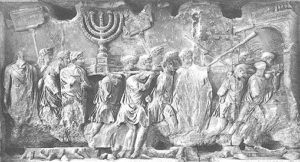
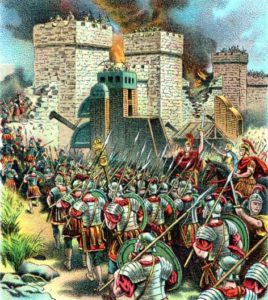
Yet sadly, the Jew’s rightful reign over Israel ultimately came to a bitter end when Jerusalem fell under siege first by the ancient Babylonian king, Nebuchadnezzar, and later, by the mighty Roman Empire. In both cases, following the breach of Jerusalem’s city walls, the First and Second Temples were plundered of their holy artifacts, set ablaze, and burned along with much of the city. Nearly all those who survived the vicious onslaughts were subsequently captured and forced into exile.
What Are the Three Weeks in Judaism?
Considering that of all the many horrific calamities to befall the Jewish people, the destruction of the two Holy Temples remains the singular greatest tragedy in our history, it comes as no surprise that we observe the Three Weeks. During this time, Jews are obligated to perform symbolic mourning rituals for 3 weeks to illustrate that even after thousands of years, the Jews continue to grieve the tremendous loss of both Temples. According to the Talmud, “Those who mourn the destruction of Jerusalem will merit seeing it rebuilt with the coming of Moshiach.”
 However, the Three Weeks do not commemorate just the destruction of the two Holy Temples. The Hebrew month of Av is often regarded as an unusually unfavorable time for Jew since during this month, several other significant Jewish tragedies transpired as well. As such, many rabbinic leaders urge Jews to postpone potentially risky endeavors like traveling, undergoing surgery, or appearing in court against a non-Jew until after Tisha B’Av. Of course, not all Jewish religious leaders agree with this stance. Some maintain that the Three Weeks is not a period of punishment, but rather an opportunity for self-reflection, repentance, and spiritual growth.
What Can’t You Do During the Three Weeks?
During this time of reflective mourning, throughout the Three Weeks, Jews are expected to avoid pleasurable activities since enjoying them would contradict the melancholic mindset we are meant to feel. Depending on one’s minhag (custom), community, and level of observance, a person will traditionally avoid one or more of the following actions:
- Playing or listening to music;
- Buying new clothing;
- Cutting one’s hair or nails;
- Eating meat, poultry, or drinking wine;
- Celebrating weddings;
- Taking trips or participating in enjoyable events.
Usually, the Three Weeks will fall out in the summer and begin with a solemn fast day on the 17th of the Hebrew month of Tammuz, in memory of the Roman capture of Jerusalem in the Second Temple era, and end with a second fast day on the 9th of Av, the date when both Temples ultimately burned.
What Are the Nine Days?
Quite simply, the Nine Days refer to the last nine days of the Three Weeks when the intensity of the mourning observances heightens right before the 9th of Av.
What Can’t You Do During the Nine Days?
Although Jews mourn throughout the entire 3-week period preceding Tisha B’Av, during the Nine Days, it is customary to refrain from additional activities, including:
- Planting new trees, grass, or flowers;
- Washing clothes, towels, or linens;
- Wearing new or freshly laundered clothes;
- Knitting, sewing, buying or making new clothing;
- Bathing or showering for reasons other than hygiene;
- Swimming for health or pleasure.
Generally speaking, enjoyable activities should be avoided as much as possible throughout the Three Weeks, especially during the Nine Days since minimally, one should take the Nine Days seriously even if they don’t intend on observing the full Three Weeks.
What Happens on Tisha B’Av?
Because Tisha B’Av is considered the saddest day in the Jewish calendar, each year on this date, we observe a solemn fast day in recognition of the ultimate Jewish tragedy – the burning of the First and Second Jewish Temples. This fast lasts for approximately 25 hours, beginning at sunset the evening before Tisha B’Av and ending after nightfall of the following day. The restrictions for Tisha B’Av include:
- No eating or drinking;
- No washing or bathing;
- No applying cosmetic creams or oils;
- Not wearing leather shoes.
There are, of course, additional customs some people observe, but these are the main prohibitions.
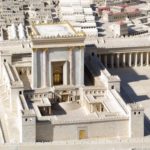
As always, we hope you enjoyed learning more about Jewish history with us, and we wish you an easy and meaningful Three Weeks and Tisha B’Av! May we all merit to see the coming of the Moshiach soon and the rebuilding of the Temple in Jerusalem!
See you all next time!
For more great content, check out our special Buying Guide for the Three Weeks and Tisha B’Av!