
Search
Menorah

What happens in Parashat Tetzaveh?

Torah Portion Tetzaveh in a Nutshell

  • Name: Tetzaveh
  • Reading: Exodus 27:20 – 30:10
  • Haftarah: Samuel 1 15:2 – 15:34


Parashat Tetzaveh Summary


God Instructs Moses Regarding the Mishkan

Instructions regarding the travelling Temple, also called the mishkan, continue:

Use pure olive oil in the lamp and never let it go out.

The Priests’ Clothing

Aaron and his family will be priests. Make them holy, beautiful garments: a breastplate, an ephod, a robe, a tunic, a cap, and a belt. Make them from gold, from blue, purple, and scarlet fine linen.

Precise details regarding the making of each item are issued. Two onyx stones should each be engraved with the names of six of the tribes and placed into the shoulder pieces of the ephod in setting of gold. A breastplate of linen should be set with four rows of stones, one to represent each tribe, so that the High Priest carries them upon his heart. The cap should include a gold plate which is inscribed with the words, “Holy for the Lord”.

Consecrating the Priests

Make linen tunics with girdles and turbans for Aaron’s sons, the priests. The priests are to be sanctified through sacrifice: dress the priests, then offer a bullock and anoint the altar with its blood. Burn the organs and smoke them on the altar; use the flesh as a sin offering. Slaughter a ram and spread its blood around the altar; cut it into pieces and smoke it on the altar. Slay another lamb and dab its blood on Aaron and his sons’ ears, hands, and toes. Take bread, oiled bread, and a wafer from the basket with the ram and they shall wave it as a wave offering. They shall eat of the offerings and purify the altar.

Serve near the people so that they will know that I am their God who brought them from Egypt.

Make an altar of acacia wood and plate it with gold, and place it before the ark and its covers.

 

Beautiful Judaica by Judaica Webstore

JWS POST YOU MAY LIKE

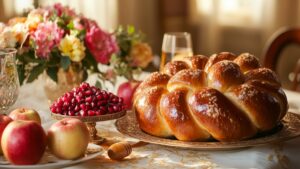
Round challah for Rosh Hashanah with honey
Round Challah for Rosh Hashanah with Honey
Rosh Hashanah recipes
What Are the Best Rosh Hashanah Recipes for a Sweet New Year?
When is Rosh Hashanah in 2026? In 2026, Rosh Hashanah begins at sundown on Friday, September 11, and ends at nightfall on Sunday, September 13. It falls on 1–2 Tishrei 5787 in the Hebrew calendar. Food plays a central role in Rosh Hashanah observance and tradition, with rich symbolism woven
A Jewish man blowing the Shofar (ram's horn), which is used to blow sounds on Rosh HaShana (the Jewish New Year) and Yom Kippur (day of Atonement)
Rosh Hashanah in the Bible: Origins of the Jewish New Year
Rosh Hashanah – the Jewish New Year, coming up September 11-12, 2026 – is one of the most important and widely celebrated holidays in Judaism. But while many are familiar with its modern customs, from apples dipped in honey to the sounding of the shofar, fewer know about its biblical
Rosh Hashanah fun for kids
Rosh Hashanah Activities for Kids: Fun & Meaningful Holiday Ideas
Looking for fun ways to keep kids busy this Rosh Hashanah? Discover hands-on crafts, apple-and-honey taste tests, family games and creative activities you can make with AI – all designed to bring more fun and meaning to the holiday.
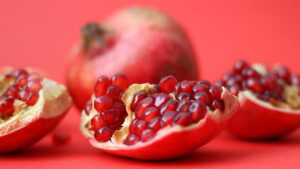
Pomegranates for Rosh Hashanah
Why Do We Eat Pomegranates on Rosh Hashanah?
Pomegranates are a popular fruit to eat during Rosh Hashanah and a significant symbol in Judaism year-round, often gracing Judaica and Jewish jewelry. Since Rosh Hashanah 2026 begins on September 11 at sundown, now is the perfect time to learn more about the significance and symbolism of the pomegranate in Judaism and Rosh Hashanah!
A Jewish man blowing the Shofar (ram's horn), which is used to blow sounds on Rosh HaShana (the Jewish New Year) and Yom Kippur (day of Atonement)
From Reflection to Renewal: The Deep Meaning of Yom Kippur
Yom Kippur, the Day of Atonement, is the holiest day of the Jewish year: a time of reflection, forgiveness, and renewal. In 2026, it begins at sundown on Sunday, September 20, and lasts through the following evening. Marked by fasting, prayer, and other austere restrictions, Yom Kippur is often seen