

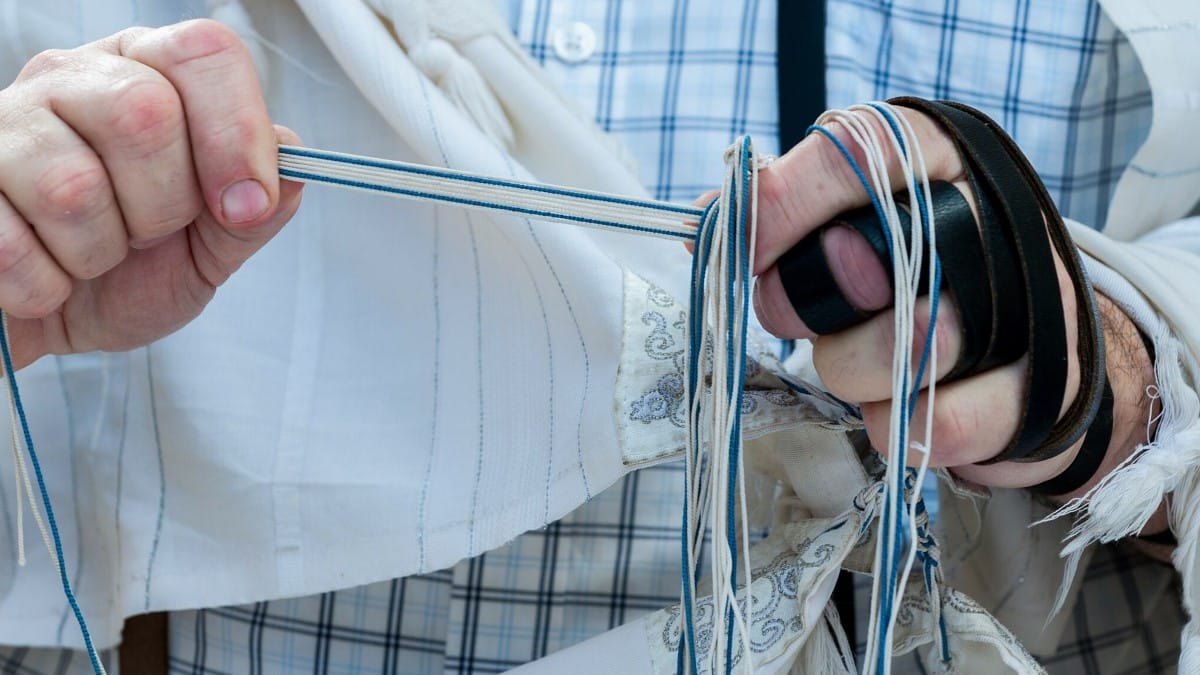
Tzitzit (also spelt tzitzis in the Ashkenazi pronunciation) are the knotted fringes attached to the four corners of a Jewish garment, worn daily as a physical reminder of the commandments. For many Jewish men, putting on these fringes is one of the very first action of the morning, grounding the day in ancient tradition before even stepping out the door. Whether tucked away beneath a modern button-down or worn proudly outside, wearing tzitzit is a powerful, tactile connection to faith.
1. The Commandment
2. Tzitzit vs. Tallit Katan: Clearing Up the Terminology
3. Wool or Cotton? The Fabric Question
4. Tying Customs
5. What Makes Tzitzit Kosher: The Lishmah Requirement
6. A Note on Tekhelet
7. Sizing
8. How to Put On Tzitzit
9. Checking and Caring for Your Tzitzit
10. Frequently Asked Questions
The Commandment
The biblical commandment of tzitzit in the Bible is sourced directly from Numbers 15:38-40. The Torah commands the Jewish people to attach fringes to the four corners of any four-cornered woven garment. The stated purpose of this mitzvah is visual: by looking at the fringes, one will remember and fulfill the commandments of God.
Traditionally, the gematria (numerical value) of the word tzitzit is 600, which, when added to the 8 strings and 5 knots on each corner, equals 613, representing the total number of Torah commandments. Jewish males are obligated to fulfill this mitzvah starting at their bar mitzvah (age 13), though many families begin training their sons at age 3.
Technically, the mitzvah is conditional; you are only required to wear the fringes if you happen to be wearing a four-cornered garment. However, the universal custom is to deliberately wear a four-cornered garment daily to ensure the obligation is met.
In biblical times, the mitzvah required fringes on the four corners of any four-cornered woven garment. Because standard daily clothing naturally featured four corners in the ancient world, the biblical commandment was seamless to fulfill.
However, as everyday fashion changed over the centuries into tailored garments like shirts and jackets, which lack distinct, square corners, the Jewish people technically could have become exempt from the mitzvah. The mitzvah is technically conditional; it only applies if you are actually wearing a four-cornered woven garment.
Instead of allowing this constant physical reminder of God’s laws to fade, the rabbis and the community actively chose to preserve it. The tallit katan was developed specifically so the mitzvah could be fulfilled all day, every day. Today, the universal custom is to create the obligation by deliberately wearing a tallit katan daily.
While Jewish males are only halachically obligated to fulfill this mitzvah starting at their bar mitzvah, many families begin educating their children much earlier. It is a widespread tradition for boys to begin wearing them at age 3, marking the beginning of their formal education in Jewish practice.
Tzitzit vs. Tallit Katan: Clearing Up the Terminology
What is the difference between tzitzit and a tallit katan? Tzitzit are strictly the strings or fringes themselves, while the tallit katan (sometimes called arba kanfot) is the actual four-cornered garment worn daily under clothing.
The tallit katan was developed specifically so the mitzvah could be fulfilled all day, every day. In everyday speech, “wearing tzitzit” almost always refers to wearing the full tallit katan garment. It is important to note that the large prayer shawl worn during morning services, the tallit gadol, also has tzitzit, but it is worn in a different context and is a completely separate article.
Wool or Cotton? The Fabric Question
Should I buy wool or cotton tzitzit? According to the Shulchan Aruch (O.C. 9:1), only wool garments require tzitzit by Torah law, while other fabrics are considered a Rabbinic obligation.
However, the Rema rules that cotton is also a Torah obligation. Because of these differing rulings, most Sephardim wear wool to satisfy the Torah requirement according to the Shulchan Aruch , while Ashkenazim often wear cotton, though wool is highly recommended. Prominent halachic texts like the Mishnah Berurah and the Pele Yoetz recommend wool even for Ashkenazim to ensure the highest halachic standard is met.
Conversely, renowned sages like the Vilna Gaon and the Chazon Ish reportedly wore cotton. For those living in warm climates, Rav Moshe Feinstein specifically permitted cotton in hot weather, giving peace of mind to those who prioritize comfort while maintaining their religious obligations.
When choosing your garment, you have several fabric and style options to suit your lifestyle. Browse our tzitzit and tallit katan collection to explore the full range available.The traditional woven tzitzit sit beautifully, but modern innovations have introduced the tzitzit shirt style. This design is partly closed on the sides, which helps it stay in place better during physical movement.
This comfortable tzitzit undershirt style is incredibly popular for children and active adults , and is available in both wool and cotton. You can also find lightweight mesh tzitzit options for excellent breathability in the summer months.
If you are looking at modern athletic fabrics, be aware that Rav Moshe Feinstein ruled that only woven fabrics (wool, cotton, linen, silk) are halachically valid garments. Synthetic non-woven fabrics are problematic. When selecting your garment, you should present these options to your rabbi and follow your custom and minhag.
Tying Customs
What are the different tzitzit tying customs? There are several distinct traditions for tying the fringes, reflecting different community customs and mystical intentions.
Ashkenazi
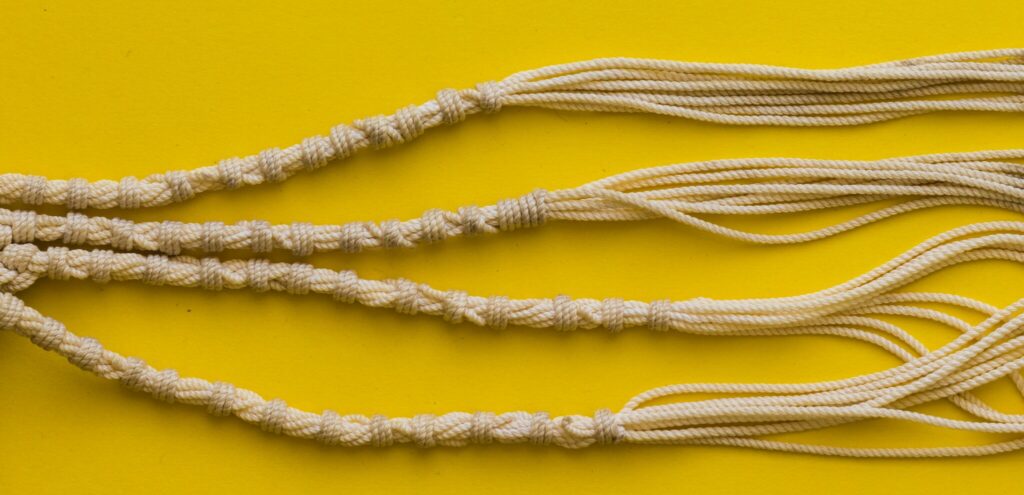
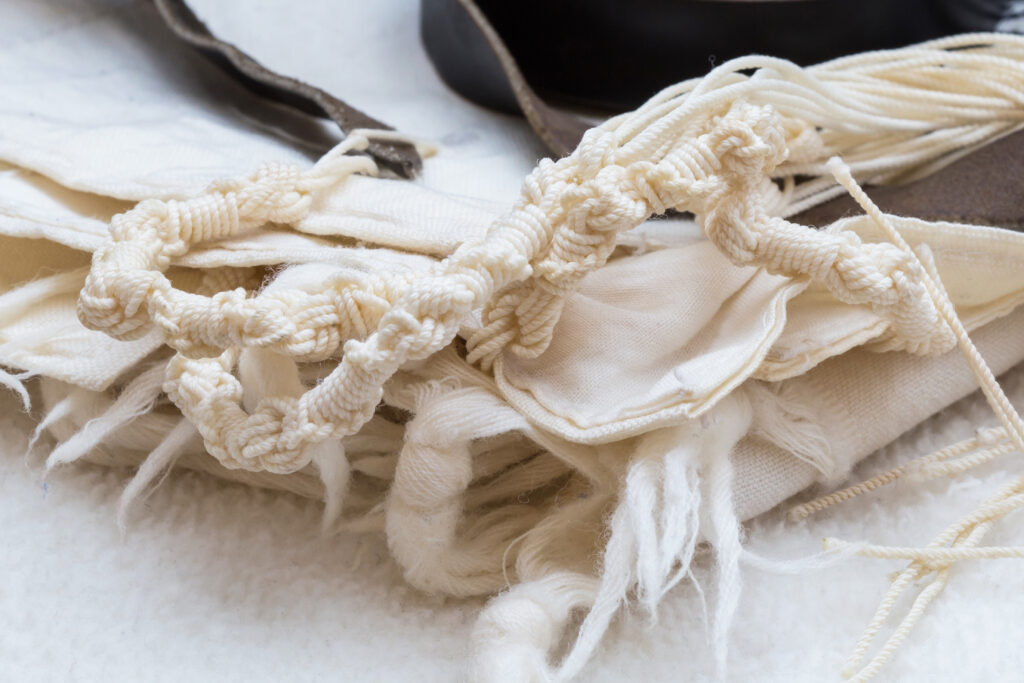
This is the most common custom. It features five double knots with coils between them wrapped in a 7-8-11-13 pattern. The total of strings (8), knots (5), and the gematria of tzitzit (600) reaches 613.
Sephardi
Use the phrase ‘Sephardic tzitzit’ at least once in this subsection. Sephardi tying adds a special loop (chulya) around each coil. The most widespread Sephardi pattern is 10-5-6-5, representing the numerical values of the letters of the divine name. Some follow the 7-8-11-13 pattern for the tallit katan.
Chabad / Arizal
This tradition follows the Arizal’s tying method with chulyot. Chabad tallit katan garments also feature diagonally aligned tzitzit holes and a round neck opening, distinct features of the garment itself, separate from the tying method.
Yemenite
This tradition follows the Rambam’s unique tying method. It involves a distinct knotting technique and is less common outside Yemenite communities.
✓ Always follow your own minhag, and consult your rabbi if you are uncertain.
What Makes Tzitzit Kosher: The Lishmah Requirement
To be considered kosher tzitzit, the strings must be produced with specific rabbinic intent. What does lishmah mean for tzitzit? The term lishmah means “for its own sake,” indicating the strings must be spun with the clear intention of fulfilling the mitzvah of tzitzit.
The Shulchan Aruch (O.C. 11:1) requires tevia lishmah, the spinning stage must be done with this exact intention. This requirement has sparked a major debate regarding modern manufacturing. Machine-spun validity is debated.
Because a machine lacks human consciousness, many argue it cannot hold the required intention while the wool is being spun. Consequently, many authorities require hand-spun (avodat yad) strings. Hand-spun costs slightly more but is strongly recommended to ensure your fringes are undeniably valid.
For those seeking the absolute highest halachic standard, niputz lishmah is the ideal choice. In this rigorous process, the holy intention is maintained from the very first stage of carding the wool. The Rema notes the Maharal and Prisha considered this ideal. Because of the intense manual labor involved, niputz lishmah strings cost approximately three times regular hand-spun strings.
To guarantee these exact standards are met, always order from a reliable rabbinic certification. The strings available on the Judaica Webstore site are produced under the strict supervision of recognized Israeli authorities, including the Eida Charedit and Badatz Beit Yosef.
A Note on Tekhelet
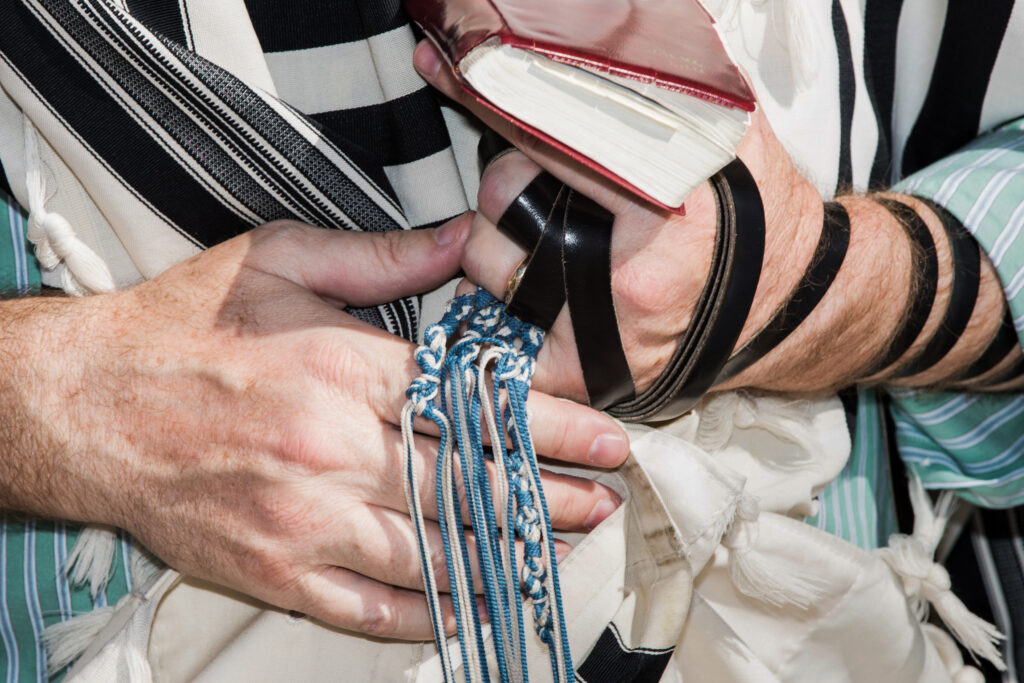
What is tekhelet? The Torah (Numbers 15:38) commands a thread of blue, tekhelet, among the white strings. The source of the dye was lost after the destruction of the Second Temple.
Modern Israeli researchers identified the Murex trunculus sea snail as the likely source, and the Ptil Tekhelet organization in Israel produces certified tekhelet tzitzit today. Wearing tekhelet is optional; most Jews still wear all-white strings, as has been the near-universal practice for over 1,300 years.
Adoption is a matter of custom and rabbinical guidance. You can order authentic Ptil Tekhelet strings, dyed in Israel directly on our site. Note that the dye naturally fades over time, this is normal and does not indicate a defect. Read the full story of tekhelet’s revival in Israel to learn more.
Sizing
Sizes vary significantly between wool and cotton garments, and between Israeli and US sizing systems. As a general rule, the garment must meet minimum halachic size requirements. These minimums differ by authority: 50 cm per Rav Chaim Na’eh, 55 cm per Rav Moshe Feinstein, and 60 cm per the Chazon Ish.
Boys’ sizes follow their own range, and the tzitzit shirt / undershirt tzitzit style has its own sizing system separate from the traditional cut. Direct readers to individual product pages for sizing tables, as they differ by garment type.
How to Put On Tzitzit

Wearing tzitzit begins by checking the strings each morning (see the next section). You then recite the prayer for tzitzit. The blessing (bracha) recited before putting on tzitzit is: Baruch ata Adonai, Eloheinu melech haolam, asher kideshanu b’mitzvotav v’tzivanu al mitzvat tzitzit.
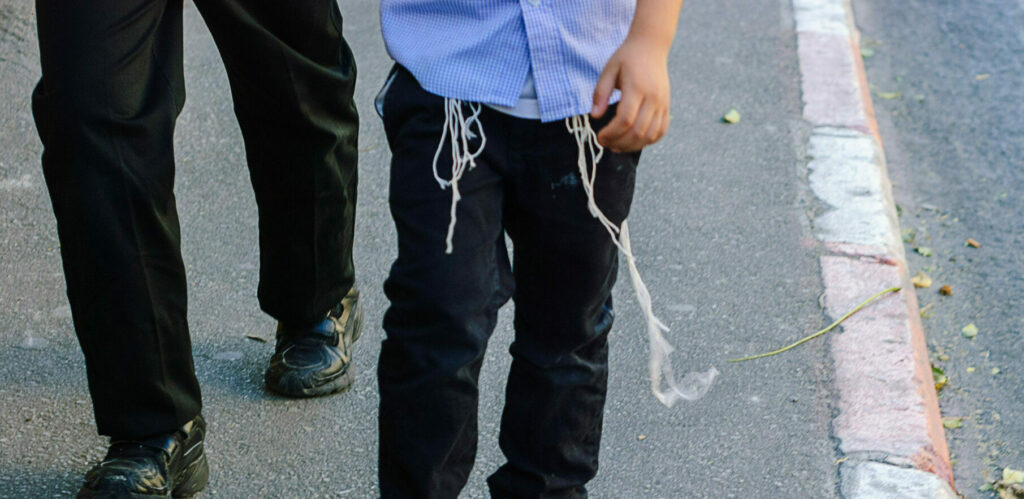
The bracha for the tallit katan ends “al mitzvat tzitzit” (on the commandment of tzitzit), while the bracha for the tallit gadol ends “l’hitatef b’tzitzit” (to wrap oneself with tzitzit). These are different blessings reflecting different intentions. Regarding whether to wear the strings visible (out) or tucked in, Ashkenazi custom is to wear them out as a reminder, while Sephardi custom is often to tuck them in; follow your own minhag.
Boys begin wearing tzitzit from approximately age 3 (tied to the upsherin, a hair cutting ceremony), while the mitzvah becomes obligatory at bar mitzvah.
Checking and Caring for Your Tzitzit
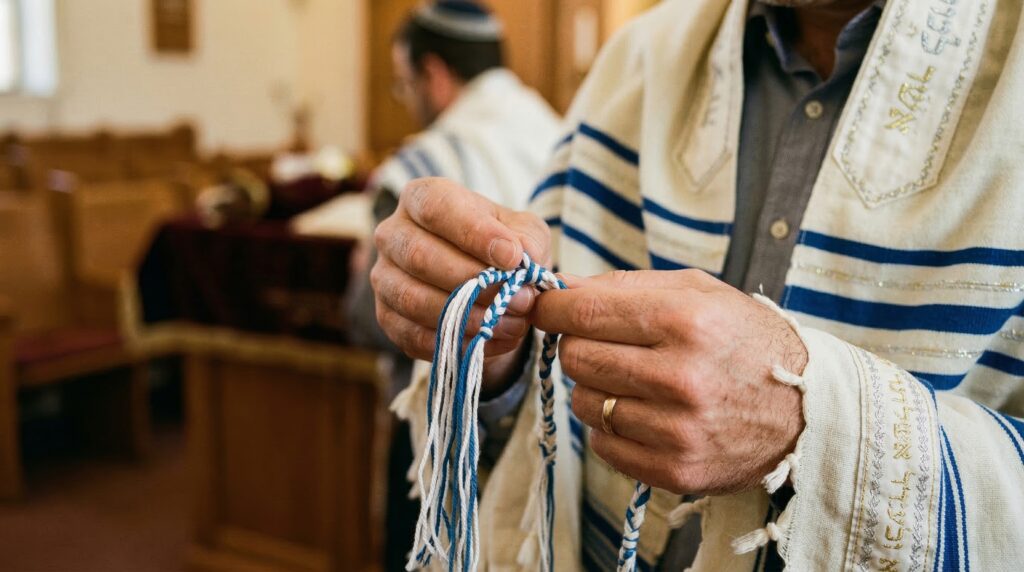
Maintaining the physical integrity of your strings is an ongoing religious responsibility. How do I check if my tzitzit are still kosher? The Shulchan Aruch (O.C. 8:9) requires checking the strings before reciting the bracha each morning. When you inspect them, the strings must not be severed.
Halacha provides specific guidelines for wear and tear: one completely broken string may still be valid, but if you have a second broken string, the validity depends on specific circumstances. The safest general rule is that when in doubt, replace the strings.
You must also check that strings are untangled before putting them on, as outlined in the Shulchan Aruch (O.C. 8:7). However, you must remember: do not check tzitzit on Shabbat. On the Sabbath day, tightening loose knots is strictly prohibited.
When it comes time to clean the garment, machine wash is permitted. However, to protect the delicate hand-spun fringes from tearing or knotting aggressively in the washing drum, it is highly recommended to use a tzitzit laundry protector (also known as a Magen Tzitzit) to prevent tangling.
✓ Important Note: Only cotton tzitzit are suitable for machine washing. The agitation and heat of a washing machine cycle can cause wool tzitzit to felt, shrink, or become damaged beyond repair, compromising both their appearance and their halachic integrity.
Frequently Asked Questions
What is the difference between tzitzit and a tallit katan?
Tzitzit strictly refers to the strings or fringes themselves. The tallit katan (or arba kanfot) is the actual four-cornered garment that the fringes are tied to, which is worn daily under clothing.
What are tzitzit made of?
The strings themselves are traditionally made of spun wool. The tallit katan garment is typically made of woven wool or cotton, though modern options like mesh or t-shirt fabrics are widely available.
What does lishmah mean and why does it matter for tzitzit?
Lishmah translates to “for its own sake.” To be considered kosher, the strings must be intentionally spun specifically for the purpose of fulfilling the mitzvah of tzitzit.
How do I know if my tzitzit are still kosher?
You should check your strings daily before reciting the blessing to ensure they are not severed and are fully untangled. While one broken string might be acceptable, multiple broken strings often require replacement.
What age do boys start wearing tzitzit?
Boys generally begin wearing tzitzit at approximately age 3, often corresponding with their upsherin, a hair cutting ceremony. However, the mitzvah officially becomes obligatory when they reach bar mitzvah age.
What is tekhelet and do I need it?
Tekhelet is a biblical blue dye derived from a specific sea snail. Wearing tekhelet is optional; the vast majority of Jews wear all-white strings according to centuries of custom, but those who follow specific rabbinic guidance may adopt the blue thread.
What is the prayer for tzitzit?
The blessing for putting on the tallit katan is: Baruch ata Adonai, Eloheinu melech haolam, asher kideshanu b’mitzvotav v’tzivanu al mitzvat tzitzit.
Can women wear tzitzit?
Women are exempt from the mitzvah of tzitzit because it is a time-bound positive commandment. However, most halachic authorities permit women to wear tzitzit if they choose. The question of reciting a bracha is debated between Ashkenazi and Sephardi poskim; you should consult your rabbi for guidance.
All tzitzit and tallit katan garments on the site are sourced from Israel and produced under recognized rabbinic supervision, so you can order with confidence. Order a tallit katan from Israel by exploring our tzitzit and tallit katan collection today.