
You’re probably familiar with the 9-branched menorah used on Hanukkah, which has historically been made using various shapes and materials, but did you know there is another, even older and more traditional type of Jewish candleholder?
That would be the 7-branched menorah – inspired by the iconic candelabra that was described in the Hebrew Bible and used by Moses in the Tabernacle, and was later lit daily in the Holy Temple in Jerusalem throughout both the First and Second Temple periods. The Temple menorah was made out of pure gold and lit with only fresh, pure, kosher olive oil.
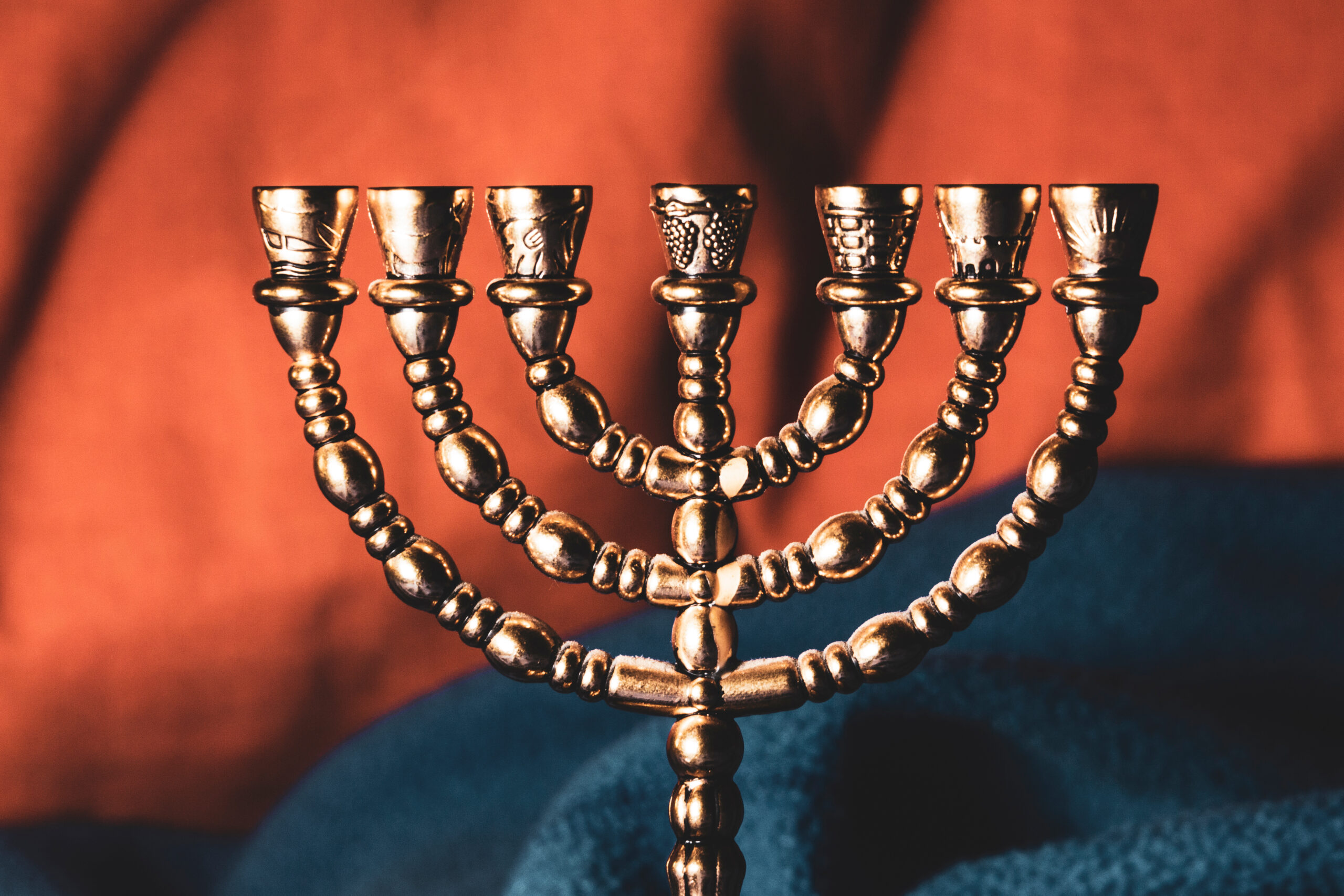
A 7-branched menorah has 6 curved branches with a 7th in the middle, usually all in a straight line at the same level.

Unfortunately, the Temple’s menorah was looted by the Roman army during its siege on Jerusalem and destruction of the Holy Temple in the year 70 CE, and is assumed to have by now been destroyed (likely melted for its valuable gold), lost, or stolen by one of the several other armies who had attacked Rome throughout the centuries.

However, the 7-branched menorah has remained in the Jewish consciousness and imagination in the centuries since, and it has acted as a symbol of Judaism and the Jewish people. It has actually been a Jewish emblem since long before the popularity of the Star of David, and depictions and replicas of it have been found in ancient synagogues all over the Land of Israel.
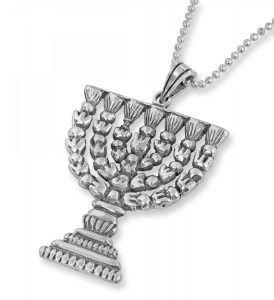
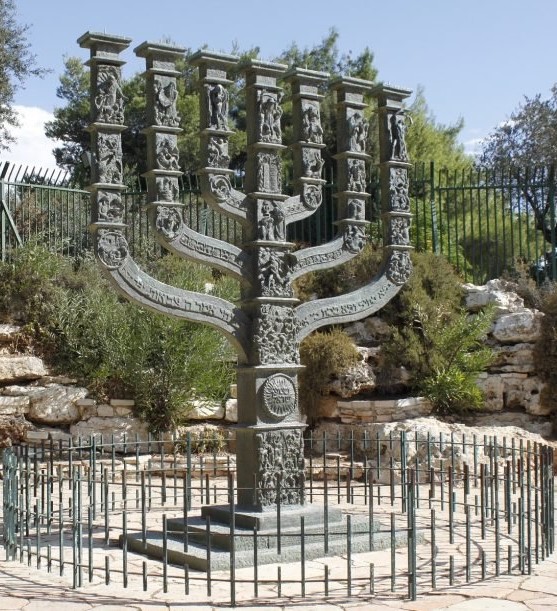
In modern times, historians and artists have constructed replicas of the original Jewish candleholder, the 7-branched menorah from the Temple, according to Biblical and historical descriptions. There are also various artistic adaptations, which use other metals besides the original gold and feature intricate decorations, often with depictions of Jerusalem or other Jewish motifs like the 12 Tribes of Israel, the 12 stones of the Hoshen (the Priestly Breastplate used by the High Priest in the Temple), or the Star of David.
In addition to being a representation of the original Temple menorah, the Talmud also describes the 7-branched menorah as a symbol of human wisdom and enlightenment. Other traditional Jewish interpretations see it as a symbol of God’s Creation of the world, with its six curved branches representing the six days of creation while the center seventh branch stands for the seventh day, Shabbat.
Throughout Jewish history, the 9-branched Hanukkah menorah has become the more popular piece of Judaica in Jewish homes – since it’s necessary for observing the Hanukkah rituals, and because we are not supposed to light a traditional 7-branch menorah outside of the Temple. The Hanukkah menorah was itself also inspired by the original Temple menorah, but with two branches added in order to represent the miracle of the oil that allowed the candelabra to be lit for eight nights instead of one.
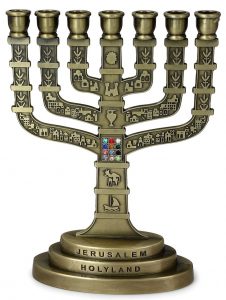
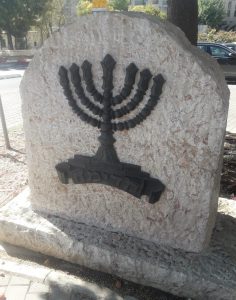
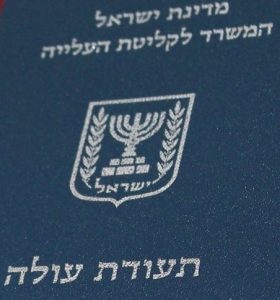
The original 7-branch menorah design has nevertheless persisted as a Jewish emblem, and it is still remembered and recognized as the iconic Jewish candleholder. It is used as a decoration and a traditional symbol of Judaism in synagogues and Jewish homes around the world, and has had a modern resurgence as a powerful representation of Jewish pride and identity. Additionally, it has become particularly strongly associated with modern Zionism and the Land of Israel – it can today be found on the official Israeli coat of arms and seen all over the country on state institutions, public sculptures, and even Israeli passports and other government documents.
This beautiful and traditional symbol of Judaism represents our ancient faith, history, and heritage, and is a timeless icon that still has its place as personal Judaica, a communal symbol on synagogues and public Jewish institutions, and even as a motif on jewelry and other personal expressions of Jewishness.