

Search
Tisha B'Av

Tisha B’Av: A Time to Mourn & Commemorate Jerusalem

This year Tisha B’Av, one of the saddest dates in the Jewish calendar, is observed on Wednesday night, July 22, through Thursday, July 23.

What happened to the Jewish people, to Jerusalem, and to the Holy Temple on this day? Read on to find out more, along with the different ways Jews have been commemorating this difficult day for generations.

A Day of Tragedies
Arch of Titus in Rome

Tisha B’Av, or the 9th of the Hebrew month of Av, marks the end of the three-week mourning period that began on the 17th of Tammuz, and is itself an anniversary of a number of terrible tragedies that befell the Jewish people throughout history. According to the Mishnah (the Oral Torah, part of the Talmud), five specific calamities occurred on the Ninth of Av:

  • The Twelve Spies returned from their mission to scout the Land of Israel; ten spoke disparagingly of the land and caused to rest of the Israelites to cry and panic, for which their generation would not enter the Promised Land as punishment from God
  • The First Temple was destroyed in the 6th century BCE by the Babylonian empire, resulting in the first exile of the Jews from the Land of Israel, along with great desolation and destruction in the city of Jerusalem
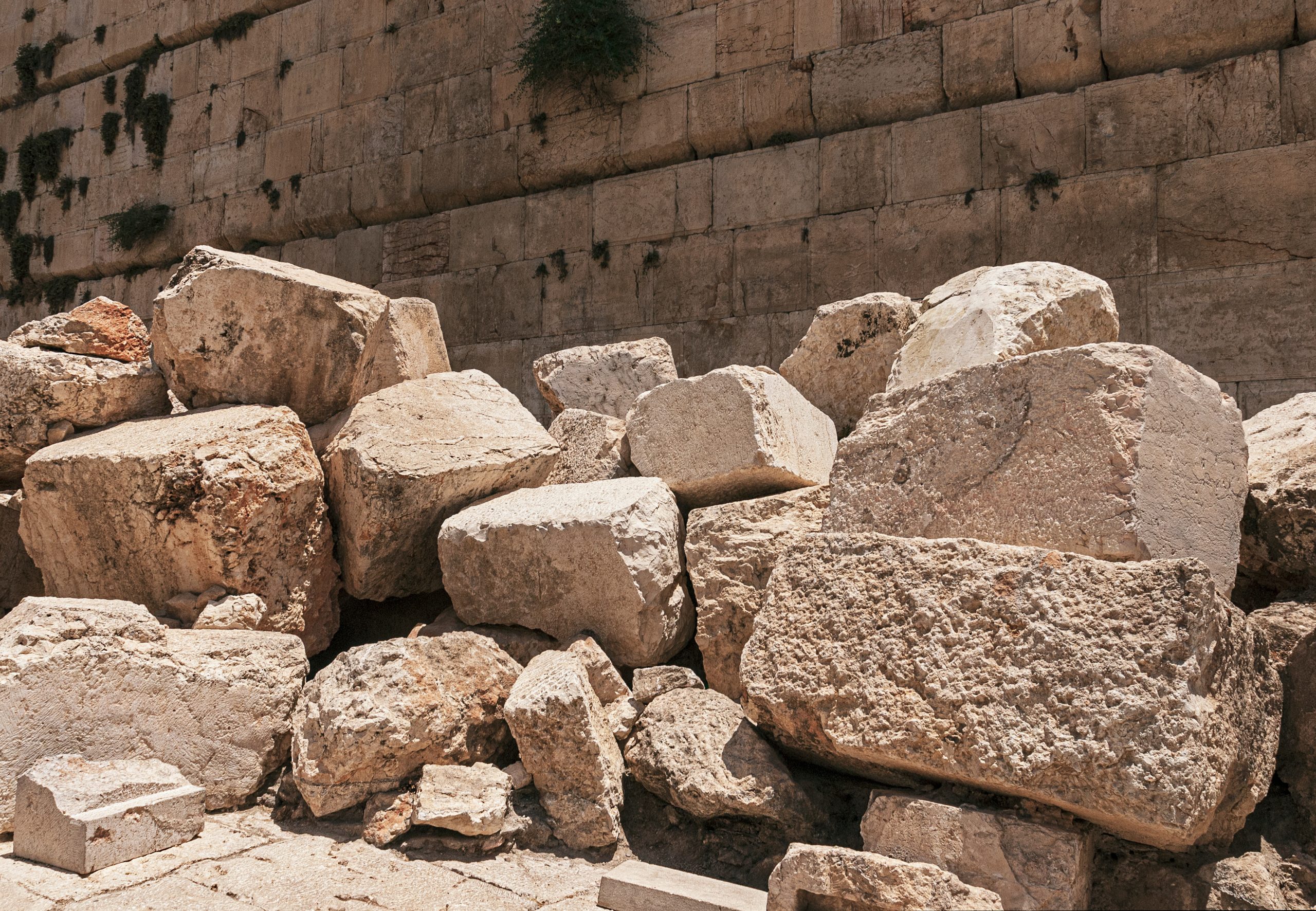
  • The Second Temple was destroyed in 70 CE by the Roman army, following a brutal siege on Jerusalem and resulting in the scattering and exile of the people of Judea
  • The Romans later crushed the Bar Kochba Revolt in 135 CE and killed over half a million Jewish civilians
  • The Roman army also further razed and destroyed the site of the Temple and surrounding area in 135 CE

For these reasons, the rabbis of the Talmud instituted Tisha B’Av as the saddest and most solemn day in the Jewish calendar. It is particularly and most commonly associated with mourning the destructions of the First and Second Temple.

btn
Jerusalem gifts
…And More Tragedies
Detail of Second Temple Destruction at the Kotel in Jerusalem

In addition, according to Jewish records, many other calamities befell the Jewish community on the day of Tisha B’Av. This includes the official start of the First Crusades; expulsions of Jews from England, France, and Spain at different points throughout the Middle Ages; and the approval of the Final Solution in 1941 and formal beginning of the Holocaust during the Second World War.

Given the packed history of the day, it makes sense that Tisha B’Av has also become a general mourning day for the Jewish people for all our national tragedies, including the Crusades, the Inquisition, and the Holocaust.

btn
Observing Tisha B’Av
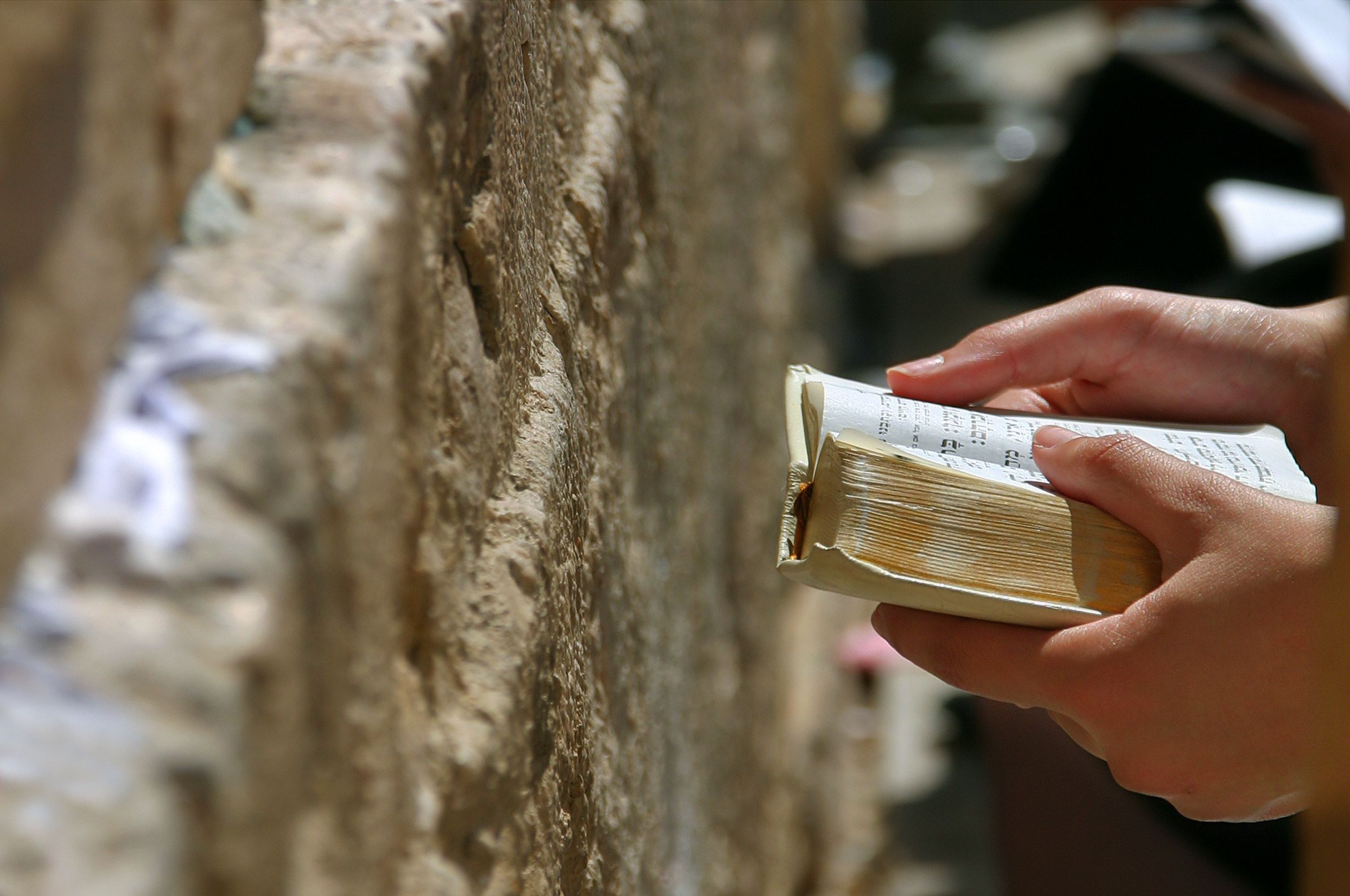
Prayer holds Torah during prayer at Western Wall.

Tisha B’Av observance is traditionally marked by fasting – abstaining from all food and drink for a full 25 hours (if medically possible) from evening until nightfall. It is considered one of the two “major” fasts in the Jewish calendar, along with Yom Kippur. Other prohibitions, as on Yom Kippur, include bathing, applying cream or oils, wearing leather shoes, and marital relations.

The day is also characterized by customary mourning practices such as sitting low on the ground, refraining from greetings, avoiding any joyous activity, and eating a solemn meal beforehand, which may include a hard boiled egg and/or bread dipped in ashes. Many people avoid work if possible, and may dim the lights in the evening and sleep on the ground or with less pillows than usual.

Other traditional Tisha B’Av practices include prayer, personal reflection, and reading the Book of Lamentations and Kinnot (mournful Jewish poetry). Common modern customs include reading books, watching films, or hearing talks that are related to the Holocaust or other Jewish national tragedies from our history.


btn
Moving Forward: A Surprising Story from the Talmud

Following the destruction of the Second Temple in 70 CE, the Talmud records that a group of ascetics vowed to never again eat meat or drink wine. They reasoned that because these items could no longer be offered on the Temple altar, they should no longer be consumed.

Rabbi Joshua challenged their choice:
"If so," he said, "we should not eat bread, because the meal offerings have ceased."
"We will survive on fruit," they replied.
"We cannot eat fruit either," Rabbi Joshua countered, "for the Bikurim (first fruits) can no longer be brought to Jerusalem."
"Then we will eat other fruits," they insisted.
"But what about water?" the Rabbi asked. "The water libation ritual has also ceased. By your logic, we must stop drinking water."

The mourners did not know what to answer. Rabbi Joshua then ruled: To not mourn at all is impossible, but to mourn too much is also impossible, because we cannot set rules that are too hard to bear.

To balance memory with daily life, the Sages ruled that when building a new home, a small square of the wall must be left unplastered. This acts as a reminder that while we enthusiastically build for the future, we never forget what was lost in the past.

(Source: Babylonian Talmud, Bava Batra 60b )


From all of us at Judaica WebStore, we wish you a meaningful Tisha B'Av. Tzom Kal to all who are fasting.


Jerusalem gifts

JWS POST YOU MAY LIKE

Round challah for Rosh Hashanah with honey
Round Challah for Rosh Hashanah with Honey
Rosh Hashanah recipes
What Are the Best Rosh Hashanah Recipes for a Sweet New Year?
When is Rosh Hashanah in 2026? In 2026, Rosh Hashanah begins at sundown on Friday, September 11, and ends at nightfall on Sunday, September 13. It falls on 1–2 Tishrei 5787 in the Hebrew calendar. Food plays a central role in Rosh Hashanah observance and tradition, with rich symbolism woven
A Jewish man blowing the Shofar (ram's horn), which is used to blow sounds on Rosh HaShana (the Jewish New Year) and Yom Kippur (day of Atonement)
Rosh Hashanah in the Bible: Origins of the Jewish New Year
Rosh Hashanah – the Jewish New Year, coming up September 11-12, 2026 – is one of the most important and widely celebrated holidays in Judaism. But while many are familiar with its modern customs, from apples dipped in honey to the sounding of the shofar, fewer know about its biblical
Rosh Hashanah fun for kids
Rosh Hashanah Activities for Kids: Fun & Meaningful Holiday Ideas
Looking for fun ways to keep kids busy this Rosh Hashanah? Discover hands-on crafts, apple-and-honey taste tests, family games and creative activities you can make with AI – all designed to bring more fun and meaning to the holiday.
Pomegranates for Rosh Hashanah
Why Do We Eat Pomegranates on Rosh Hashanah?
Pomegranates are a popular fruit to eat during Rosh Hashanah and a significant symbol in Judaism year-round, often gracing Judaica and Jewish jewelry. Since Rosh Hashanah 2026 begins on September 11 at sundown, now is the perfect time to learn more about the significance and symbolism of the pomegranate in Judaism and Rosh Hashanah!
A Jewish man blowing the Shofar (ram's horn), which is used to blow sounds on Rosh HaShana (the Jewish New Year) and Yom Kippur (day of Atonement)
From Reflection to Renewal: The Deep Meaning of Yom Kippur
Yom Kippur, the Day of Atonement, is the holiest day of the Jewish year: a time of reflection, forgiveness, and renewal. In 2026, it begins at sundown on Sunday, September 20, and lasts through the following evening. Marked by fasting, prayer, and other austere restrictions, Yom Kippur is often seen