Search

7 Inspiring Mothers From the Hebrew Bible

In honor of the upcoming Mother’s Day and strong Jewish moms everywhere, we’ve picked our favorite 7 mothers from the Hebrew Bible who inspire us with their strength and valor!

Mother’s Day in the United States is celebrated on Sunday, May 10, 2026. While the holiday isn’t religious per se, Judaism has a strong tradition of honoring our mothers and the other strong women who raise us, take care of us, guide us, and make us the people we are today.

Within the Tanakh (also known as the Hebrew Bible), there are dozens of women mentioned. In honor of Mother’s Day, we have compiled this list of 7 strong mothers from the Tanakh who inspire us, even today in 2026, due to their strength, courage, and resiliency.
1. Rebecca

Rebecca (known as Rivkah in Hebrew) is one of Judaism’s four matriarchs, alongside Leah, Rachel, and Sarah, so of course we had to include her. With her husband Isaac, Rebecca had two sons: Esau and Jacob. While Rebecca ultimately deceives her husband so that he will bless Jacob, her favored son, over Esau, some rabbis interpret this deception to be an act of faith in God, since she had received a prophecy while pregnant that the twins would fight their entire lives, and that only one would prevail. 

In some midrashim (interpretations), rabbis also write that in addition to being a woman of persisting faith, she had a motherly understanding of her sons and their true characters that Isaac simply did not. 

2. Tzipporah

Tzipporah was Moses’ wife and the mother of his two sons, Eliezer and Gershom. She is mentioned in Exodus and was known for her beauty. While she was not an Israelite, Tzipporah played an important role in saving Moses from death twice, including by circumcising their newborn son. Gershom was born during their rigorous journey and so Moses had postponed the circumcision. When an angel from God appears to kill Moses, Tzipporah realizes that it’s because their son has not entered the covenant and courageously circumcises Gershom herself. 

Her selflessness and quick-thinking, both as a wife and a mother, played an important role in the story of the Jewish people. 

Give your mom the gift of Israel’s most famous natural resource this Mother’s Day, with our amazing line of Dead Sea cosmetics from top Israeli brands!

3. Rachel

Rachel is the mother of two important Biblical figures, Joseph and Benjamin. We don’t get to learn much about Rachel as a mother, as she dies while giving birth to Benjamin. However, her legacy lived on through her children, who later became major leaders and figures in Jewish history. Due to her loyalty to Jacob and her dedication to bearing his children, Rachel is also remembered in her own regard as an important intercessor for the Jewish people.

4. Yocheved

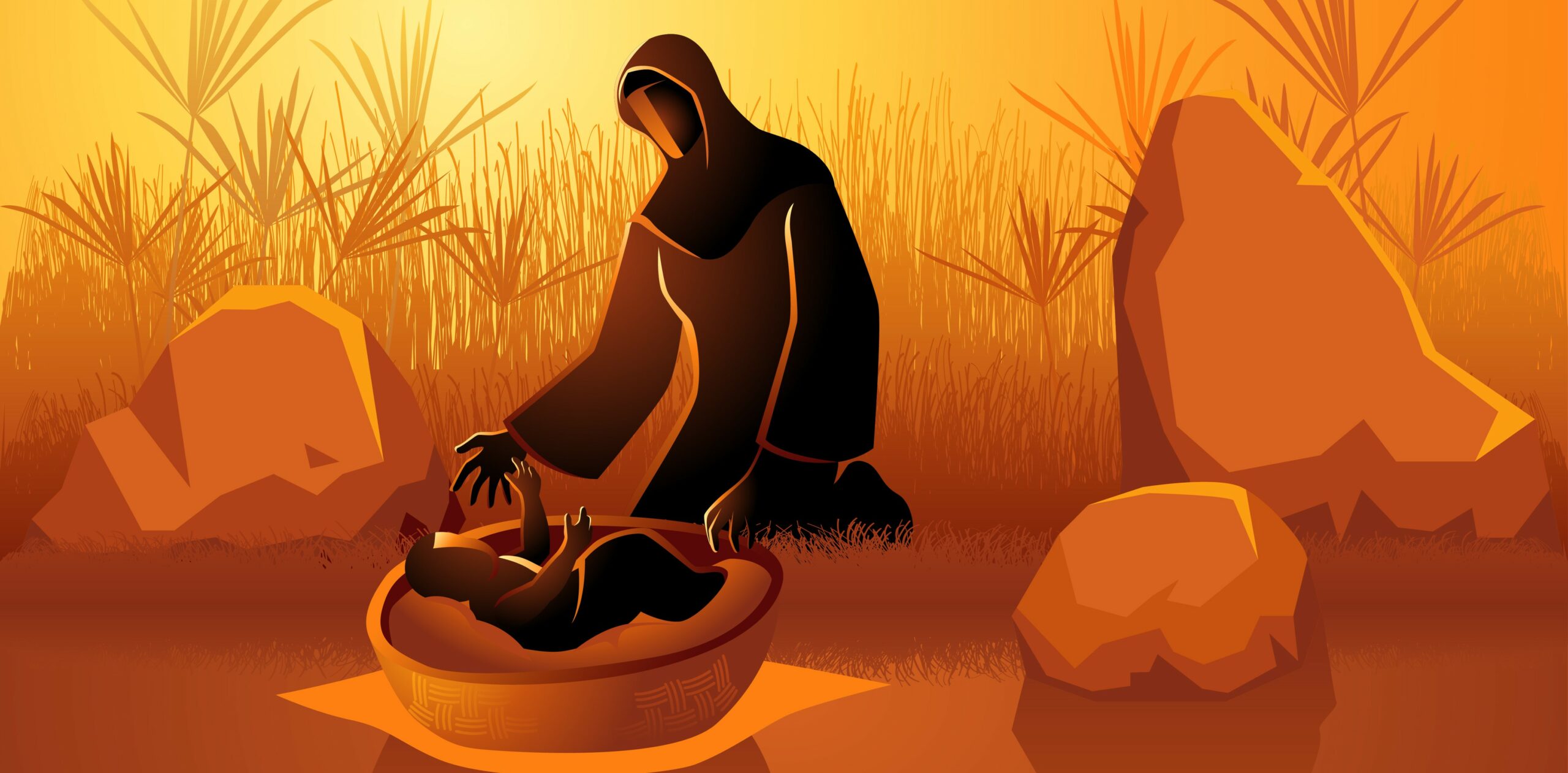
Yocheved, sometimes written in English as Jochebed, is the mother of Moses, Miriam, and Aaron. She is best known for putting three-month-old Moses, her youngest son, in a woven basket and down the Nile River to save his life. 

This selfless act allowed Judaism’s most important prophet to grow up, lead the Israelites out of slavery in Egypt, and bring the Jewish people closer to the Promised Land. Her two elder children played a crucial role in Jewish history as well – surely thanks to the strong women who raised them, even in the unimaginable circumstances of slavery.

Jochebed puts Moses in the basket

Take home your own Tanakh or Hebrew Bible – with English translation from top Jewish scholars – and get inspired by our ancient stories and Jewish wisdom!

5. Abigail

Most commonly known for being one of King David’s wives, Abigail was also known for her beauty, intelligence, and dedication to her family and faith. She became a mother when she birthed one of King David’s sons, Chileab. 

While the Tanakh doesn’t go into great detail about her motherly ways, Abigail is frequently mentioned throughout various Jewish texts as being a prophetess, a strong woman, and a role model for Jewish moms everywhere when it comes to dealing with tough situations.

6. Ruth

Ruth’s tale of joining the Jewish people is well-known and is remembered each Shavuot when we read her story in synagogue. After following Naomi and joining her faith and people, Ruth marries Boaz and they have a son together, Obed, who later becomes King David’s grandfather.

Known for her kindness and loyalty, Ruth’s important role in bringing King David to life serves as a reminder that our grandmothers, great-grandmothers, and other matriarchal figures around us can also play a major role in our lives and trajectory!

Freedom

7. Sarah

One of the most famous women of the Bible, Sarah – then in old age – is often remembered for laughing when a visitor suggested that she would become pregnant within a year. Sarah did indeed become pregnant and gave birth to Isaac, who would later become one of Judaism’s patriarchs (alongside his father, Abraham). Throughout the Torah, Sarah’s devotion to Isaac shines through, even beyond her death as he becomes a strong leader. 

Even today, Sarah is often called Sarah Imenu, or “Sarah our Mother,” because she is seen as the first matriarch of the Jewish people.

Unsure of what to get the strong women in your life for Mother’s Day 2026? Luckily we have amazing gifts just for moms from top Israeli artists! Check out our Top 15 Mother’s Day gifts guide, or view our full selection here.

Happy Mother’s Day!

Are you ready for Mother’s Day?? Don’t fret, we’ve gathered the best made-in-Israel gifts for the special woman who raised you!

JWS POST YOU MAY LIKE

Round challah for Rosh Hashanah with honey
Round Challah for Rosh Hashanah with Honey
Rosh Hashanah recipes
What Are the Best Rosh Hashanah Recipes for a Sweet New Year?
When is Rosh Hashanah in 2026? In 2026, Rosh Hashanah begins at sundown on Friday, September 11, and ends at nightfall on Sunday, September 13. It falls on 1–2 Tishrei 5787 in the Hebrew calendar. Food plays a central role in Rosh Hashanah observance and tradition, with rich symbolism woven
A Jewish man blowing the Shofar (ram's horn), which is used to blow sounds on Rosh HaShana (the Jewish New Year) and Yom Kippur (day of Atonement)
Rosh Hashanah in the Bible: Origins of the Jewish New Year
Rosh Hashanah – the Jewish New Year, coming up September 11-12, 2026 – is one of the most important and widely celebrated holidays in Judaism. But while many are familiar with its modern customs, from apples dipped in honey to the sounding of the shofar, fewer know about its biblical
Rosh Hashanah fun for kids
Rosh Hashanah Activities for Kids: Fun & Meaningful Holiday Ideas
Looking for fun ways to keep kids busy this Rosh Hashanah? Discover hands-on crafts, apple-and-honey taste tests, family games and creative activities you can make with AI – all designed to bring more fun and meaning to the holiday.
Pomegranates for Rosh Hashanah
Why Do We Eat Pomegranates on Rosh Hashanah?
Pomegranates are a popular fruit to eat during Rosh Hashanah and a significant symbol in Judaism year-round, often gracing Judaica and Jewish jewelry. Since Rosh Hashanah 2026 begins on September 11 at sundown, now is the perfect time to learn more about the significance and symbolism of the pomegranate in Judaism and Rosh Hashanah!
A Jewish man blowing the Shofar (ram's horn), which is used to blow sounds on Rosh HaShana (the Jewish New Year) and Yom Kippur (day of Atonement)
From Reflection to Renewal: The Deep Meaning of Yom Kippur
Yom Kippur, the Day of Atonement, is the holiest day of the Jewish year: a time of reflection, forgiveness, and renewal. In 2026, it begins at sundown on Sunday, September 20, and lasts through the following evening. Marked by fasting, prayer, and other austere restrictions, Yom Kippur is often seen