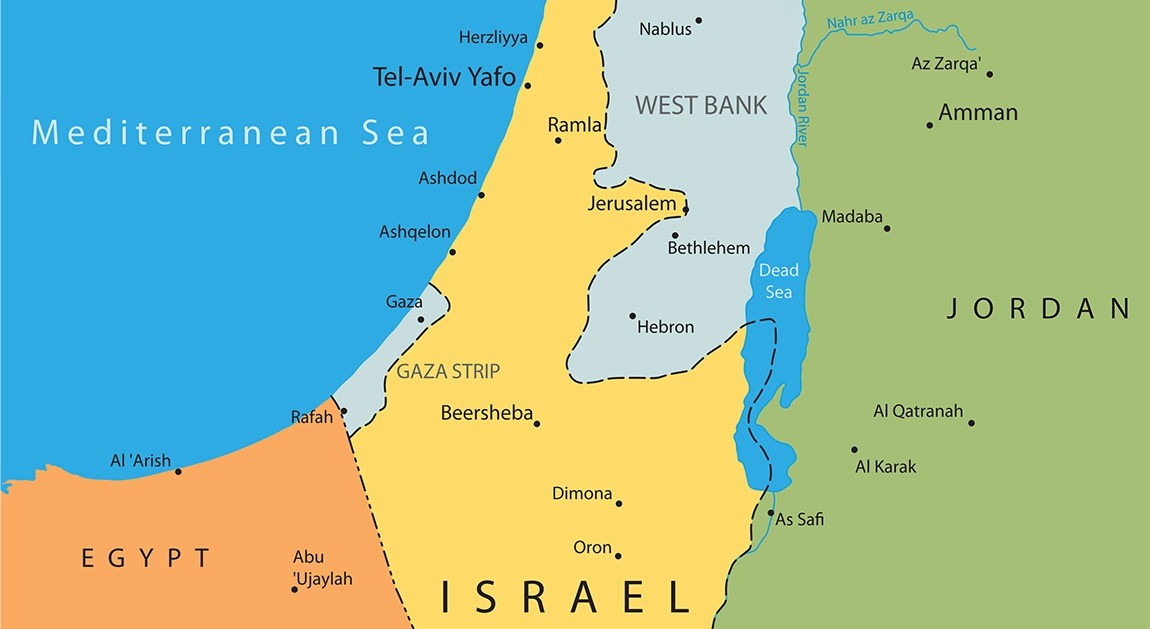
The history of Jews in Gaza stretches back to ancient times, with evidence of Jewish presence in the city dating back to the time of the Hebrew Bible. Gaza, a strategically located city on the Mediterranean coast, was mentioned in the Book of Judges as part of the territory allotted to the Tribe of Judah. Despite its frequent conquests by various empires, a Jewish community managed to persist in Gaza over the centuries.
During the Byzantine period, Gaza was home to a significant Jewish population. This is evidenced by the discovery of a synagogue in 1965, which dates back to the sixth century CE. This synagogue, with its exquisite mosaics and inscriptions, highlights the vibrant Jewish life that existed in Gaza during this era. The rediscovery of this ancient synagogue brought to light the rich cultural and religious life of the Jewish community in Byzantine Gaza.
Read more about Gaza's fascinating ancient synagogue and its recent rediscovery by Israeli soldiers here!
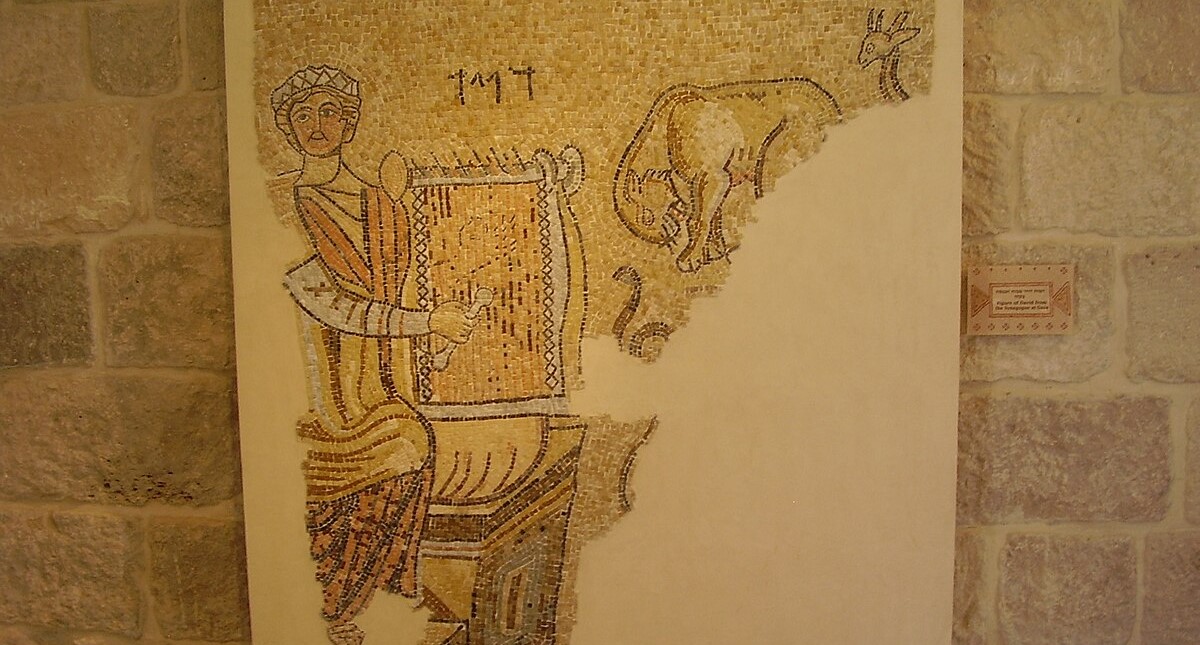
Mosaic of King David from ancient Gaza synagogue, restored by Israeli archeologists and today housed at the Museum of the Good Samaritan in the West Bank (Photo: Avishai Teicher/Wikipedia PikiWiki Israel license CC BY 2.5)
Following the Islamic conquest of Gaza in the 7th century, the Jewish community continued to live in the city. Despite the changes in political and social structures, Jews in Gaza adapted and maintained their religious and cultural practices. The community faced various challenges over the centuries, including periods of persecution and economic hardship, but managed to survive.
In the medieval period, the Jewish community in Gaza experienced fluctuations in its fortunes. Under the Crusaders, Jews faced persecution, and many were forced to flee. However, with the rise of the Mamluk Sultanate and later the Ottoman Empire, Jewish life in Gaza saw periods of revival. The Ottomans, who controlled Gaza from the 16th century, generally allowed Jews to live relatively peacefully, although the community remained small and economically disadvantaged.
One of the most notable figures in the Jewish history of Gaza during the Ottoman period was Nathan of Gaza (1643-1680). Born in Jerusalem, Nathan became a prominent kabbalist and a key figure in the Sabbatean movement, which centered around the controversial messianic figure Shabbetai Zevi. Nathan of Gaza was instrumental in spreading Zevi's teachings and claims of messianism, gaining a significant following in the Jewish world. His activities in Gaza made the city an important center for the Sabbatean movement until Zevi's apostasy and subsequent decline of the movement.

Portrait of Nathan of Gaza from the 1906 Jewish Encyclopedia
The Jewish community in Gaza began to decline significantly in the 19th and early 20th centuries. Economic difficulties, coupled with increasing tensions between Jews and Arabs in the region, led many Jews to leave Gaza for more secure and prosperous areas. By the time of the British Mandate in Palestine, the Jewish population in Gaza had dwindled considerably.
During the 1948 Arab-Israeli War, also known as Israel's War of Independence, the remaining Jews in Gaza were evacuated or fled due to the hostilities. The establishment of the State of Israel and the subsequent wars further exacerbated the divide, and the Jewish presence in Gaza effectively came to an end.
Some Jewish settlements and synagogues emerged in Gaza after the region came under Israeli control following the Six-Day War. However, all Jews were evacuated from the Gaza Strip during Israel's withdrawal in 2005.

The discovery of the ancient Gaza synagogue in 1965 was a significant archaeological find, shedding light on the historical presence of Jews in the region. The synagogue's well-preserved mosaics, including a large floor mosaic depicting King David playing the lyre, inscriptions in Hebrew and Aramaic, and other religious symbols, provided invaluable insights into the life and culture of the Jewish community in Byzantine Gaza. This discovery highlighted the long-standing and deep-rooted connection of Jews to Gaza, a history that had been largely forgotten.
The history of Jews in Gaza is a testament to the enduring presence and resilience of Jewish communities in the face of changing political and social landscapes. From ancient times through the Byzantine and Islamic periods, and into the Ottoman era, Jews in Gaza contributed to the cultural and religious tapestry of the region. Despite the eventual decline of the Jewish community in Gaza, its legacy remains an integral part of the region!
Take pride in Jewish history by exploring our favorite Jewish pride gifts or shopping Star of David necklaces and other fabulous Jewish jewelry from Israeli artists!