Search

Israeli Soldiers Rediscover Ancient Gaza Synagogue

IDF Soldiers During Hamas War Pray in Ancient Gaza Synagogue for First Time in Decades!

While Israel’s current war against Hamas has caused more than a share of heartbreak and pain, Israelis are always living for the happy, positive moments. And one such happy, astounding moment was hearing reports of IDF soldiers who are stationed in Gaza praying at an ancient synagogue that has been off-limits to Israelis for decades!

Read more about this amazing story and the synagogue’s special significance below!

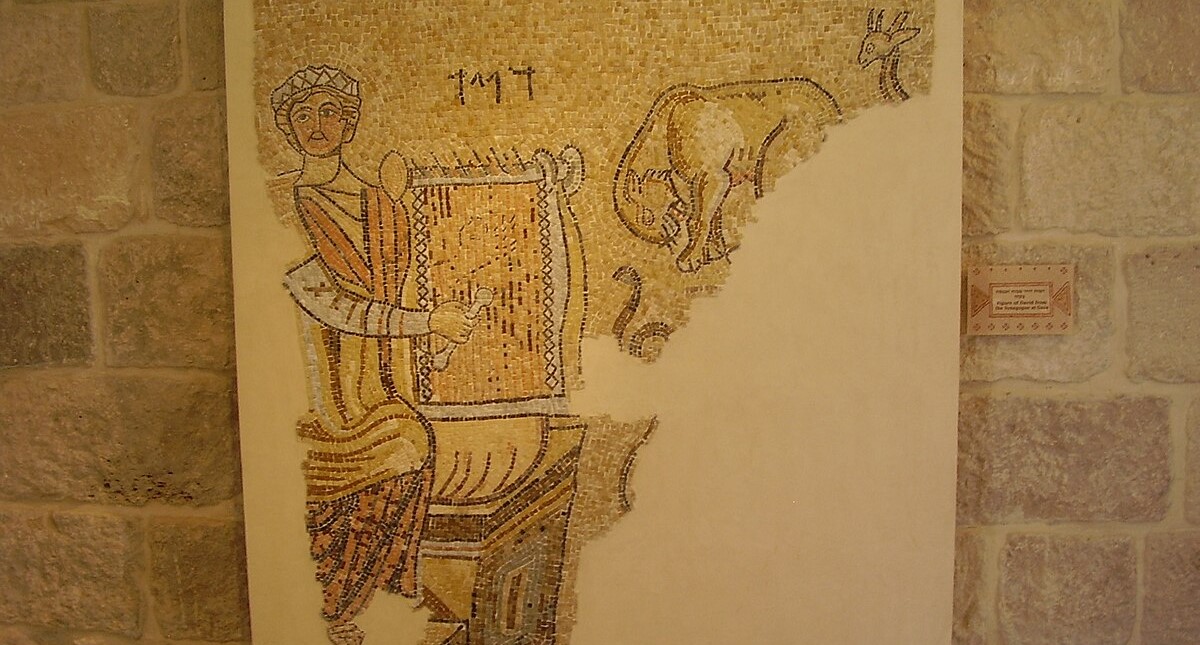
Mosaic of King David from ancient Gaza synagogue, restored by Israeli archeologists and today housed at the Museum of the Good Samaritan in the West Bank (Photo: Avishai Teicher/Wikipedia PikiWiki Israel license CC BY 2.5)


Last month, a number of posts on social media had reported that IDF soldiers in Gaza had rediscovered and prayed at a centuries-old synagogue there, a place that had already been familiar to Israeli scholars but inaccessible to Jews or Israelis in any way for nearly twenty years.

Due to security reasons no photos of the event were shared, but according to Michael Freund, a columnist for the Jerusalem Post, "For the first time in decades, Israeli soldiers prayed in the ancient synagogue in Gaza, which was built in the 6th century and where a beautiful mosaic floor depicting King David was unearthed years ago."

This exciting piece of news has inspired and energized the Israeli public, as the poignant symbolism of Israeli soldiers bringing Jewish prayer and ritual once again to one of our ancient places in the historic Land of Israel is truly remarkable!

Read on below for the historical background of this special synagogue, and check out our Land of Israel jewelry to wear your connection to our ancient homeland every day!

btn
Israel Jewelry

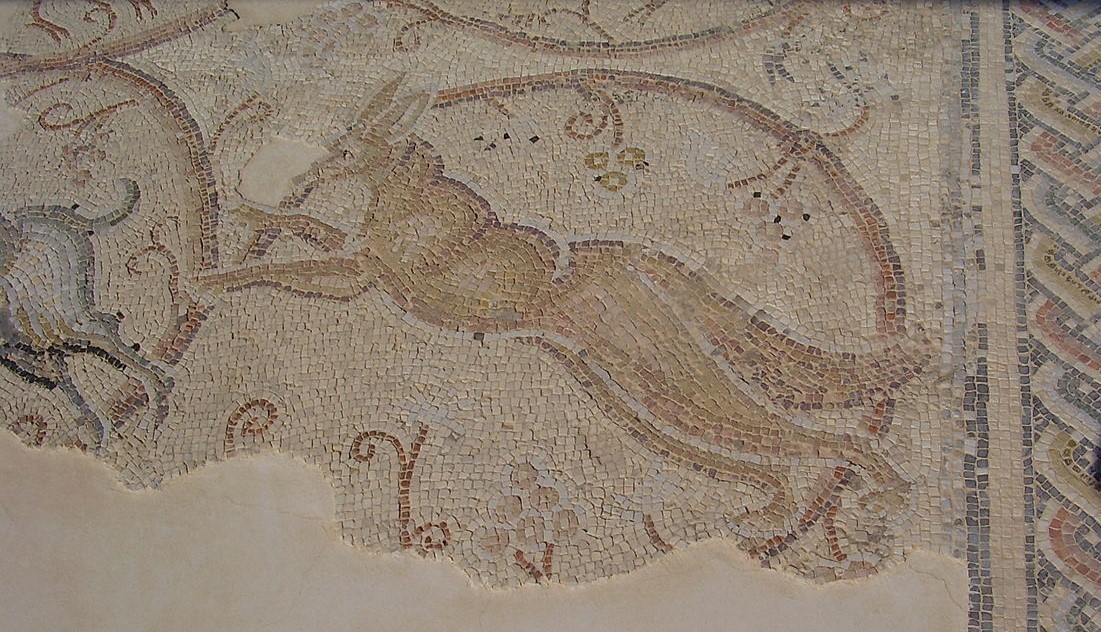
Decorative floor mosaic from ancient Gaza synagogue, today kept at the Museum of the Good Samaritan in the West Bank (Photo: Avishai Teicher/Wikipedia PikiWiki Israel license CC BY 2.5)


The ancient synagogue of Gaza dates back to 508 CE and is located in what was a bustling port city at the time known as "Maiuma" or El Mineh, today in the Rimal district of Gaza City. It was discovered in 1965 by Egyptian archaeologists and came under Israeli control following the 1967 Six-Day War.

Both Hebrew and Greek writing was incorporated into the building's decor, in addition to Greek and Byzantine artistic influences. The synagogue stands as an important testament of Jewish life in the Land of Israel in the 6th century, showing a Jewish presence even after the Roman expulsions centuries prior.

The synagogue also had stunning, intricate floor mosaics of animals and natural life as well as one of King David playing the harp and featuring Hebrew lettering. After the discovery some of the mosaics were deliberately damaged and vandalized in antisemitic attacks, and so after 1967 they were moved to Jerusalem for restoration by scholars at the Israel Musem. Today they are displayed at the Museum of the Good Samaritan near Ma'ale Adumim in the West Bank.

Relocating the historic and magnificent mosaics ended up being a wise move, as the site of the Gaza synagogue itself has been inaccessible to Jews since the Israeli withdrawal from Gaza in 2005. That makes the rediscovery of the site by IDF soldiers all the more special, particularly as confirmation that it is remarkably still standing today!

Are you inspired by ancient Jewish history and by the brave defenders of Israel today? Show your pride with our Israel Army Gifts and Support Israel Collection!


btn
ISRAELT-SHIRTS_(C)1200x628 (1)

JWS POST YOU MAY LIKE

Round challah for Rosh Hashanah with honey
Round Challah for Rosh Hashanah with Honey
Rosh Hashanah recipes
What Are the Best Rosh Hashanah Recipes for a Sweet New Year?
When is Rosh Hashanah in 2026? In 2026, Rosh Hashanah begins at sundown on Friday, September 11, and ends at nightfall on Sunday, September 13. It falls on 1–2 Tishrei 5787 in the Hebrew calendar. Food plays a central role in Rosh Hashanah observance and tradition, with rich symbolism woven
A Jewish man blowing the Shofar (ram's horn), which is used to blow sounds on Rosh HaShana (the Jewish New Year) and Yom Kippur (day of Atonement)
Rosh Hashanah in the Bible: Origins of the Jewish New Year
Rosh Hashanah – the Jewish New Year, coming up September 11-12, 2026 – is one of the most important and widely celebrated holidays in Judaism. But while many are familiar with its modern customs, from apples dipped in honey to the sounding of the shofar, fewer know about its biblical
Rosh Hashanah fun for kids
Rosh Hashanah Activities for Kids: Fun & Meaningful Holiday Ideas
Looking for fun ways to keep kids busy this Rosh Hashanah? Discover hands-on crafts, apple-and-honey taste tests, family games and creative activities you can make with AI – all designed to bring more fun and meaning to the holiday.
Pomegranates for Rosh Hashanah
Why Do We Eat Pomegranates on Rosh Hashanah?
Pomegranates are a popular fruit to eat during Rosh Hashanah and a significant symbol in Judaism year-round, often gracing Judaica and Jewish jewelry. Since Rosh Hashanah 2026 begins on September 11 at sundown, now is the perfect time to learn more about the significance and symbolism of the pomegranate in Judaism and Rosh Hashanah!
A Jewish man blowing the Shofar (ram's horn), which is used to blow sounds on Rosh HaShana (the Jewish New Year) and Yom Kippur (day of Atonement)
From Reflection to Renewal: The Deep Meaning of Yom Kippur
Yom Kippur, the Day of Atonement, is the holiest day of the Jewish year: a time of reflection, forgiveness, and renewal. In 2026, it begins at sundown on Sunday, September 20, and lasts through the following evening. Marked by fasting, prayer, and other austere restrictions, Yom Kippur is often seen