The kippah, yarmulke, skullcap: It’s the most famous Jewish item, yet often one of the least understood. Where does it come from, and what does it mean? Who is supposed to or allowed to wear it, and when?
Read on for our astonishing kippah facts!




The iconic circular Jewish head covering is called a Kippah in Hebrew and Yarmulke in Yiddish. “Kippah” comes from the Hebrew word for “dome,” while “Yarmulke” is a Yiddish adaptation of the Aramaic word for “fear the King,” the King referring to God.
If you live in an English-speaking country you may have heard an Anglicized version of “yarmulke,” something more like “yamaka,” or might have seen some people, particularly non-Jews, simply refer to it as a skullcap. Meanwhile, Israelis and more Zionist-minded Jewish communities are more likely to refer to it as a kippah.
The Yiddish term for this famous headgear gives a hint as to its purpose and meaning: traditionally, Jewish men are supposed to wear it as a reminder of, and an expression of awe and fear of, the Divine.
In modern times, the kippah has also taken on a meaning as a symbol of Jewish identity and belonging to the Jewish people. Some also wear one as a statement of Jewish pride or defiance in the face of antisemitism, or as an expression of their faith and spirituality. In Israel, wearing a kippah can also indicate that the wearer wishes to outwardly identify as a traditionally-observant Jew.
Traditionally, a man should cover his head while praying, studying Torah, or performing other religious rituals. Some have the custom to wear a kippah all the time, while others only put it on for prayer or other religious acts, or may only wear it in synagogue or during special occasions.

Based on a traditional mystic teaching that the female soul is more in tune with spirituality and feels a closer attachment to God than the male soul, the kippah was historically never a required head covering for a woman to wear. Nonetheless, some modern, more liberal Jewish communities have seen a rise in the number of women choosing to wear a kippah or yarmulke. On the flipside, in more traditional communities it may be seen as inappropriate for a woman to wear one as it’s considered an exclusively male clothing item, while women have other types of head coverings.
A male non-Jew visiting a synagogue or attending a Jewish wedding, funeral, holiday meal, or other special occasion may be asked to wear a kippah or yarmulke out of respect. Whether this is expected or required will depend on the particular community.
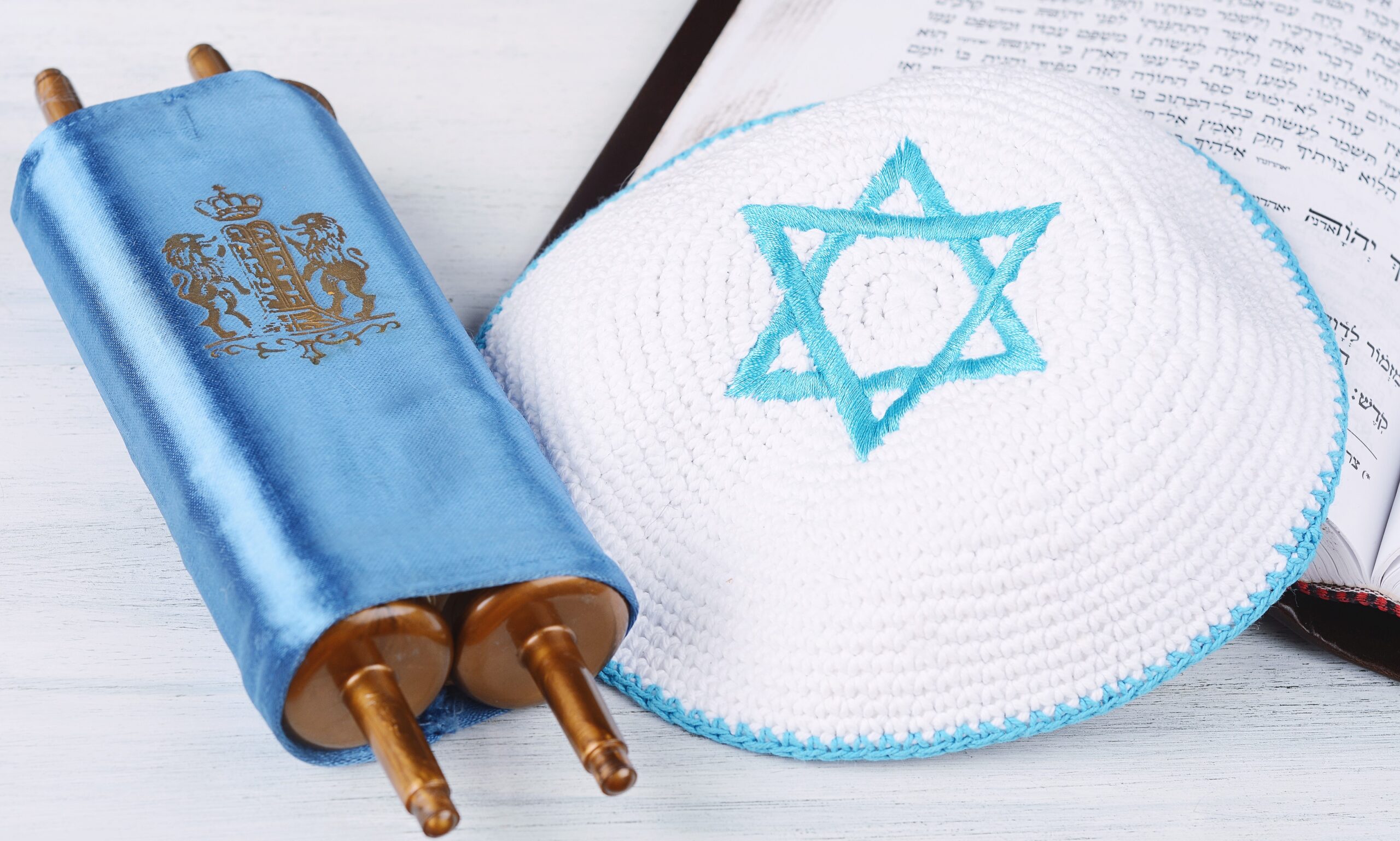
The kippah itself is not specifically mentioned in the Bible. However, the origins of the custom come from the ancient practice of the Kohanim (Priests) wearing head coverings while ministering in the Holy Temple in Jerusalem during Biblical times.
Originally, the only people commanded to cover their heads were the Kohanim. In the years since the destruction of the Temple, however, certain Rabbis began to adopt the custom of covering one’s head as a way of honoring God.
In Talmudic times, some Rabbis held that a man cannot walk a certain minimal distance without covering his head, while others believed that only married scholars or the particularly pious were required to keep this custom.
The particular style of the kippah or yarmulke as we know it today likely developed in the Middle Ages, as did a more widespread practice of Jewish men covering their heads. It was also around this time that the practice of male head covering became codified in Jewish texts such as the Shulchan Aruch.

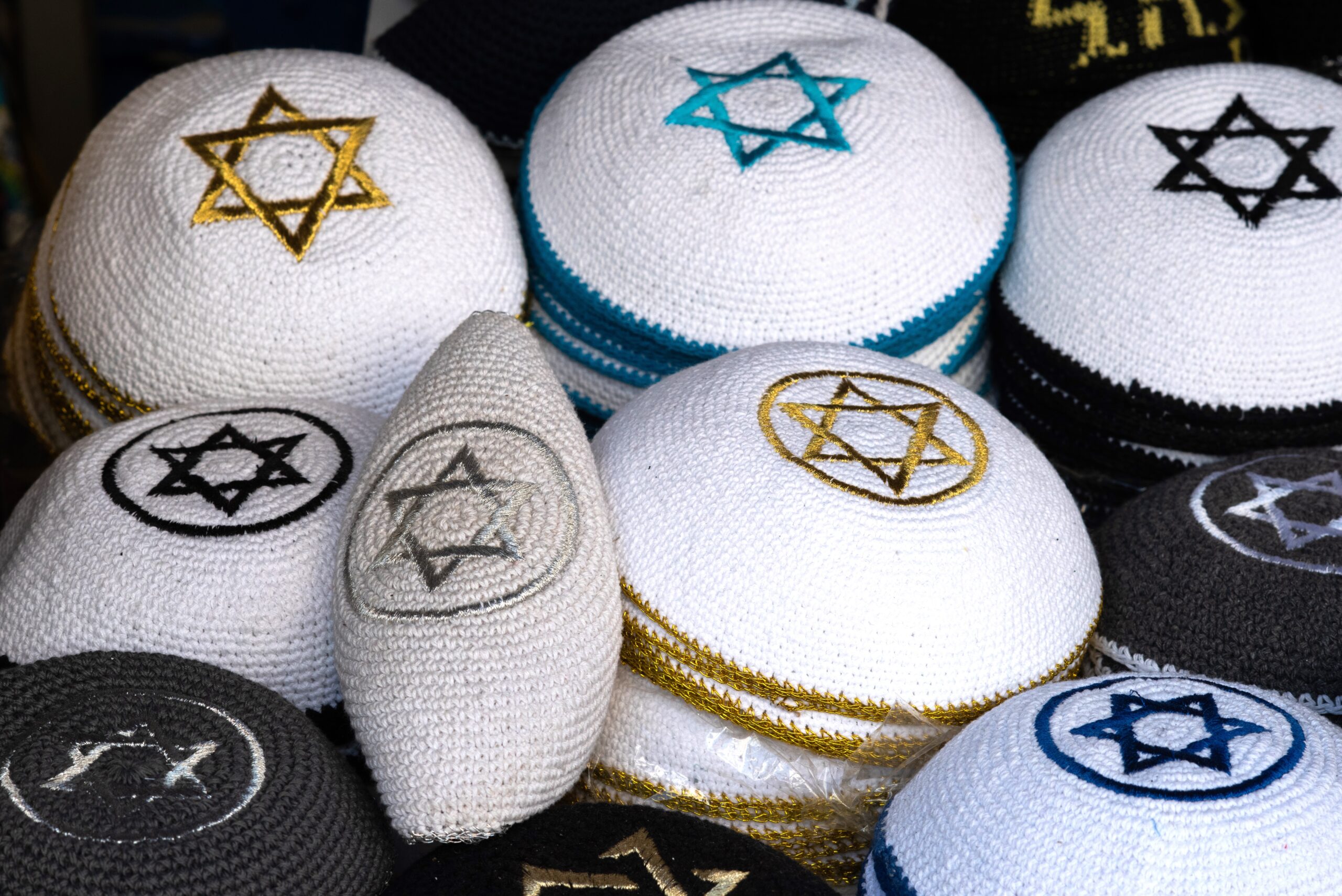
Today, you can see a variety of different kippah sizes, styles, colors, and materials. This diversity is due to the rich tapestry that makes up the modern Jewish community.
Some kippah styles signify the ethnic origin of the person wearing it (for example, Bucharian Jews from Central Asia wear large kippahs that cover the entire head and feature colorful and floral designs), while other styles sometimes symbolize the denominational community that the wearer feels a part of (for instance, many Modern Orthodox men wear suede or knitted kippahs, while velvet kippahs are more popular among Charedi men).
There are also fun and colorful children’s kippah styles, and particularly feminine designs for women who connect with the custom but don’t like the more traditional, masculine styles.
Israeli designers create traditional kippahs as well as more artistic and expressive designs, including those adorned with Jewish symbols like Stars of David, Jerusalem scenes, or patriotic motifs such as colors and designs reminiscent of the Israeli flag.
Now that you have a better understanding of the rich history and meaning of the kippah/yarmulke, feel free to check out our wide selection of kippahs and find the perfect one for you!
Can’t decide? We also have a Top 10 list right here to give you some shopping inspo!