
What Is the Western Wall?
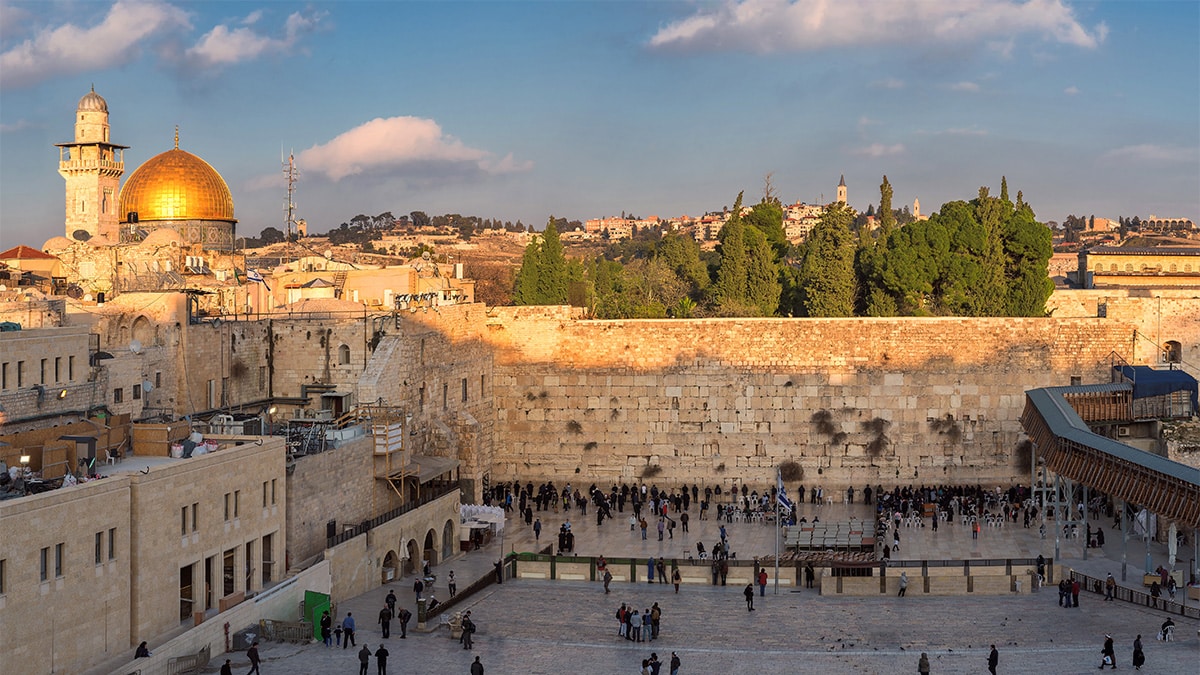
The Western Wall, known in Hebrew as the Kotel and sometimes called the Wailing Wall, is an ancient limestone wall in Jerusalem’s Old City. It is the holiest place where Jewish people can openly pray today and one of the world’s most important religious landmarks.
Although many people think it was part of the Temple itself, the Western Wall is actually a section of the enormous retaining wall built by King Herod the Great around 20 BCE to support the expanded Temple Mount. This platform was home to the Second Temple, which stood on the site of the First Temple and included the Holy of Holies, Judaism’s most sacred place.

When the Romans destroyed the Second Temple in 70 CE, the Temple itself was reduced to ruins, but much of the surrounding retaining wall remained. Because the site traditionally identified as the Holy of Holies lies approximately beneath where the Dome of the Rock stands today, the Western Wall became the primary place where Jews could come closest to Judaism’s most sacred spot, giving it its unique spiritual significance.
The name “Wailing Wall” was given by outsiders who saw generations of Jewish pilgrims mourning the destruction of the Temple and praying for Jerusalem’s restoration. Today, most Jews prefer the name Western Wall or Kotel.
For nearly 2,000 years, Jews around the world have faced Jerusalem during their daily prayers, directing their hearts toward the Temple Mount and the site of the Holy of Holies. The Western Wall has become a powerful symbol of faith, longing, and the enduring connection between the Jewish people and Jerusalem.
Today, millions of visitors from every faith come to the Western Wall each year. One of its best-known traditions is placing handwritten prayers into the ancient stone crevices, a custom that has become a meaningful expression of hope and devotion for people from around the world.
How the Western Wall Changed After 1967
The Western Wall that visitors see today looks very different from the site that existed before 1967. Following Israel’s reunification of Jerusalem after the Six-Day War, the narrow alley that had long served as the Wall’s prayer area was transformed into the vast open plaza familiar today.

The years that followed also reshaped how the Western Wall is managed. While early secular Israelis envisioned the plaza as an open-air national monument, religious authorities moved quickly. Later in 1967, the Ministry of Religions installed a permanent mechitza (gender partition), introducing Orthodox separation between men’s and women’s prayer areas. In 1981, government regulations formally designated the main prayer plaza as an Orthodox synagogue, establishing rules that prohibit non-Orthodox practices such as women reading from Torah scrolls or wearing prayer shawls (tallitot).
The Egalitarian Prayer Area
These arrangements have remained the subject of ongoing debate. After decades of advocacy by groups such as Women of the Wall, the Israeli government approved a landmark agreement in 2016 to create a permanent, state-funded egalitarian prayer area.

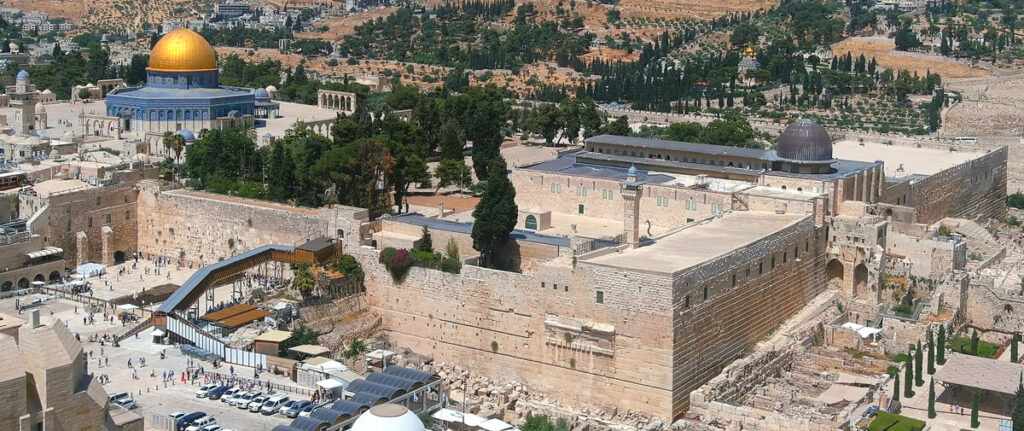
Tucked completely outside the main Western Wall plaza, the egalitarian section sits further south, separated by the wooden Mughrabi Bridge – the only access point for non-Muslims to the Temple Mount. Running alongside the remnants of an ancient earthen ramp and stone retaining wall, this inclusive prayer area remains entirely out of sight of the gender-segregated plazas next door, offering a peaceful, hidden sanctuary.
The compromise was widely welcomed as a step toward accommodating different Jewish traditions. However, following strong opposition from ultra-Orthodox political parties, the plan was frozen in 2017, leaving the question of shared access and worship unresolved.
The Current Threat: A Seven-Year Shadow
In 2026, a proposed “Western Wall Bill” began making its way through the Knesset, aiming to give the Orthodox Chief Rabbinate absolute legal authority over the entire archaeological complex – including the southern egalitarian section. Under the proposed law, which has passed its preliminary reading, the definition of “desecrating” a holy site would expand to include any spiritual practice, behavior, or dress code that does not conform to strict Orthodox standards.
The wording has sparked widespread outrage among Reform, Conservative, and other non-Orthodox Jewish communities, who argue that it effectively labels their forms of Jewish worship as acts of desecration. Many Jewish organizations around the world have condemned the language as deeply offensive, noting that the majority of Jews living outside Israel are not affiliated with the Orthodox movement.
The stakes are high: if the bill passes, holding a pluralistic, mixed-gender Reform or Conservative service anywhere at the Wall could be treated as a criminal offense, carrying a maximum penalty of up to seven years in prison.
More Than Stones
For nearly two thousand years, Jews have turned toward this sacred place, carrying with them an unbroken bond with Jerusalem and the site of the Holy Temple. Today, that ancient connection is shared with millions of visitors from around the world. Jews and non-Jews alike stand before its weathered stones to offer prayers of gratitude, healing, remembrance, and hope. In many ways, the Western Wall reflects the timeless vision of the prophet Isaiah: “My house shall be called a house of prayer for all peoples” (56:7).

Whatever the future may hold, the Western Wall is a living symbol of Jewish faith, resilience, and memory, where people of every background add their own prayers to those of countless generations before them.
Practical guide and Frequently Asked Questions
1. Why is it called the “Wailing Wall”?
The phrase “Wailing Wall” is an outdated term coined by European travelers who witnessed generations of Jewish pilgrims weeping and mourning at the site over the historic destruction of the ancient Temples. Today, most locals, tour guides, and Jewish people prefer the names Western Wall or the Kotel (the Hebrew word for “wall”). The older nickname is increasingly viewed as an external, slightly derogatory description rather than an authentic name for the sacred landmark.

2. Is the Western Wall open to non-Jews?
Yes, the open-air plaza is completely free and accessible to international tourists and visitors of all religious faiths, operating 24 hours a day, 365 days a year. However, because it functions as an active Orthodox synagogue, the primary prayer area is divided by a permanent partition known as a mechitza. Male visitors enter the left section, while female visitors use the right section, with both sides offering direct access to the ancient Herodian stones.
3. What is the dress code for visiting the Kotel?
Because it is a revered house of worship, a respectful and modest dress code is strictly enforced at the security checkpoints. All visitors, regardless of faith, must keep their shoulders and knees fully covered. Men are required to wear a head covering out of religious respect; complimentary disposable kippahs (yarmulkes) are provided at the entrance kiosks. Women are likewise requested to dress conservatively, and wrap-around shawls are often available for those arriving in shorter attire.
4. Can you take photos at the Western Wall?
Photography and video recording are fully permitted Sunday through Thursday, making it easy for tourists to capture memories of the historic site. However, all cameras, smartphones, writing utensils, and electronic devices are strictly prohibited from Friday evening to Saturday nightfall out of respect for the Jewish Sabbath (Shabbat). During these hours, smoking is also banned in the plaza. Additionally, a traditional custom dictates that visitors walk backward when exiting the immediate prayer area so as not to turn their backs on the holy site.
5. Why is the Wall culturally and historically significant?
The structure is a 2,000-year-old limestone retaining wall constructed by King Herod the Great to expand the flat plateau of the Temple Mount. It was never a physical wall of the sanctuary building itself. However, when the Roman army destroyed the Second Temple in 70 CE, this massive outer fortification survived. Because the traditional location of the Holy of Holies – the innermost and holiest part of both the First and Second Temples – lies approximately where the Dome of the Rock stands today, the Western Wall is the closest place to that sacred site where Jews can pray. For nearly two thousand years, it has therefore become the ultimate focal point of Jewish prayer and pilgrimage.
For more information about our research process, sourcing, and editorial review, please see our editorial standards and content policy.