
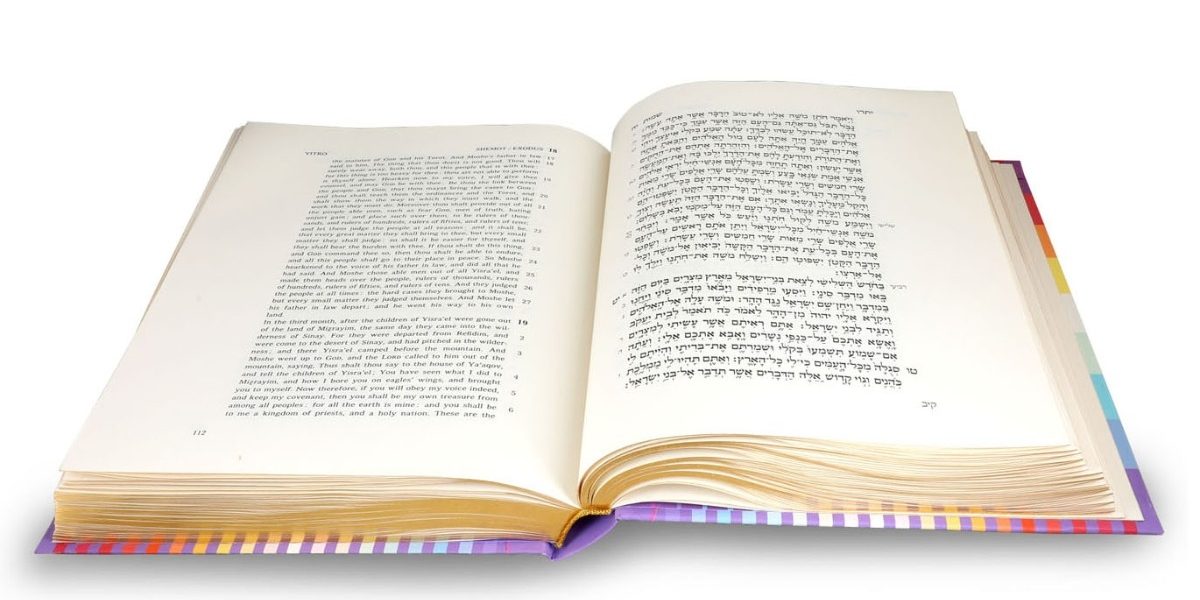
Blessings – short prayers known as brachot in Hebrew – are a simple yet powerful, ancient Jewish tradition that allows us to add holiness to our daily lives. Judaism gives us countless opportunities to express gratitude for both the everyday and the extraordinary, with these timeless blessings that are more than mere words – they open a spiritual portal to connection with the Divine.

These words often come from Tanakh (our Hebrew Bible) or the Talmud, and they invoke one of God’s holy names in addition to other words of holy Scripture. In fact this tradition goes all the way back to the first chapters of the Torah, where blessings have both direct physical and spiritual potential: God blesses and commands Adam and Eve to multiply and fill the world; Abraham is called a blessing for all his descendants; and Jacob alters his destiny by stealing the first-born blessing.
Today, blessings are an important part of Jewish observance, giving us countless opportunities to directly speak to God using some of the holiest words of our tradition.
Check out the below examples of potent Jewish blessings for your spiritual connection!
Everyday Blessings
There are many opportunities for punctuating our daily lives with brief but poignant Jewish blessings. We have blessings for before eating or drinking, which proclaim God as our blessed Creator; for after going to the bathroom, expressing gratitude for the wonders of our working bodies; and in connection to ritual handwashing (or netilat yadayim in Hebrew) that’s done upon waking up, after using the bathroom, and before eating bread.
Read more about netilat yadayim, and adorn your handwashing ritual with beautiful washing cups and hand towels from Israel.
There is also a set of prayers said after eating a full meal with bread, known as birkat hamazon in Hebrew or bentshing in Yiddish, and usually called “grace after meals” in English. Regular Jewish daily prayer services are also filled with many blessings that are recited.
Add countless blessings to your life with a traditional Jewish prayerbook or a convenient grace after meals blessings guide.
Special Occasions
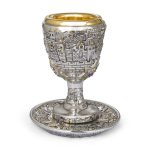
Special occasion blessings include those that sanctify the beginning of shabbat and holidays (known as kiddush); those that mark seeing an awe-inspiring natural phenomenon like a rainbow or the ocean; or ones that express gratitude for experiencing newness (the shehecheyanu blessing) – such as eating a new species of fruit, wearing a new dress or suit, or starting a new job or school year.
Mark your shabbat and holiday blessings with a beautiful kiddush cup made in Israel!
Blessing for the Home
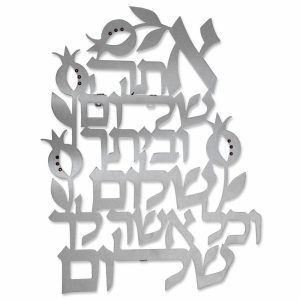
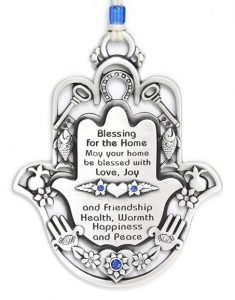
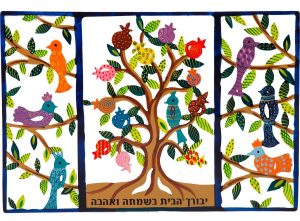
These are blessings that instead of being said, are written out and hung up in the home. They are referred to as birkat habayit or home blessing, and are often beautifully, artistically decorated and may incorporate Jewish symbols and motifs like hamsa hands or pomegranates.
There are several different texts that are commonly used as traditional home blessings, and they generally aim to invoke Divine protection or wish good fortune, happiness, success, peace, love, or prosperity on the household.
Add Jewish tradition and invoke Divine protection over your household by hanging a traditional Jewish house blessing!
And check out our favorite beautiful and artistic home blessings from Israeli artists.
Priestly Blessing

Each day in Israel and during the High Holidays everywhere else in the world, Kohanim (descendants of Priests) perform the Priestly Blessing, which is believed to provide protection over the entire community. While it is not appropriate for people who are not kohanim to recite this blessing, it is not uncommon to hang the words of the blessing in one’s home or wear them on jewelry.
Bring priestly protection to your home with Priestly Blessing home décor or jewelry!

Traveler’s Prayer

Tefilat HaDerech or the Traveler’s Prayer is a special blessing recited when traveling – generally said when leaving the city limits or about halfway through one’s journey, and today often recited during long car trips or flights. Reciting this prayer is believed to keep the traveler safe throughout their journey.
You can even add an additional layer of spiritual connection to your trip with Traveler’s Prayer jewelry, traditionally worn as a protective amulet.
Special Blessing Power at Special Occasions
At certain occasions in our lives we are considered to have a special power to give blessings. For example brides and grooms give out personalized, self-composed blessings to guests on their wedding day, as it is believed that God gives special attention to their prayers on that day. There is also a similar tradition of giving out blessings to friends and family on one’s birthday.
In addition, parents are given a special blessing power on Friday night and on Rosh Hashana to bless their children. There are traditional children’s blessing texts, which differ for boys and girls. For boys, the blessing is a wish that they should be like Ephraim and Menashe, the grandsons who were blessed by Jacob in the Torah. The girls’ blessing is a hope that they will grow up to be like the matriarchs of Judaism: Sarah, Rivka, Rachel and Leah.
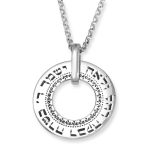
You can also give your children a daily reminder of your blessing for them through a piece of jewelry or beautiful wall art or other decor adorned with the traditional blessing.
Amulets and Special Jewelry
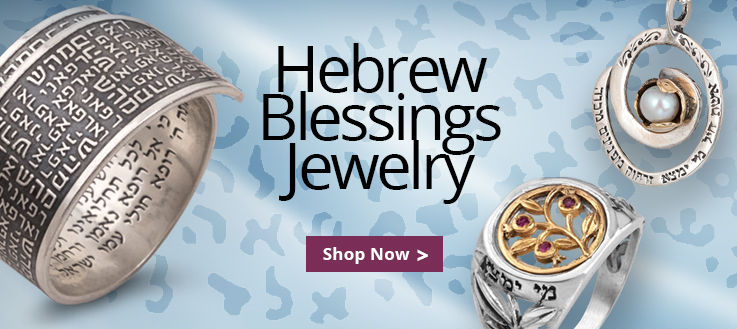
One of the oldest Jewish traditions is the wearing or carrying of various kinds of amulets to ward off the “evil eye” and in hopes of bringing health and happiness to the wearer. These amulets are often in the form of jewelry, and are adorned with special Biblical words or sacred designs, in order to invoke Divine protection.
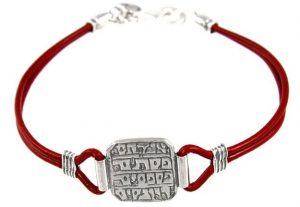
You too can wear a traditional protective amulet, taking part in a centuries-old Jewish tradition.
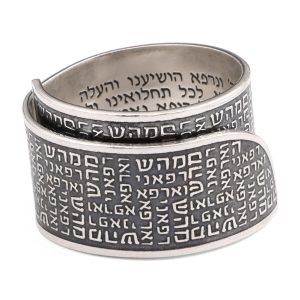
In addition, there are also many blessings and Biblical verses that adorn Jewish jewelry to this day and have various meanings: Some are meant to evoke love; others offer protection, healing, or a reminder of Jerusalem or our holy Scriptures.
Check out all our blessings jewelry, lovingly crafted in the Land of Israel, as well as our top 10 favorites and our comprehensive guide!